Cast Iron Burgers & Crispy Oven Fries — The Backyard Classic Done Right
Ground chuck, a screaming-hot cast iron, and a butter-toasted brioche bun — this is the burger your family will ask for every single weekend. Crispy oven fries included.
 Dan Cooks7 min readPrint this post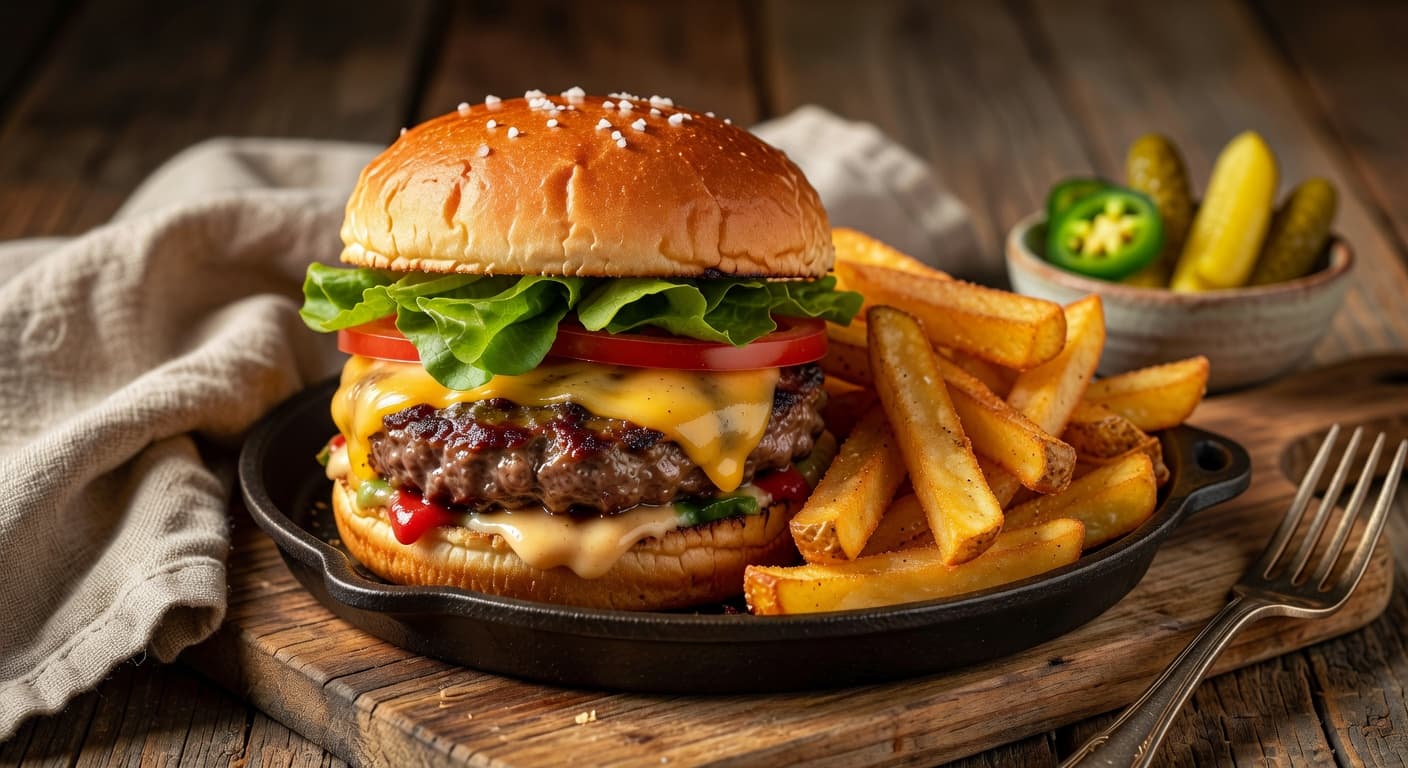
The best meals aren't measured by perfection — they're measured by the memories made around the table.
There are meals you cook because you have to, and then there are meals you cook because they mean something. This burger is the second kind. Down here in Tampa, a warm evening, a hot skillet, and a cold sweet tea in hand — that's the whole picture. My kids come running when they smell the cast iron heating up, and my wife already knows to slice the tomato thick. This isn't a restaurant burger trying to be fancy. It's the real thing: 80/20 ground chuck seasoned with soul, seared until a dark crust forms, melted American cheese draped over the top, and a brioche bun toasted in butter until it's golden and fragrant. Oven fries seasoned with smoked paprika and garlic powder ride alongside. Simple ingredients. Deliberate technique. Food that tastes like home.
Why 80/20 Chuck Is Non-Negotiable
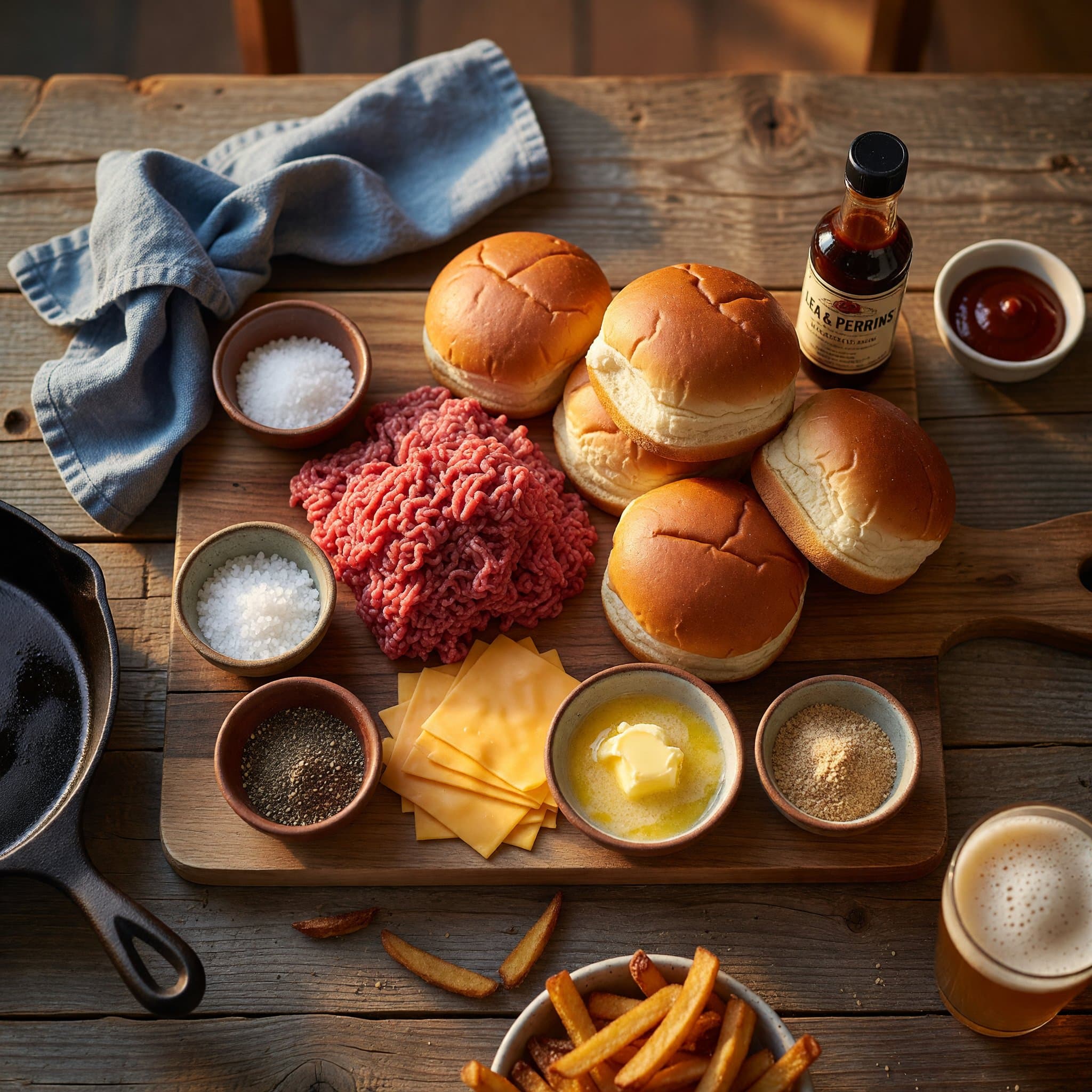
The fat in your ground beef is doing real work here. An 80/20 blend — that's 20% fat by weight — gives the patty enough richness to survive the high heat of a cast iron without drying out or shrinking into a hockey puck. Go leaner and you'll feel it in every bite. When you're at the meat counter, look for ground chuck specifically, not just 'ground beef.' Chuck comes from the shoulder, and the fat is marbled through in a way that keeps the patty juicy from the inside out. Same principle applies to the smoked paprika you're putting on those fries — the generic stuff is fine, but if you can find a Spanish pimentón de la Vera, the smoke depth is in a completely different league.
25 minutes, and you’re ready to cook.
With fries and burgers cooking in parallel, mise en place matters. Here's how to set yourself up so nothing gets rushed.
- Gather EquipmentGather a large cutting board, sharp chef's knife, vegetable peeler, paper towels, a large bowl for soaking potatoes, a dry bowl for tossing, a sheet pan, parchment paper or foil, a cast iron skillet, a lid or foil for covering the skillet, a small bowl for mixing burger seasoning, a meat thermometer, and serving plates.
- Preheat OvenPreheat your oven to 425°F. Line a sheet pan with parchment paper or foil and position a rack in the upper third of the oven for maximum crispiness.
- Prepare Russet PotatoesScrub the russet potatoes under cold running water to remove any dirt, keeping the skin on. Cut them into 1/4-inch thick fry sticks, keeping them as uniform as possible for even cooking. Place the cut fries in a large bowl of cold water and soak for at least 10 minutes to draw out starch and increase crispiness. After soaking, drain thoroughly and pat very dry with paper towels — any excess moisture will steam them instead of crisping them.
- Season Potato FriesTransfer the dried fries to a dry bowl. Toss with 2 tablespoons olive oil, 3/4 teaspoon kosher salt, 1/4 teaspoon black pepper, 1/2 teaspoon smoked paprika, and 1/4 teaspoon garlic powder until every fry is evenly coated.
- Prepare Ground Chuck BeefIn a small bowl, gently combine 3/4 lb ground chuck beef with 1 teaspoon Worcestershire sauce, 1/4 teaspoon garlic powder, 1/2 teaspoon kosher salt, and 1/2 teaspoon black pepper. Mix just until combined — do not overwork, as this develops tough burgers. Divide into two equal portions and loosely form into patties about 3/4 inch thick. Press a shallow indent into the center of each patty with your thumb to prevent them from puffing up during cooking.
- Prepare Iceberg LettuceSeparate 2 leaves of iceberg lettuce, rinse under cold water, and pat dry with paper towels. Keep whole or tear into burger-sized pieces as preferred.
- Prepare Beefsteak TomatoRinse the beefsteak tomato under cold water and pat dry. Slice into 2 thick slices (about 1/4 inch each), discarding the ends. Set aside on a clean plate.
- Prepare Red OnionPeel the red onion, removing the papery skin and first layer if damaged. Slice thinly into rings. Separate the rings and set aside.
- Measure Condiments and ToppingsMeasure out 2 tablespoons ketchup, 1 tablespoon yellow mustard, and 2 tablespoons mayonnaise into small bowls or ramekins. Place the dill pickles (4 slices) on a small plate. Set all condiments and toppings within easy reach of your assembly area.
- Prepare Brioche Buns and ButterRemove 2 brioche burger buns from packaging and place on a clean surface. Set 1 tablespoon butter nearby for toasting the buns.
- Stage IngredientsArrange all prepped ingredients near your cooking station in order of use: seasoned potato fries on the sheet pan ready to roast, burger patties in a bowl, American cheese slices on a plate, cast iron skillet within reach, condiments and toppings (lettuce, tomato, onion, pickles, ketchup, mustard, mayonnaise) organized on plates or in bowls, and brioche buns with butter nearby for toasting.
The Cast Iron Sear — What's Actually Happening
A cast iron skillet holds heat differently than a stainless or nonstick pan — it stays ripping hot even when a cold patty hits the surface. That sustained heat is what drives the Maillard reaction: the proteins and natural sugars on the surface of the beef transform into hundreds of flavor compounds, building that dark, savory crust you're after. The key is patience. Put the patty down and don't touch it. If it's sticking, it's not ready to flip — a proper crust will release cleanly on its own after 3 to 4 minutes. One flip, then cheese goes on in the last minute with a lid to trap steam and melt it fast. While the patty rests, those same juices redistribute through the meat so every bite stays moist. Don't skip the rest — even 90 seconds makes a difference.
Don't Sleep on the Pickles and Mustard
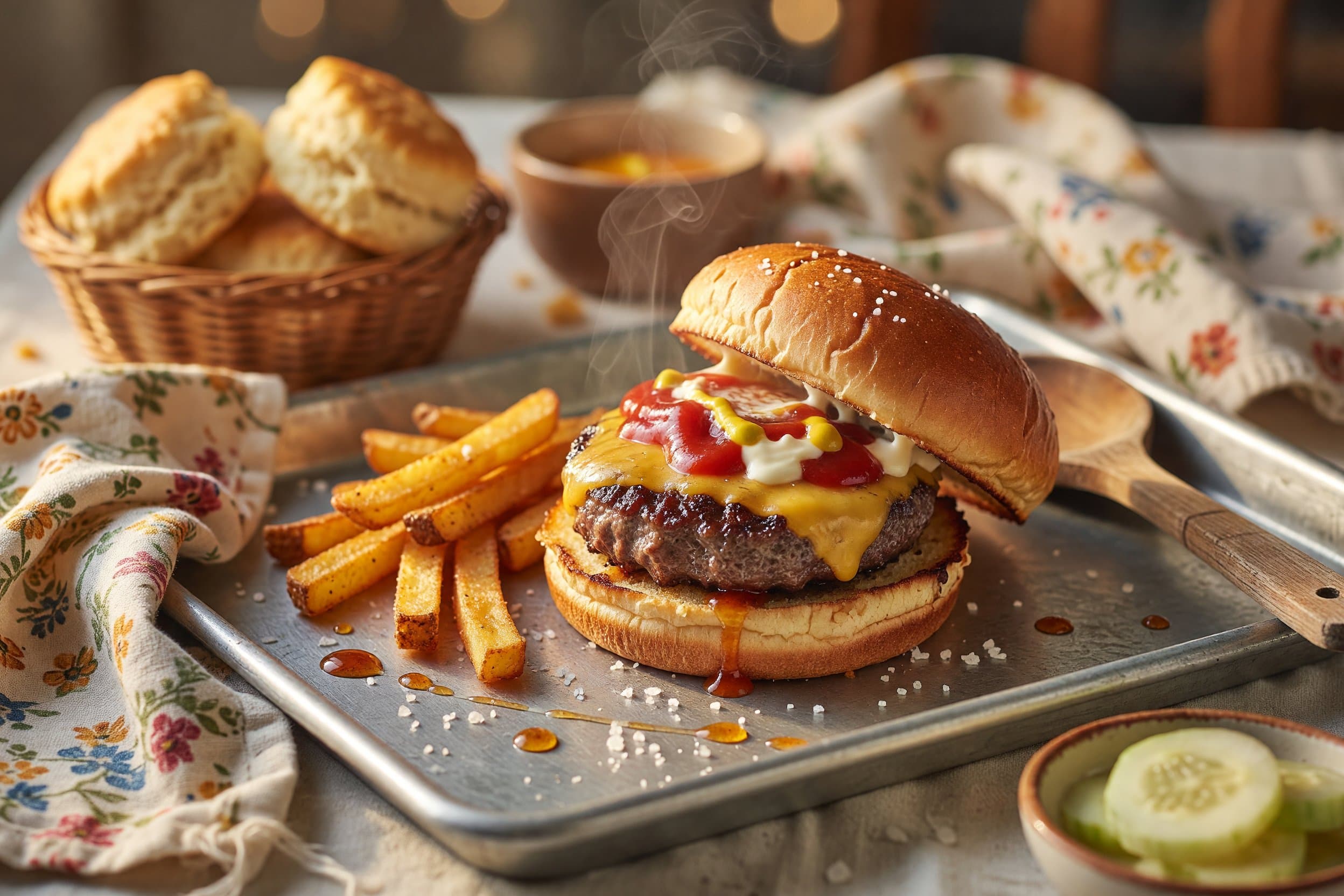
I know it's tempting to treat the condiments like an afterthought — just pile on whatever's in the fridge. But the pickles and yellow mustard on this burger are doing structural work. The beef and cheese are rich and fatty. The brioche is buttery and slightly sweet. Without something sharp to cut through all of that, every bite starts to feel heavy by the third one. The acidity from the pickles and the tang from the mustard reset your palate between bites. They're not garnish. They're balance. Same goes for the red onion — don't skip it or go too thin on the slices. You want a little bite in there.
Butter on the Brioche Is Doing More Than You Think
Toasting the brioche cut-side down in butter isn't just about color — it's the best pairing move in this whole recipe. Brioche already has a natural nutty-sweet quality baked into it. Butter amplifies those same warm, toasty notes and creates a thin fat layer on the surface of the bun that slows down sogginess once the juicy patty goes on top. Tomato and olive oil are another pairing worth paying attention to: both share a fresh, slightly grassy character that makes them taste more vibrant together than either does alone. A small drizzle of olive oil on your tomato slice before it goes on the burger is a quiet upgrade that ketchup alone can't replicate.
An Honest Word on the Nutrition
Let's be straight about what this meal is: it's a satisfying, protein-rich dinner that hits hard on flavor and will keep your family full. Each serving delivers serious protein — more than a full day's worth for most adults — and the russet potatoes bring real fiber and potassium to the table. Where it's lighter is on vegetables and fruit, so if you want a more complete plate, add a simple side salad or some sliced fruit. The sodium is on the higher side thanks to the pickles, cheese, and condiments, so if you're watching that, ease back on the ketchup and go lighter with the pickles. This isn't an everyday meal for everyone, but made with quality ingredients and eaten with people you love, it's exactly what dinner should be sometimes.
Substitutions that still taste like the recipe.
Want to riff on the recipe? These swaps keep the flavor logic intact while giving you room to work with what you have.
- lamb
Shares pyrazine compounds with beef
- pork
Shares pyrazine compounds with beef
- short ribs
Shares maillard compounds with beef
- bread
Shares pyrazine compounds with brioche
- naan
Shares pyrazine compounds with brioche
- focaccia
Shares pyrazine compounds with brioche
- fermented bamboo shoots↓ salty
Shares acid compounds with pickles — less salty
- rhubarb↓ salty
Shares acid compounds with pickles — less salty
- fermented mustard greens
Shares acid compounds with pickles
- mustard
Shares sulfur compounds with yellow mustard
- sauerkraut
Shares acid compounds with yellow mustard
- brined capers↑ salty
Shares acid compounds with yellow mustard — more salty
Common questions
Can I make these burgers on the grill instead of a cast iron?
My fries always come out soggy. What am I doing wrong?
Do I really need to press an indent into the center of the patty?
What internal temperature should I cook the burgers to?
Can I mix and form the patties the night before?
This burger is one of those recipes that sounds simple on paper — and it is — but the details are what make it sing. A hot pan, the right fat ratio in your beef, a buttered bun, and condiments that actually do their job. Cook it for your family on a Friday night. Let the kids help with the toppings. Pour yourself something cold and stand by the stove the way my grandmother stood by hers — present, unhurried, and happy to be feeding the people who matter most. That's what this is all about. Fire up something good today.
The Quarterly
Get the next Quarterly from Dan Cooks
Seasonal recipes, notes, and the issue links worth saving.
Comments