Dan Cooks
Cast Iron Burgers & Crispy Oven Fries — The Backyard Classic Done Right
Ground chuck, a screaming-hot cast iron, and a butter-toasted brioche bun — this is the burger your family will ask for every single weekend. Crispy oven fries included.
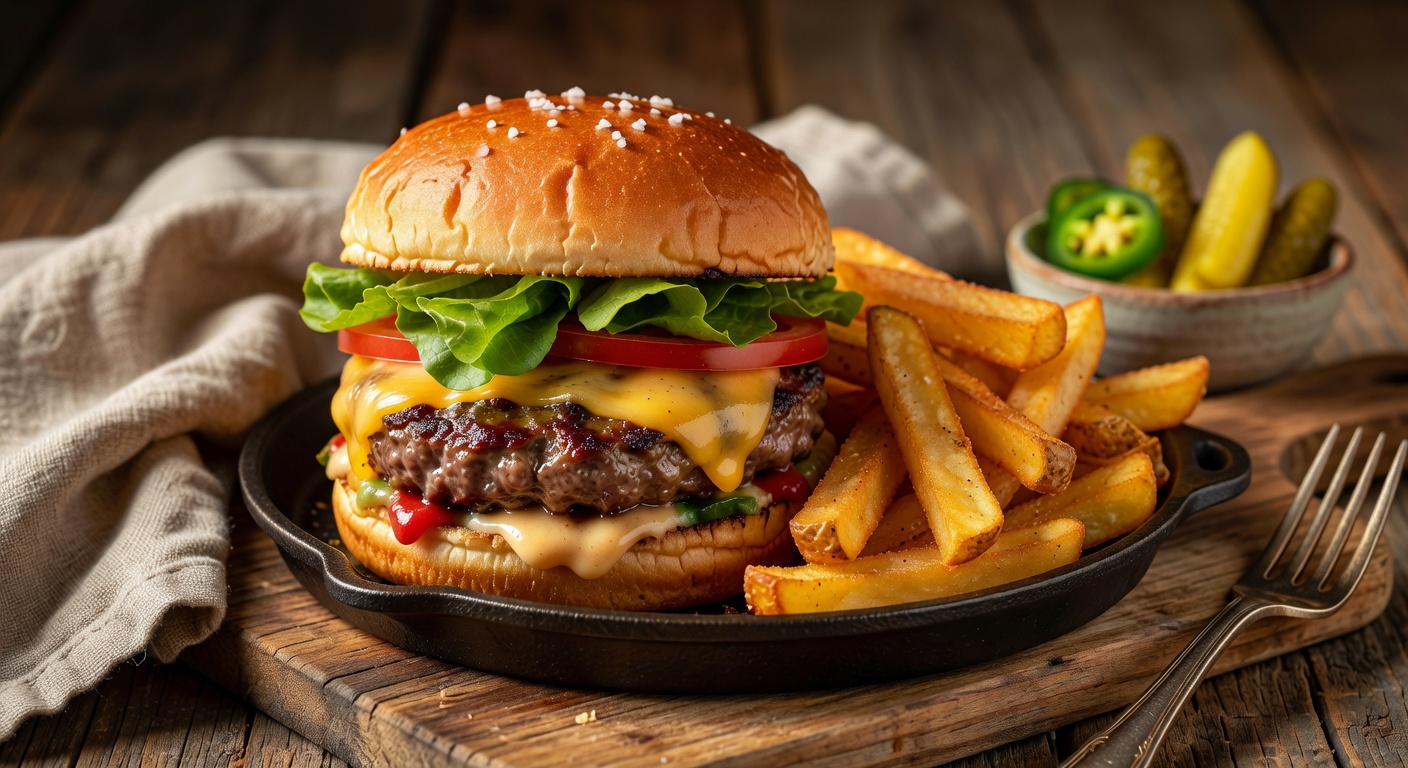
There are meals you cook because you have to, and then there are meals you cook because they mean something. This burger is the second kind. Down here in Tampa, a warm evening, a hot skillet, and a cold sweet tea in hand — that's the whole picture. My kids come running when they smell the cast iron heating up, and my wife already knows to slice the tomato thick. This isn't a restaurant burger trying to be fancy. It's the real thing: 80/20 ground chuck seasoned with soul, seared until a dark crust forms, melted American cheese draped over the top, and a brioche bun toasted in butter until it's golden and fragrant. Oven fries seasoned with smoked paprika and garlic powder ride alongside. Simple ingredients. Deliberate technique. Food that tastes like home.
Why 80/20 Chuck Is Non-Negotiable
The fat in your ground beef is doing real work here. An 80/20 blend — that's 20% fat by weight — gives the patty enough richness to survive the high heat of a cast iron without drying out or shrinking into a hockey puck. Go leaner and you'll feel it in every bite. When you're at the meat counter, look for ground chuck specifically, not just 'ground beef.' Chuck comes from the shoulder, and the fat is marbled through in a way that keeps the patty juicy from the inside out. Same principle applies to the smoked paprika you're putting on those fries — the generic stuff is fine, but if you can find a Spanish pimentón de la Vera, the smoke depth is in a completely different league.
The Cast Iron Sear — What's Actually Happening
A cast iron skillet holds heat differently than a stainless or nonstick pan — it stays ripping hot even when a cold patty hits the surface. That sustained heat is what drives the Maillard reaction: the proteins and natural sugars on the surface of the beef transform into hundreds of flavor compounds, building that dark, savory crust you're after. The key is patience. Put the patty down and don't touch it. If it's sticking, it's not ready to flip — a proper crust will release cleanly on its own after 3 to 4 minutes. One flip, then cheese goes on in the last minute with a lid to trap steam and melt it fast. While the patty rests, those same juices redistribute through the meat so every bite stays moist. Don't skip the rest — even 90 seconds makes a difference.