The Dark Chocolate Cake My Family Asks for Every Celebration
Three tender layers, a frosting that sets up silky and rich, and a handful of chemistry tricks that make it stay moist for days — this is the cake worth lighting the candles for.
 Dan Cooks8 min readPrint this post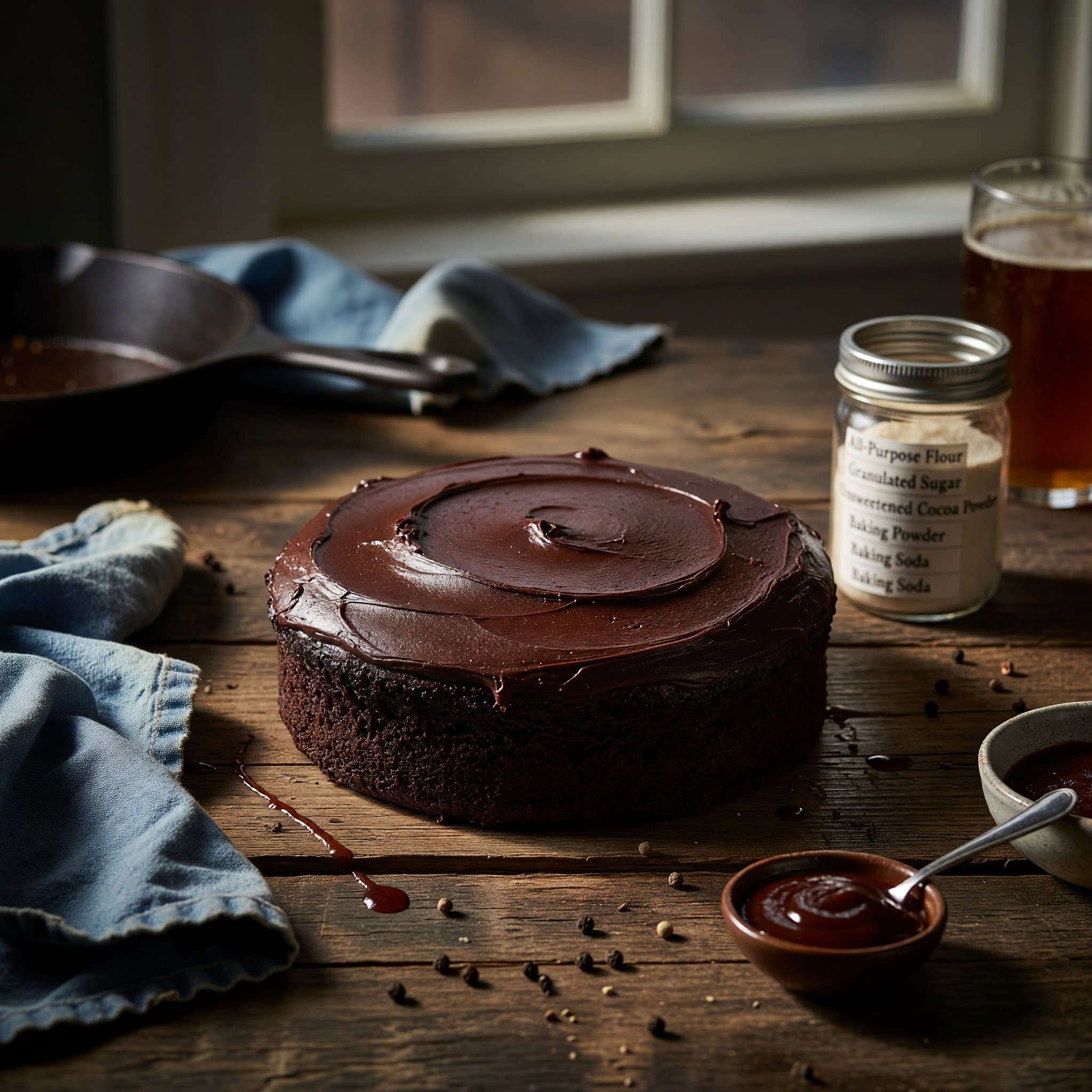
The best meals aren't measured by perfection, but by the memories made around the table.
Some desserts are just desserts. And then there's this cake — the one my family starts asking about the moment a birthday rolls around or a holiday weekend shows up on the calendar. I'm a grill guy at heart, born and raised on smoke and fire, but I'll tell you something: the day I pulled this dark chocolate cake out of the oven for the first time, my wife's eyes lit up the same way they do when the ribs come off the smoker. That's saying something.
This is a from-scratch layer cake with real depth — three tall rounds of tender, almost fudgy chocolate crumb stacked under a frosting so smooth and dark it looks like it came from a bakery. It's not a quick weeknight thing. It's a deliberate, love-it-into-existence kind of bake. But once you understand what's actually happening in the bowl — and I'll walk you through it — you'll see why every step earns its place.
The Story Behind This Cake
My grandmother Hellon had a saying that stuck with me: if you're going to make something sweet, make it worth remembering. She wasn't a baker by trade — she was a woman who cooked by feel and fed people by instinct. But when she did bake, it was all in. No box mixes, no shortcuts, no apologizing for the butter.
This dark chocolate cake carries that same spirit. It's the kind of thing you make when the occasion calls for a real effort — a birthday that deserves more than store-bought, a holiday table that needs a centerpiece, a Sunday when you just want to show your family how much you love them through a slice of something extraordinary. My kids have started requesting it by name. That's the highest honor a recipe can earn in my house.
Why This Cake Works — The Science in Plain English
Here's the thing about a great chocolate cake: it's not magic, it's chemistry — and once you know the rules, you stop guessing and start baking with confidence.
The lift in this cake comes from a one-two punch of baking soda and baking powder. Natural unsweetened cocoa powder is slightly acidic, and that acidity is exactly what baking soda needs to get to work, releasing the gas that makes your layers rise light and tall. Baking powder is the backup — it fires again in the oven's heat for a second boost. Together, they're a system. Mess with one without adjusting the other and you'll end up with a flat, oddly metallic cake.
Then there's the boiling water. It looks alarming when the batter goes thin as chocolate milk, but trust it. The hot water blooms the cocoa, deepening its flavor, and the steam it creates in the oven is part of what keeps the crumb so tender. The vegetable oil does the rest — it coats the flour proteins more thoroughly than butter ever could, keeping gluten development minimal and the texture soft even after the cake cools completely. That's why this cake still tastes great the next day.
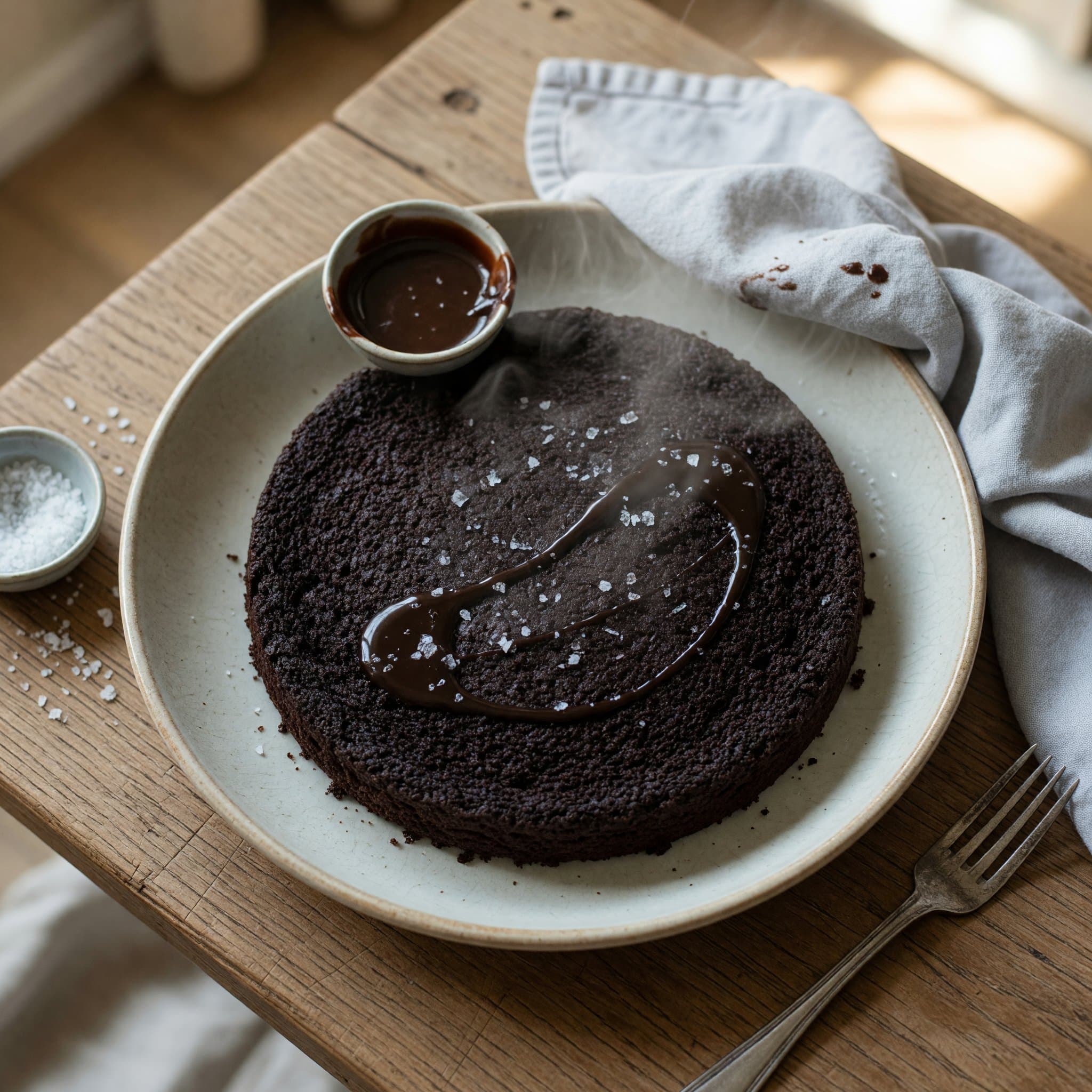
15 minutes, and you’re ready to cook.
About 15 minutes of mise en place makes the actual bake smooth and stress-free. Get your pans lined and your butter softening before anything else.
- Gather EquipmentGather three 9-inch round cake pans, parchment paper, a large mixing bowl, a separate mixing bowl for frosting, a whisk, a spatula or wooden spoon, measuring cups and spoons, a fine-mesh sieve or sifter, a hand mixer or stand mixer, a cooling rack, a cake board or platter, and a toothpick for testing doneness.
- Preheat OvenPreheat the oven to 350°F. While preheating, grease the three 9-inch cake pans with butter or cooking spray. Cut three circles of parchment paper to fit the bottom of each pan and press them into the greased pans. Set the prepared pans aside.
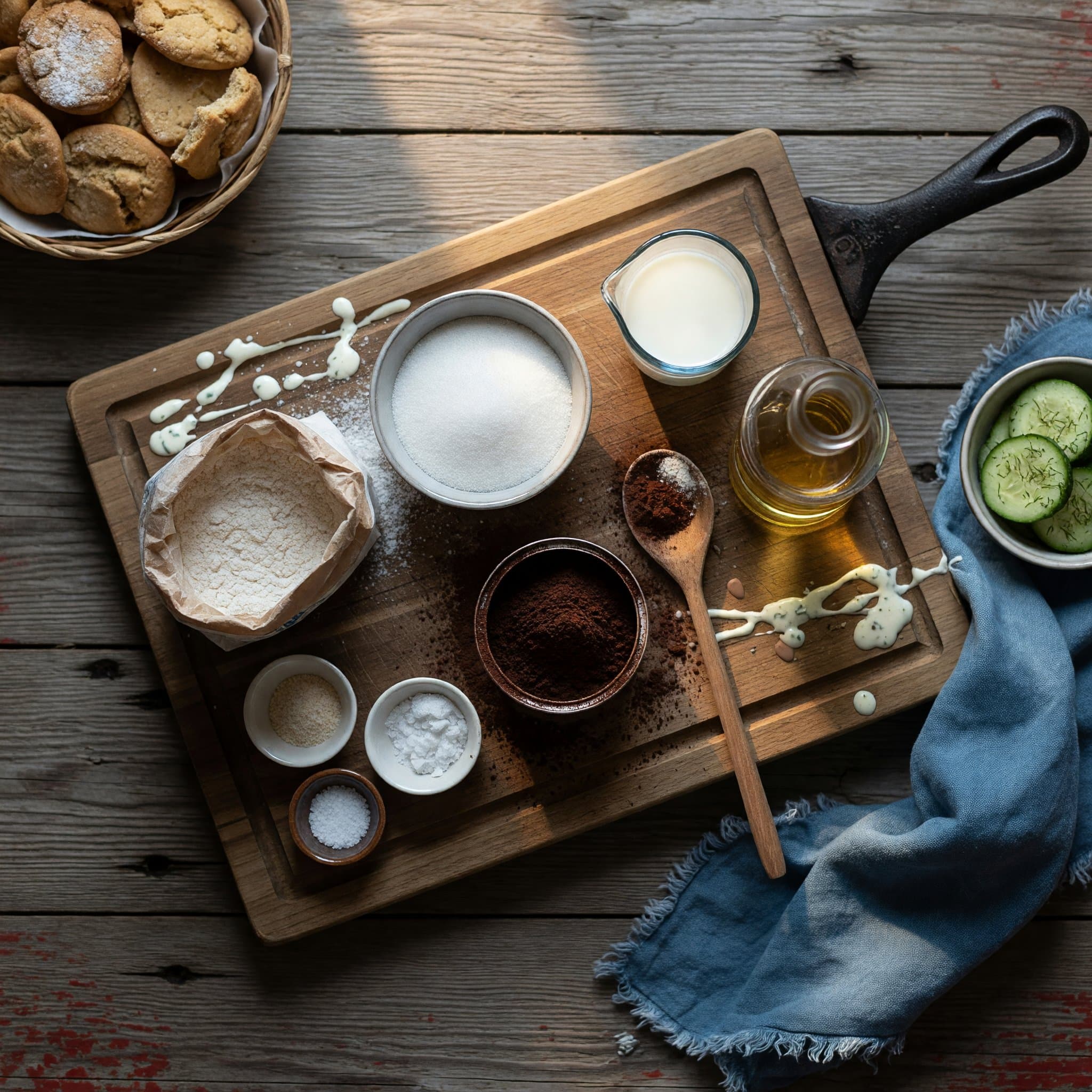
- Measure Dry Ingredients for CakeMeasure out 3 cups all-purpose flour, 3 cups granulated sugar, 1¼ cups unsweetened cocoa powder, 1 tablespoon baking powder, 2¼ teaspoons baking soda, and 1½ teaspoons salt. Place all dry ingredients in a large mixing bowl, ready to whisk together.2 min
- Prepare Wet Ingredients for CakeMeasure out 1½ cups milk, ¾ cup vegetable oil, 1 tablespoon vanilla extract, and place in a separate container. Crack 3 large eggs (at room temperature) into a small bowl and beat lightly with a fork until combined. Keep the eggs separate from the milk mixture until ready to combine.2 min
- Measure WaterMeasure out 1½ cups water and set aside in a heat-safe container. This will be added to the batter after the initial mixing.30s
- Measure Dry Ingredients for FrostingMeasure out 5½ cups powdered sugar and 1¼ cups unsweetened cocoa powder. Whisk these together in a small bowl to combine evenly, breaking up any lumps. Set aside.2 min
- Prepare Frosting Wet IngredientsRemove ¾ cup unsalted butter from the refrigerator to bring to room temperature (it should be soft but not melting). Measure out 1 cup heavy cream and 2 teaspoons vanilla extract into a small container, keeping them together.1 min
- Stage IngredientsArrange all prepped ingredients near the stove and oven in the order they will be used: the large bowl with dry cake ingredients, the container with milk and oil, the beaten eggs, the water in its heat-safe container, the prepared cake pans, and the frosting ingredients (softened butter, powdered sugar/cocoa mixture, and heavy cream/vanilla) in a separate area for later use.
Tools for this recipe.
Nothing exotic here — just good fundamentals. Three 9-inch pans are non-negotiable; a hand mixer makes the frosting effortless.
- 9-inch round cake pan
- parchment paper
- large mixing bowl
- mixing bowl
- whisk
- spatula
- measuring cups
- measuring spoons
- fine-mesh sieve
- hand mixer
- cooling rack
- cake board
- toothpick
The Frosting Is Its Own Reward
A lot of people focus all their attention on the cake layers and treat the frosting like an afterthought. Don't do that here. This dark chocolate frosting is the reason people go back for a second slice.
The key is creaming the butter properly before you add anything else. Beat it on medium speed for a full two minutes until it turns pale and almost fluffy. That step aerates the fat and gives the frosting its light, whipped texture — rush it and you'll end up with something that tastes dense and greasy no matter how much powdered sugar you add. Then alternate the cocoa-sugar mixture with the heavy cream in stages, beating after each addition. The cream loosens the texture and adds a richness that rounds out the deep cocoa flavor. Vanilla goes in last, and it does more than you'd think — it softens the sharper edges of the cocoa and pulls out its natural fruity undertones. Finish with three full minutes on high speed and you'll have a frosting that holds its shape, spreads like a dream, and tastes like the best thing you've ever put on a cake.
One Warning Before You Frost
I'll say it clearly because I've learned this the hard way: do not frost a warm cake. I know you're excited. I know it smells incredible. But if those layers haven't cooled completely — and I mean all the way through, not just cool to the touch on the outside — the butter in your frosting will melt on contact and the whole thing will slide and weep. Give the layers at least an hour on the cooling rack, or pop them in the fridge for 20 minutes once they're at room temperature. A patient baker gets a beautiful cake. A rushed one gets a delicious mess.
Sourcing the Cocoa — It Actually Matters
Not all cocoa powder is the same, and for this recipe the difference is real. You want natural unsweetened cocoa — not Dutch-process — and you want one with a higher fat content if you can find it. Hershey's Special Dark is a great pantry-accessible option that brings genuine depth without costing a fortune. If you go premium, look for a cocoa that lists 22–24% fat on the label; that extra fat helps the cocoa emulsify into the batter more smoothly and gives you a richer, less chalky flavor in both the cake and the frosting.
For the butter in the frosting, go unsalted. Salted butter varies in sodium content by brand, and since this frosting relies on a precise balance of sweet, bitter, and just enough salt to keep things interesting, you want to be in control of that variable yourself.
Substitutions that still taste like the recipe.
Need to work with what's in the pantry? Here are the closest swaps for the key players in this cake and frosting.
- fenugreek
Shares phenolic compounds with unsweetened cocoa powder
- valerian root
Shares phenolic compounds with unsweetened cocoa powder
- cacao powder
Shares phenolic compounds with unsweetened cocoa powder
- cottage cheese
Shares lactone compounds with milk
- buttermilk↑ sour
Shares lactone compounds with milk — more sour
- creme fraiche↑ fatty
Shares lactone compounds with milk — more fatty
- clotted cream
Shares lactone compounds with butter
- mascarpone
Shares lactone compounds with butter
- cream
Shares lactone compounds with butter
- cream
Shares lactone compounds with heavy cream
- half-and-half
Shares lactone compounds with heavy cream
- mascarpone
Shares lactone compounds with heavy cream
- vanilla
Shares phenolic compounds with vanilla extract
- rose water
Shares aldehyde compounds with vanilla extract
- almond extract
Shares aldehyde compounds with vanilla extract
Make It Your Own — Variations Worth Trying
Once you've made this cake as written and know how it behaves, there's real room to play. A teaspoon of instant espresso powder stirred into the dry ingredients won't make the cake taste like coffee — it deepens the chocolate flavor in a way that's hard to put your finger on but impossible to miss. For a Southern twist, swap the milk for full-fat buttermilk; it adds a gentle tang that cuts through the sweetness and makes the crumb even more tender. If you want to lean into the dark chocolate flavor even harder, try adding a half cup of hot brewed coffee in place of some of the boiling water. And if you're serving this at a backyard cookout — which I absolutely recommend — a scoop of good vanilla ice cream alongside a warm slice is about as close to perfect as dessert gets.
Common questions
Can I make this cake ahead of time?
Why is my batter so thin after adding the boiling water?
Can I use Dutch-process cocoa instead of natural?
My frosting is too thick / too thin — how do I fix it?
Can I make this as a two-layer cake instead of three?
This is the cake I make when I want to tell my family I love them without saying a word. Three layers, a frosting that takes five minutes of patience to get right, and the kind of deep chocolate flavor that makes the room go quiet when the first slice hits the plate. It's not an everyday bake — it's a special-occasion cake that earns every minute you put into it.
Season boldly, trust the process, and feed the ones you love. That's the Southern way, whether you're standing at the grill or pulling something beautiful out of the oven.
Fire up the grill with Dan — and save me a slice.
The Quarterly
Get the next Quarterly from Dan Cooks
Seasonal recipes, notes, and the issue links worth saving.
Comments