Dan Cooks
The Dark Chocolate Cake My Family Asks for Every Celebration
Three tender layers, a frosting that sets up silky and rich, and a handful of chemistry tricks that make it stay moist for days — this is the cake worth lighting the candles for.
Some desserts are just desserts. And then there's this cake — the one my family starts asking about the moment a birthday rolls around or a holiday weekend shows up on the calendar. I'm a grill guy at heart, born and raised on smoke and fire, but I'll tell you something: the day I pulled this dark chocolate cake out of the oven for the first time, my wife's eyes lit up the same way they do when the ribs come off the smoker. That's saying something.
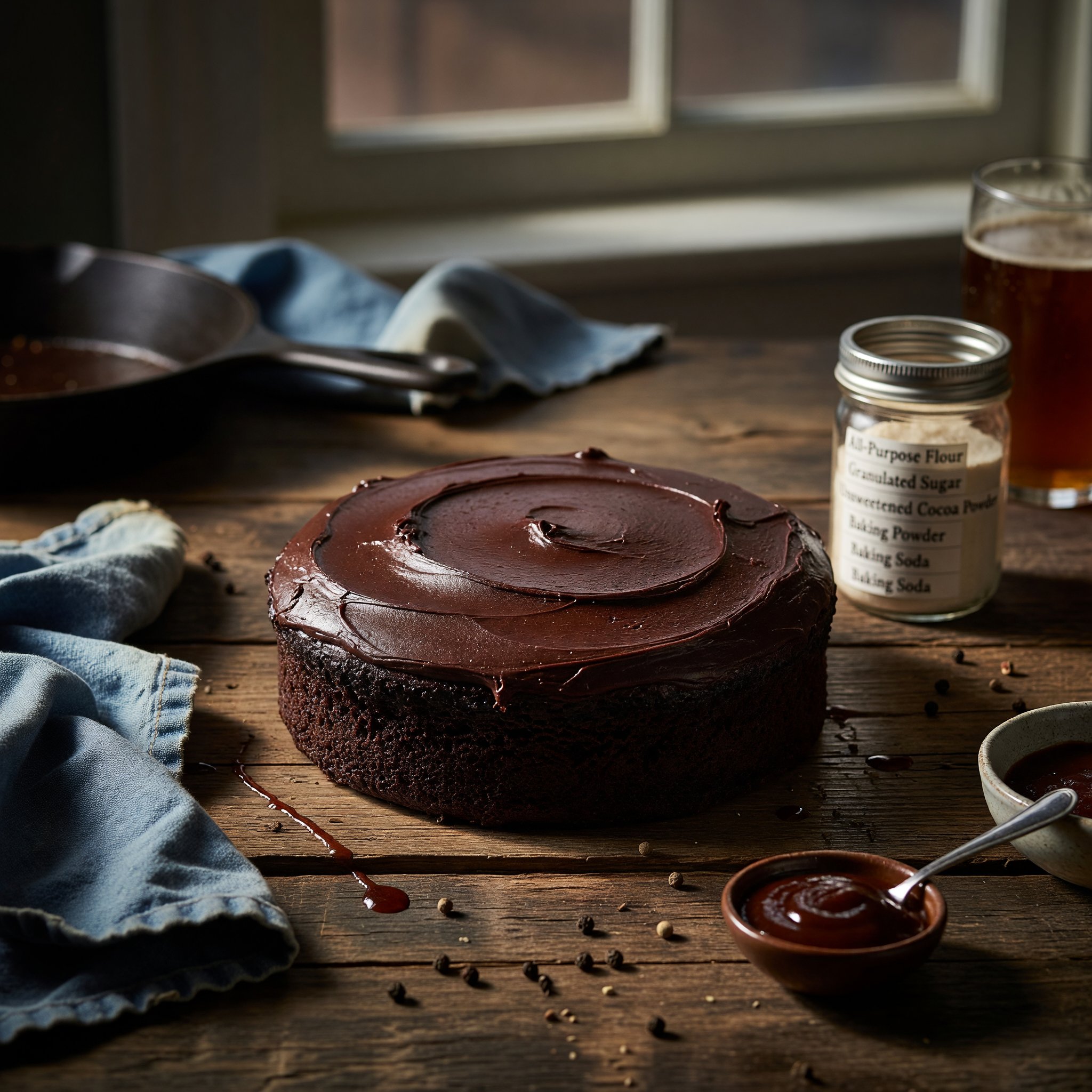
This is a from-scratch layer cake with real depth — three tall rounds of tender, almost fudgy chocolate crumb stacked under a frosting so smooth and dark it looks like it came from a bakery. It's not a quick weeknight thing. It's a deliberate, love-it-into-existence kind of bake. But once you understand what's actually happening in the bowl — and I'll walk you through it — you'll see why every step earns its place.
The Story Behind This Cake
My grandmother Hellon had a saying that stuck with me: if you're going to make something sweet, make it worth remembering. She wasn't a baker by trade — she was a woman who cooked by feel and fed people by instinct. But when she did bake, it was all in. No box mixes, no shortcuts, no apologizing for the butter.
This dark chocolate cake carries that same spirit. It's the kind of thing you make when the occasion calls for a real effort — a birthday that deserves more than store-bought, a holiday table that needs a centerpiece, a Sunday when you just want to show your family how much you love them through a slice of something extraordinary. My kids have started requesting it by name. That's the highest honor a recipe can earn in my house.
Why This Cake Works — The Science in Plain English
Here's the thing about a great chocolate cake: it's not magic, it's chemistry — and once you know the rules, you stop guessing and start baking with confidence.
The lift in this cake comes from a one-two punch of baking soda and baking powder. Natural unsweetened cocoa powder is slightly acidic, and that acidity is exactly what baking soda needs to get to work, releasing the gas that makes your layers rise light and tall. Baking powder is the backup — it fires again in the oven's heat for a second boost. Together, they're a system. Mess with one without adjusting the other and you'll end up with a flat, oddly metallic cake.
Then there's the boiling water. It looks alarming when the batter goes thin as chocolate milk, but trust it. The hot water blooms the cocoa, deepening its flavor, and the steam it creates in the oven is part of what keeps the crumb so tender. The vegetable oil does the rest — it coats the flour proteins more thoroughly than butter ever could, keeping gluten development minimal and the texture soft even after the cake cools completely. That's why this cake still tastes great the next day.