Pasta With Pancetta & Peas: The 40-Minute Italian Staple You'll Make on Repeat
Crispy pancetta, sweet peas, a silky cream sauce, and a blizzard of Parmesan — this Roman-inspired weeknight pasta is big flavor with almost zero effort.
 Dowell Cooks5 min readPrint this post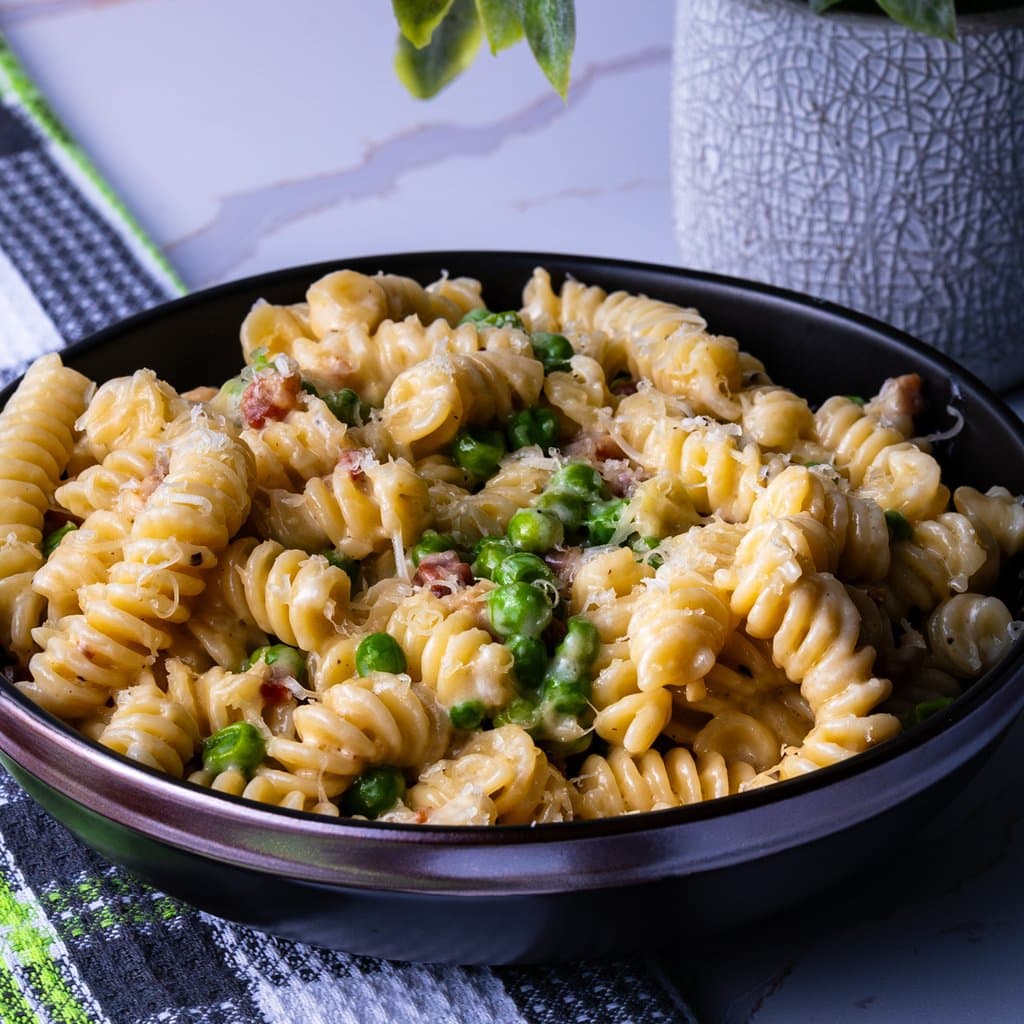
Simple ingredients, delicious meals — that's the whole game.
Hey, welcome back to Dowell Cooks! If you're looking for a dinner that feels fancy but comes together on a Tuesday night without breaking a sweat, this is it. Pasta with pancetta and peas is one of those recipes that lives permanently in my rotation — it's the kind of dish where you look at the ingredient list, think "that's it?", and then take a bite and wonder how six simple things can taste this good. No complicated steps, no obscure ingredients, just real food that your whole family will actually want to eat. Let's get into it.
The Secret Is in the Pancetta
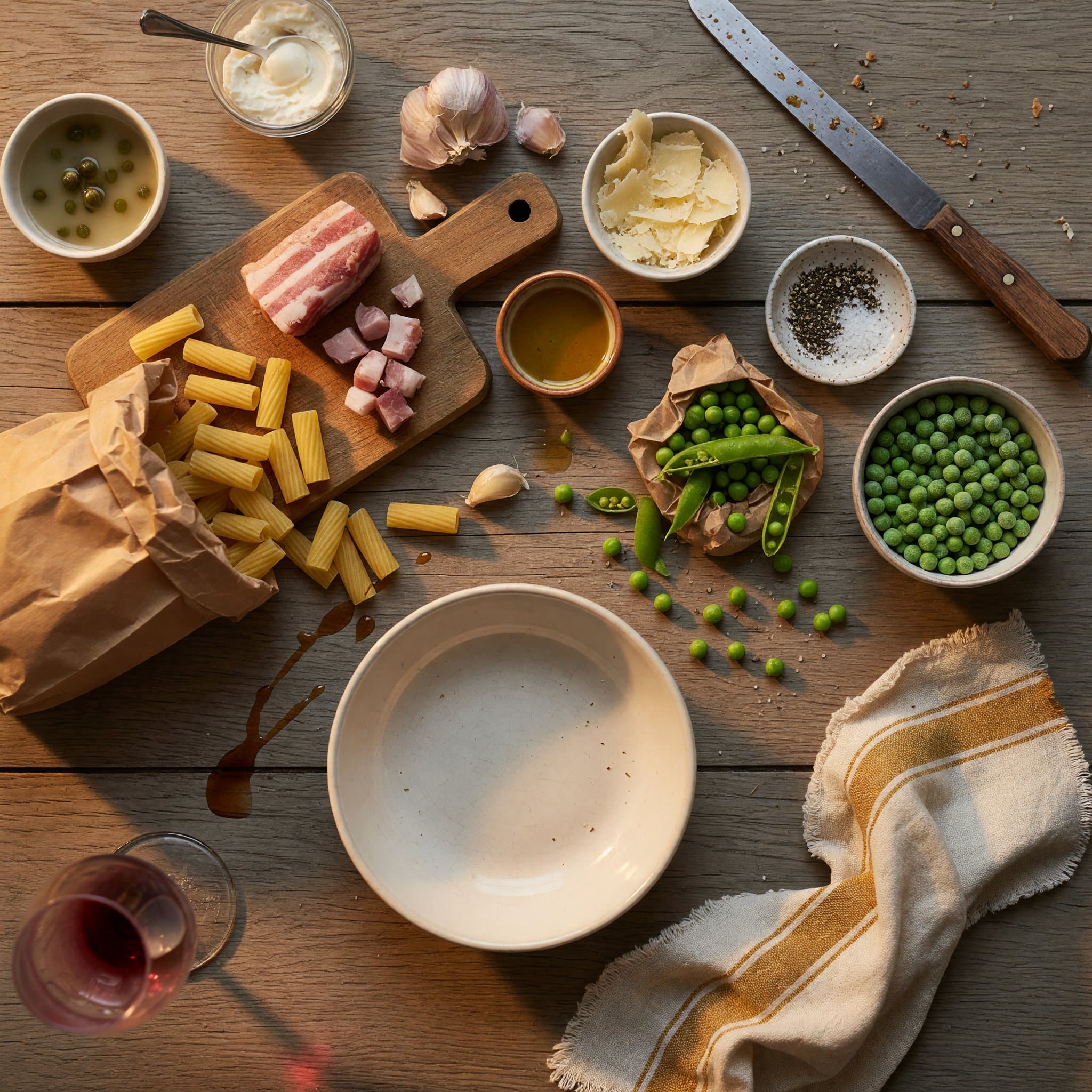
Here's the one thing that separates a good version of this dish from a great one: patience with the pancetta. You want to render it low and slow — medium-low heat, giving it 8 to 10 minutes to release its fat and develop those gorgeous crispy, browned edges. That browned fat left in the pan is pure gold. It's your flavor base, and everything else — the garlic, the cream, the pasta — builds right on top of it. Rush this step and you lose the foundation the whole sauce is standing on. Once the pancetta is properly crispy, add your garlic straight into that fat and let it sweat until soft and fragrant, about 60 to 90 seconds. You're not looking for color on the garlic — just softness. Then the cream goes in, a light simmer, and you're almost done.
Don't Skip the Pasta Water
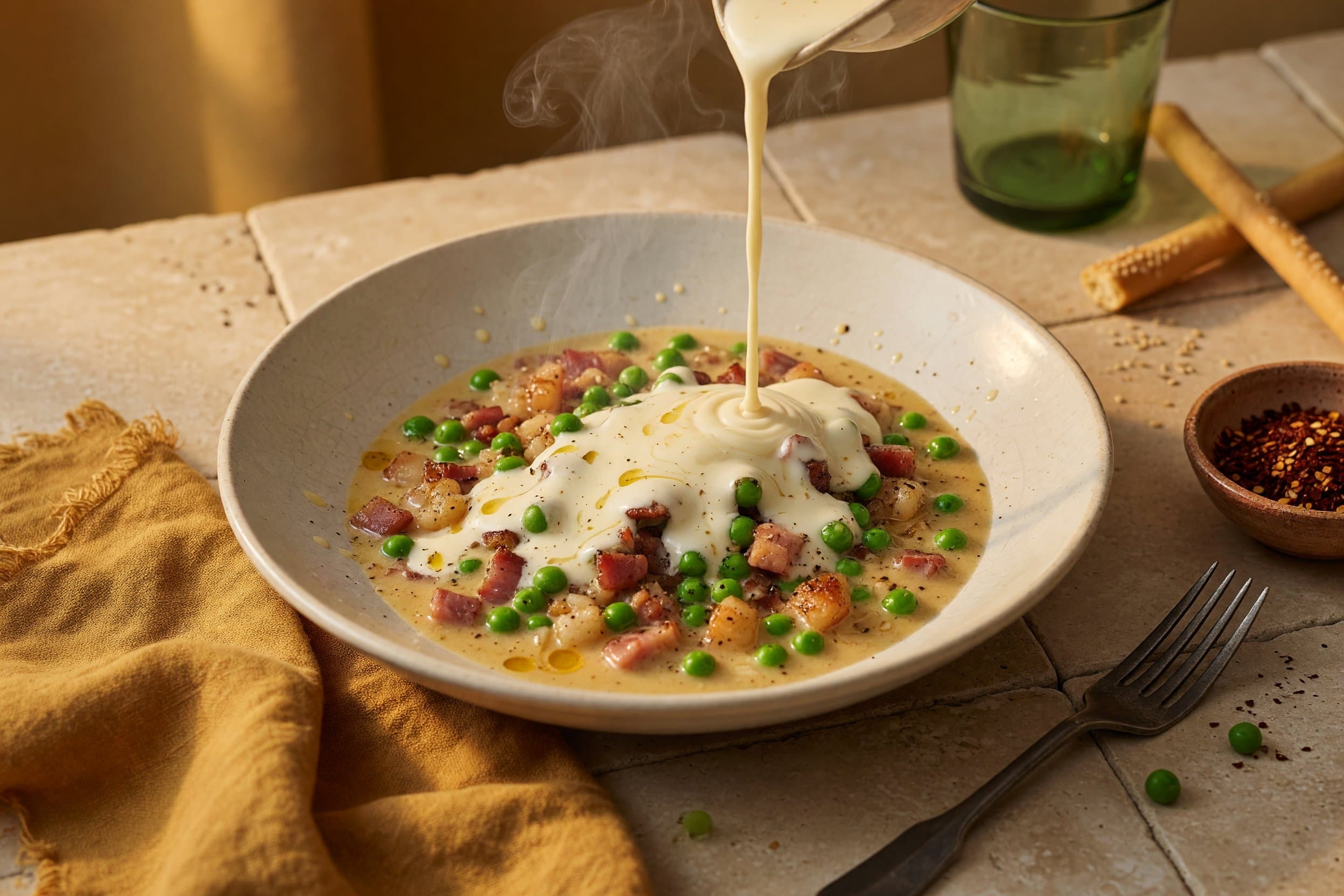
Before you drain your pasta, scoop out at least a quarter cup of that starchy cooking water and set it aside. It looks like nothing, but it's actually the secret weapon for getting a silky, restaurant-style sauce. When you finish the pasta in the skillet with the cream and Parmesan, a splash of that pasta water helps everything emulsify — the fat, the starch, the cheese — into one cohesive, glossy sauce that clings to every noodle instead of pooling at the bottom of the bowl.
15 minutes, and you’re ready to cook.
15 minutes of mise en place, 25 minutes of cooking. Here's how to set yourself up so everything flows smoothly.
- Gather EquipmentGather a large pot, a large skillet, a cutting board, a chef's knife, a box grater or microplane, a measuring cup, measuring spoons, a small bowl, and a wooden spoon or spatula.
- Prepare the GarlicPeel 3 cloves of garlic and mince finely. Place in a small prep bowl.1 min
- Prepare the PancettaCut 6 oz pancetta into small dice or thin strips (about 1/4 inch). Place in a prep bowl.2 min
- Grate the Parmesan CheeseGrate 1/2 cup Parmesan cheese on the fine side of a box grater or using a microplane. Place in a small prep bowl.2 min
- Measure the Peas and CreamMeasure out 3/4 cup peas and 3/4 cup heavy cream into separate small bowls or measuring cups.30s
- Stage IngredientsArrange all prepped ingredients near the stove in cooking order: olive oil and pancetta first, then minced garlic and peas, followed by heavy cream, grated Parmesan, and pasta (to be cooked). Have a measuring cup ready for reserving pasta water.
Brighten It Up
This dish leans rich — creamy, salty, savory — which is exactly what you want on a cozy weeknight. But if you want to lift it a little, a squeeze of fresh lemon over the finished plate does wonders. It cuts right through the fat and makes all the other flavors pop without changing the character of the dish. A splash of dry white wine when you deglaze the fond after the pancetta is another great move. Either way, a little acid goes a long way here.
Sourcing Makes a Difference
For a dish this simple, ingredient quality really does show up in the final bowl. The biggest upgrade you can make: buy a block of Parmigiano-Reggiano and grate it yourself. Pre-grated cheese has anti-caking powder mixed in, which stops it from melting cleanly — you'll end up with a grainy sauce instead of a smooth one. A microplane or the fine side of a box grater takes about two minutes and makes a noticeable difference. For the pancetta, look for the flat, unrolled style (pancetta tesa) if your store carries it — it renders more evenly than the rolled kind and gives you better coverage in the pan.
Two sourcing swaps that actually move the needle on this dish.
Use a block of Parmigiano-Reggiano and grate it yourself — pre-grated cheese has anti-caking agents that prevent clean melting
What to Serve Alongside
This pasta is rich and filling on its own, but it plays really well with a simple green salad dressed with lemon vinaigrette — that acidity does the same job as the lemon squeeze trick above, balancing out the cream and fat. A crusty piece of bread for sauce-mopping is basically mandatory. If you want to round out the plate from a nutrition standpoint, a handful of fresh fruit or something bright and citrusy on the side fills in the gaps this dish leaves open. Nothing complicated — just something fresh to balance all that savory richness.
Substitutions that still taste like the recipe.
Need to swap something out? Here are the best substitutes that keep the dish tasting like itself.
- prosciutto
Shares pyrazine compounds with pancetta
- sausage
Shares aldehyde compounds with pancetta
- breakfast sausage
Shares aldehyde compounds with pancetta
- egg noodle
Shares pyrazine compounds with pasta
- white pasta
Shares pyrazine compounds with pasta
- soba noodle
Shares pyrazine compounds with pasta
- cream
Shares lactone compounds with heavy cream
- butter↑ fatty
Shares lactone compounds with heavy cream — more fatty
- coconut milk↑ sweet
Shares lactone compounds with heavy cream — more sweet
- pecorino cheese
Shares lactone compounds with parmesan cheese
- gruyere cheese
Shares lactone compounds with parmesan cheese
- parmesan↑ savory
Shares lactone compounds with parmesan cheese — more savory
- corn
Shares aldehyde compounds with peas
- potato↓ sweet
Shares pyrazine compounds with peas — less sweet
- bell pepper
Shares pyrazine compounds with peas
Common questions
Can I use bacon instead of pancetta?
Can I use frozen peas?
What pasta shape works best?
How do I store and reheat leftovers?
Can I make this lighter?
That's it — easy, fun, and absolutely delicious, just the way dinner should be. This pasta with pancetta and peas is one of those recipes that earns a permanent spot in your weeknight lineup. It's fast, it's satisfying, and it tastes like you put in way more effort than you actually did. If you give it a try, I'd love to hear how it goes! Browse all the recipes on Dowell Cooks for more easy, flavor-packed meals the whole family will love.
The Quarterly
Get the next Quarterly from Dowell Cooks
Seasonal recipes, notes, and the issue links worth saving.
Comments