The Panera White Cheddar Mac You Can Make at Home in 35 Minutes
A proper béchamel-based mac & cheese with sharp white cheddar, a sneaky mustard trick, and three ways to serve it — stovetop, Crock Pot, or baked with a cracker crust.
 Dowell Cooks6 min readPrint this post
The mustard powder isn't there for flavor — it's there to make the cheddar taste more like itself. Don't skip it.
If you've ever grabbed a bowl of mac & cheese from Panera and thought "I wish I could make this at home," good news — you absolutely can, and it's easier than you think. This recipe nails that super creamy, velvety white cheddar sauce that clings to every shell. We're talking a real from-scratch béchamel sauce (don't let that word scare you — it's just butter, flour, and dairy), loaded up with sharp white cheddar and a couple of secret-weapon seasonings. Weeknight dinner, done. The whole thing is on the table in 35 minutes, and if you want to go the baked route with a crushed Ritz cracker topping? Even better.
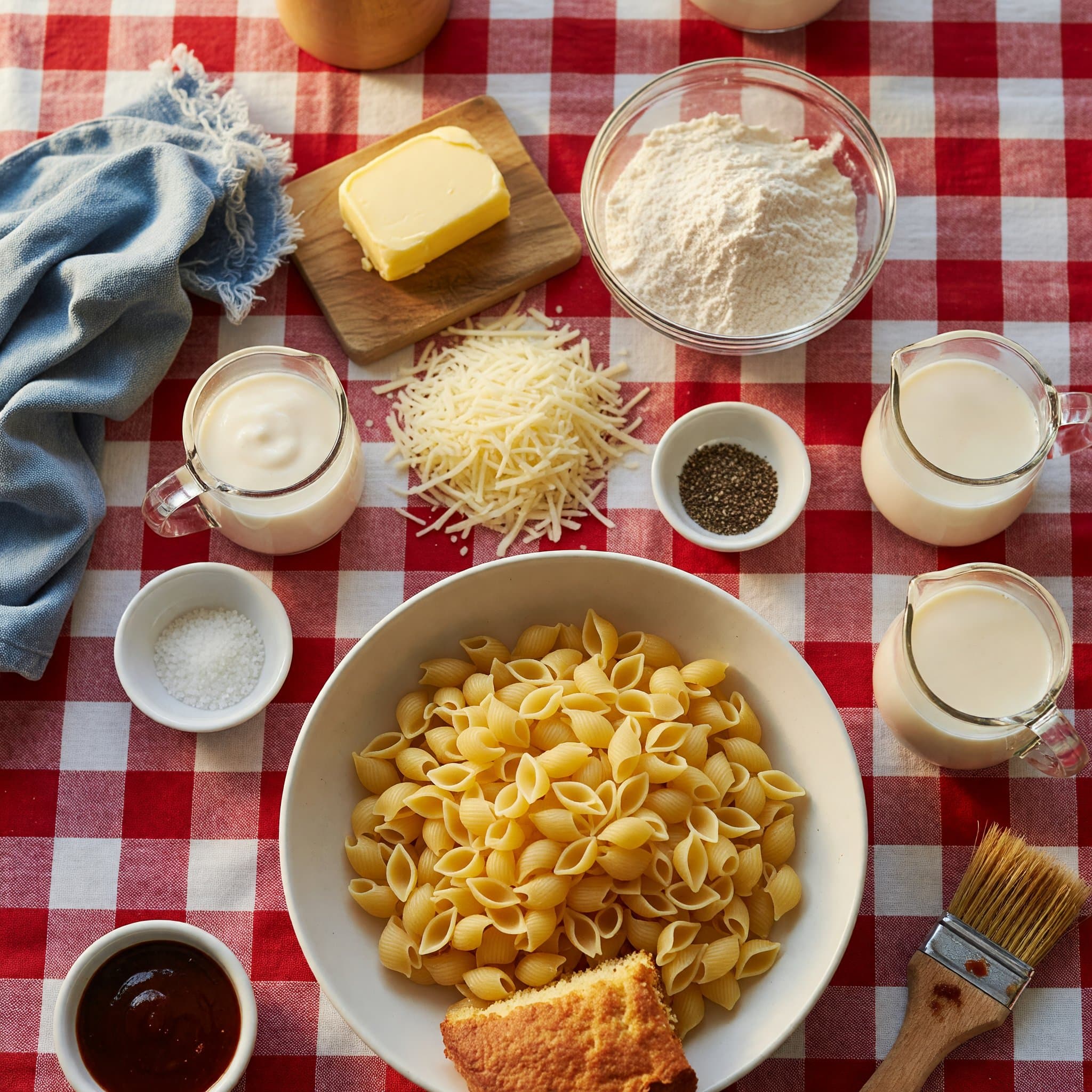
Why Shells? Why Sharp White Cheddar?
These two ingredient choices aren't random. Pasta shells are shaped like little cups — they literally scoop up the sauce with every bite, so you get a better sauce-to-pasta ratio than you'd get with a flat noodle like linguine. And for the cheese, go sharp or extra-sharp white cheddar. Mild cheddar just doesn't have the punch to stand up to all that cream and butter — the sauce ends up tasting bland. Cracker Barrel Vermont Sharp White Cheddar is the move here, and shredding it yourself from the block makes a real difference versus pre-shredded (which has anti-caking coatings that can make your sauce grainy).
The Roux: Don't Rush It
Here's where most people go wrong with homemade mac & cheese — they don't cook the roux long enough. Melt your butter, whisk in the flour, and then keep cooking it for a full 90 seconds over medium heat. You're looking for it to turn a light golden color and start smelling a little nutty, almost biscuity. If you pull it too early, the sauce will taste like raw flour and it'll thin out as it sits because the starch hasn't done its job yet. Once you hit that sweet spot, slowly stream in your warm cream and milk while whisking constantly — no dumping it all in at once — and you'll have a smooth, lump-free sauce in about 3 minutes.
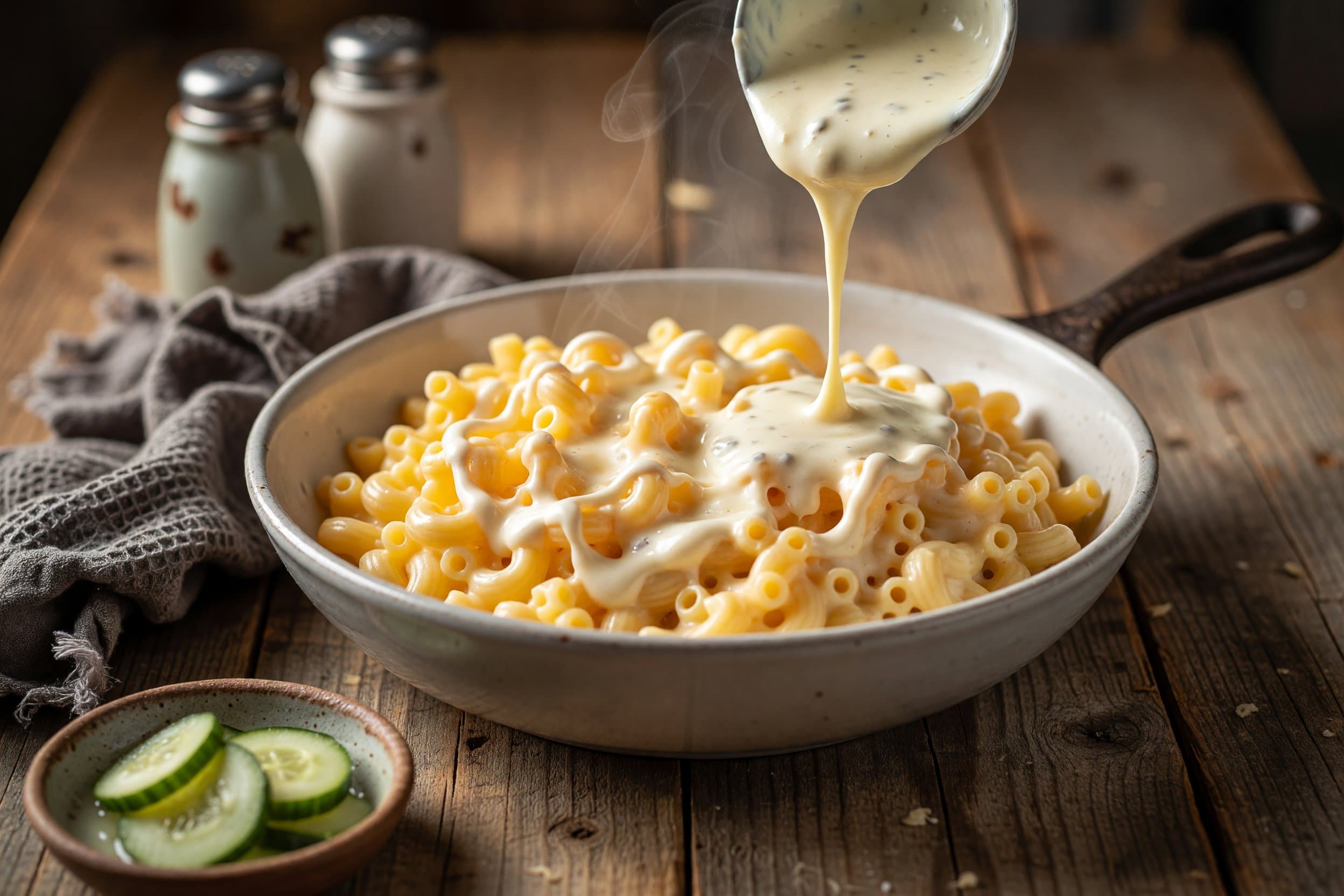
The Cheese: Add It Off the Heat
This is the step that separates a silky mac from a greasy, broken one. Once your sauce has thickened, pull the pot off the burner and let it rest for about 30 seconds. Then add your shredded cheddar in two additions, stirring as you go. If the sauce is still at a rolling simmer when the cheese hits it, the proteins seize up and the fat separates — you end up with a grainy, oily mess that no amount of stirring will fix. Also: make sure your shredded cheese is close to room temperature before it goes in. Cold cheese straight from the fridge is another fast track to a broken sauce.
The Secret Seasonings
Mustard powder and hot sauce — these are the two ingredients that make people say "what IS that?" when they taste this mac. The mustard powder isn't adding a mustard flavor at this quantity; it's actually amplifying the sharpness of the cheddar, making the whole sauce taste more cheesy and complex. The hot sauce (just a quarter teaspoon) brings a tiny hit of acid that cuts through all that butter and cream so the sauce doesn't feel heavy after a few bites. You can skip the hot sauce if you're feeding little ones, but I'd really encourage you to keep the mustard powder — it's doing serious work behind the scenes.
15 minutes, and you’re ready to cook.
Set yourself up right before you start the sauce — once the roux goes in the pan, things move fast.
- Gather EquipmentGather a large pot for boiling pasta, a saucepan for the cheese sauce, a colander for draining pasta, a whisk, a box grater or microplane, a measuring cup, measuring spoons, a cutting board, a large mixing bowl or pot for combining pasta and sauce, and a 9 x 13 inch casserole dish (if baking).
- Preheat OvenPreheat the oven to 325°F if you plan to bake the mac and cheese. If serving directly from the stovetop, skip this step.
- Shred the White Cheddar CheeseUsing a box grater or microplane, shred the White Cheddar cheese to yield 3 cups. Place the shredded cheese in a bowl and let it sit at room temperature — it should NOT be cold when added to the sauce.
- Measure Spices and Hot SauceMeasure out ¾ teaspoon salt, ½ teaspoon black pepper, 1 teaspoon mustard powder, and ¼ teaspoon hot sauce. Place all seasonings in a small bowl or ramekin for easy access.
- Measure Butter, Flour, Cream, and MilkMeasure out ¼ cup butter, ¼ cup all-purpose flour, 1 cup heavy cream, and 2 cups whole milk. Place each in a separate small bowl or measuring cup for easy access during sauce-making.
- Stage IngredientsArrange all prepped ingredients near the stove in the order they will be used: butter and flour together, then the cream and milk together, then the spice bowl, then the room-temperature shredded cheese. Have the pasta shells and colander nearby.
Substitutions that still taste like the recipe.
Need to swap something out? Here are the best alternatives that'll keep the sauce tasting great.
- rigatoni pasta
Shares maillard compounds with pasta shells
- rigatoni
Shares maillard compounds with pasta shells
- penne
Shares maillard compounds with pasta shells
- pecorino cheese
Shares ester compounds with cheddar cheese
- gruyere cheese
Shares ester compounds with cheddar cheese
- parmesan cheese
Shares ester compounds with cheddar cheese
- cream
Shares lactone compounds with heavy cream
- half-and-half
Shares lactone compounds with heavy cream
- mascarpone
Shares lactone compounds with heavy cream
- half and half
Shares lactone compounds with whole milk
- low-fat milk↓ fatty
Shares lactone compounds with whole milk — less fatty
- whipped cream↑ fatty
Shares lactone compounds with whole milk — more fatty
- brown mustard seeds
Shares sulfur compounds with mustard powder
- ground ginger
Shares phenolic compounds with mustard powder
- chinese five spice
Shares phenolic compounds with mustard powder
Tools for this recipe.
Nothing fancy needed here — just a few kitchen basics.
- large pot
- saucepan
- colander
- whisk
- box grater
- measuring cups
- measuring spoons
- cutting board
- mixing bowl
- baking dish
Want to Bake It?
The stovetop version is great on its own, but the baked version is next level. Use only 3/4 lb of pasta (it'll keep absorbing sauce in the oven), boil it a minute less than al dente, then transfer everything to a greased 9x13 casserole dish. Top with a cup of crushed Ritz crackers for that buttery, crunchy crust and bake at 325°F for 15 minutes. Let it rest 5 minutes before serving — it firms up just enough to scoop cleanly. This is the version I'd make for a crowd or when I want something a little more special on a Friday night.
Common questions
Can I make this ahead of time?
Can I use pre-shredded cheese to save time?
My sauce got too thick — how do I fix it?
Can I make this in a Crock Pot?
Is the hot sauce going to make it spicy?
This is one of those recipes that looks impressive but is genuinely simple — and that's exactly the kind of cooking I love. Once you've made this béchamel a couple of times, you'll have it memorized, and then you can riff on it however you like. Stir in some crispy bacon. Add a handful of broccoli. Go wild with the cracker topping. The base is solid and it's yours to play with. If you make it, I'd love to hear how it turned out — drop a comment and let me know if you went stovetop or baked! 🍝
The Quarterly
Get the next Quarterly from Dowell Cooks
Seasonal recipes, notes, and the issue links worth saving.
Comments