One-Pot Garlic Parmesan Pasta That's Ready in 25 Minutes
Creamy, garlicky, and made in a single pot — this weeknight pasta cooks right in the broth for a sauce that practically builds itself.
 Dowell Cooks6 min readPrint this post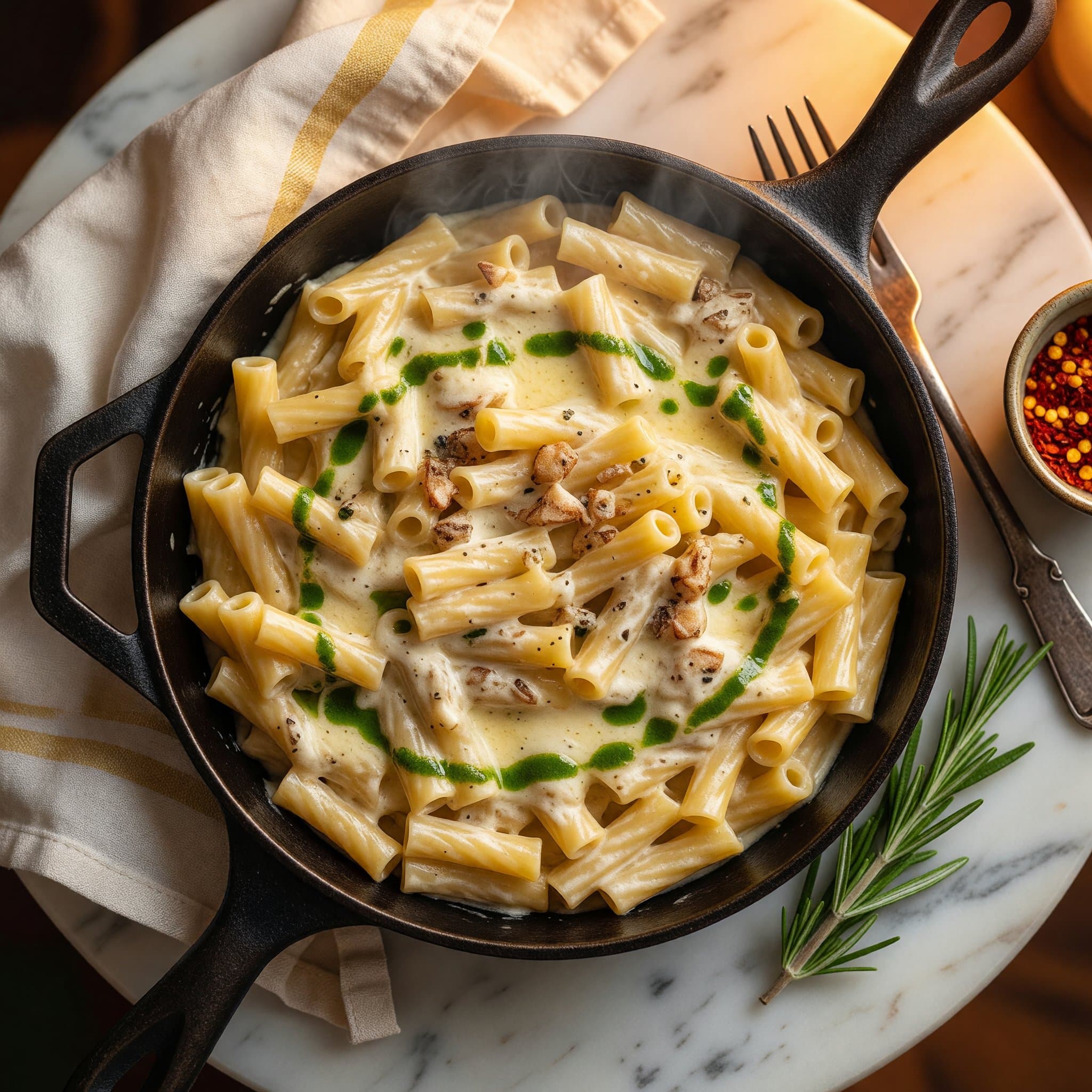
Simple ingredients, delicious meals — that's the whole game.
Welcome to the kind of dinner that makes a Tuesday feel like a win. This one-pot garlic Parmesan pasta is exactly what it sounds like — cozy, creamy, garlicky, and done in about 25 minutes with barely any cleanup. No draining a giant pot of water, no juggling three pans. Just one pot, a handful of pantry staples, and a sauce that comes together like magic. It's the kind of recipe you'll make once and then add to permanent rotation. Perfect for a weeknight dinner for two when you want something that tastes like you actually tried — without actually trying that hard.
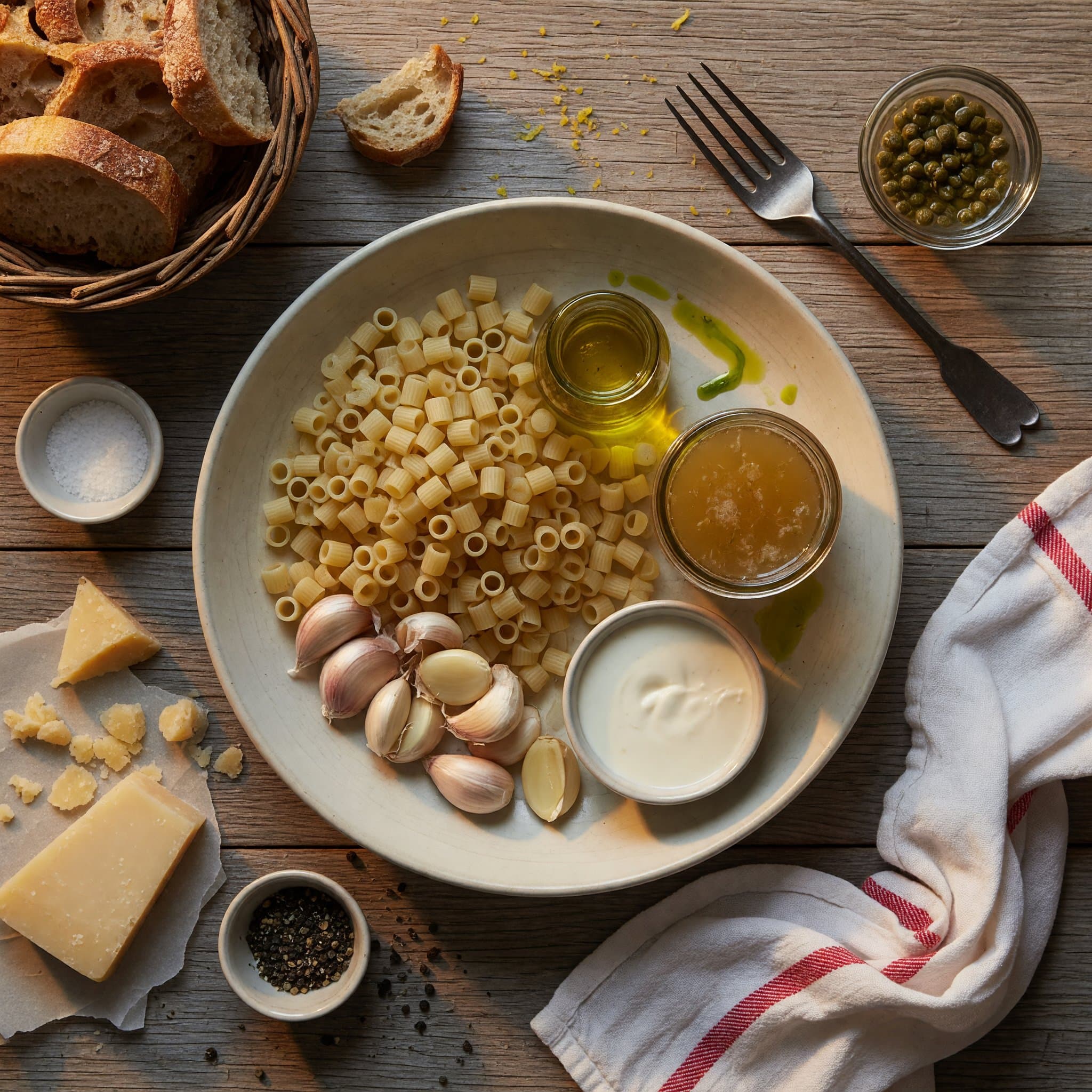
15 minutes, and you’re ready to cook.
Mise en place takes about 15 minutes — mostly just mincing garlic and grating Parmesan. Stage everything near the stove before you start.
- Gather EquipmentGather a large pot (at least 3-quart capacity), a wooden spoon or pasta fork for stirring, a cutting board, a chef's knife, a box grater or microplane, measuring cups and spoons, a small bowl for minced garlic, and a prep container for the Parmesan cheese.
- Prepare the GarlicPeel 3 cloves of garlic and mince finely until you have about 1 tablespoon of minced garlic. Place in a small prep bowl.2 min
- Measure the Ditalini PastaMeasure out 1½ cups of ditalini pasta and place in a prep container or small bowl.30s
- Measure the Chicken BrothMeasure out 2½ cups of chicken broth and place in a measuring cup or small bowl.30s
- Measure SpicesMeasure out 1 teaspoon salt, 1 teaspoon black pepper, and ½ teaspoon red pepper flakes. Combine all three spices in a small bowl.45s
- Measure the Heavy CreamMeasure out ¼ cup of heavy cream and place in a small prep bowl or measuring cup.20s
- Grate the Parmesan CheeseGrate Parmesan cheese on the fine side of a box grater or microplane; measure out ½ cup and place in a prep container. Set aside an additional small amount for topping.2 min
- Measure the Olive OilMeasure out 3 tablespoons of olive oil and place in a small bowl or measuring cup.20s
- Prepare the Fresh ParsleyRinse fresh parsley, pat dry, and chop finely. Place in a small prep bowl for topping.2 min
- Stage IngredientsArrange all prepped ingredients near the stove in cooking order: olive oil and minced garlic closest to the pot, followed by the ditalini pasta, chicken broth, spice mixture, heavy cream, grated Parmesan, and fresh parsley for topping.
The Technique That Makes It Work
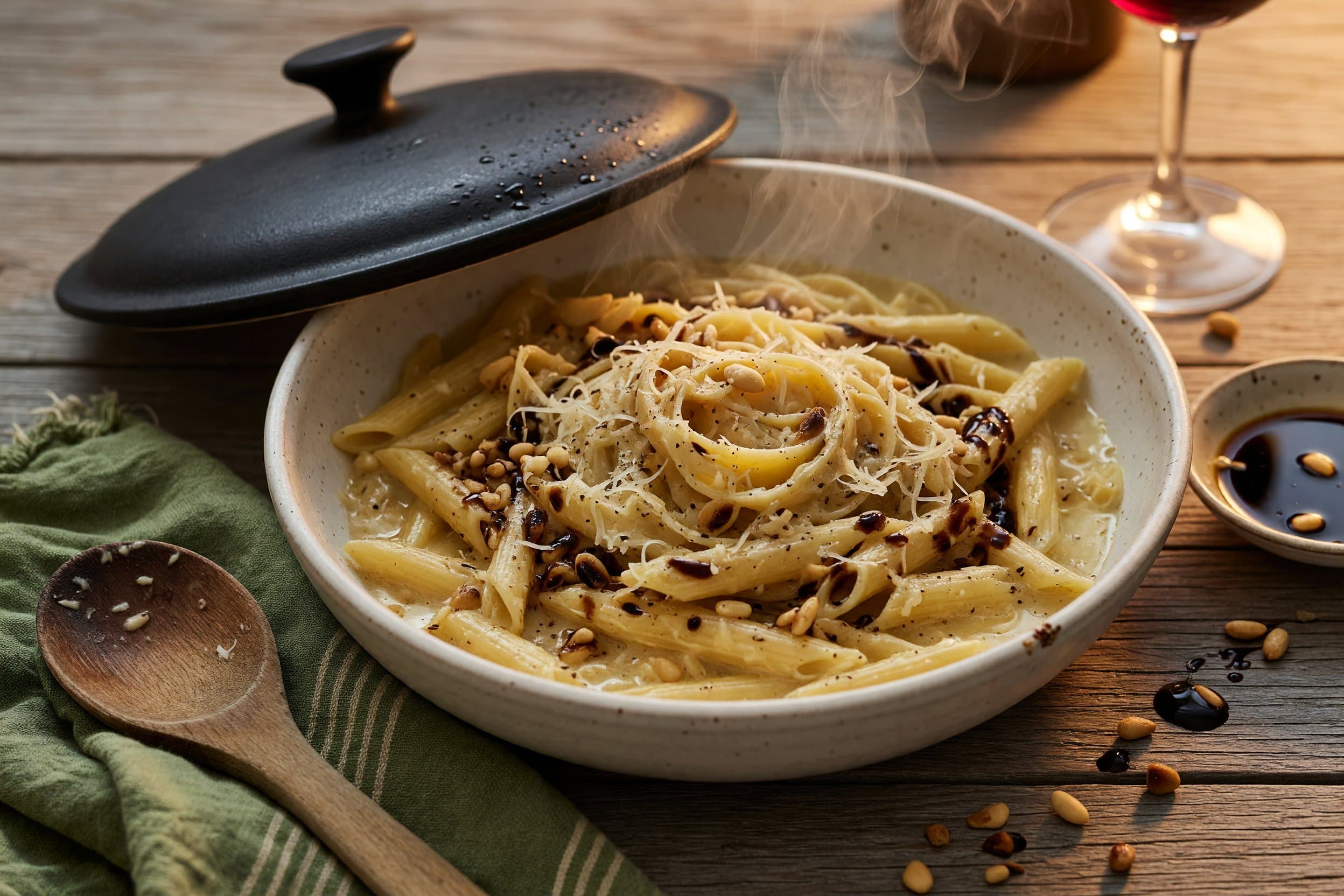
Here's the thing about cooking pasta directly in broth: the pasta releases starch as it simmers, and that starch turns the remaining liquid into a slightly thick, glossy base — before you've added a single drop of cream. That's your safety net. When you stir in the heavy cream and Parmesan at the end, they're going into a starchy, emulsified base rather than thin liquid, which is why the sauce holds together instead of going greasy and broken.
The key timing call: start checking the pasta at 7 minutes. You want the broth reduced to a starchy glaze — not fully dry, not still soupy. Pull it off direct heat before the cheese goes in. Residual heat is plenty to melt Parmesan smoothly. High heat is what breaks a sauce like this.
A Little Tip on the Garlic
Don't rush the garlic. Two to three minutes over medium-low heat in olive oil is all it takes to go from sharp and raw to sweet, fragrant, and mellow. That slow sweat is what unlocks the flavor — browned garlic tastes bitter, and raw garlic added straight to the broth will stay harsh the whole way through. Low and slow here pays off big in the finished dish.
Sourcing: The One Upgrade Worth Making
If you only make one upgrade to this recipe, make it the Parmesan. Grab a block of Parmigiano-Reggiano and grate it yourself right before it goes in. Pre-grated Parmesan has anti-caking agents in it that prevent it from melting cleanly — you'll end up with a grainy, clumpy sauce instead of a smooth one. A microplane or the fine side of a box grater takes about two minutes and makes a real difference.
On the broth: go low-sodium if you can find it. Standard chicken broth already carries a lot of salt, and between that, the Parmesan, and the added salt in the recipe, it adds up fast. Low-sodium broth lets you season to taste at the end rather than playing catch-up.
Substitutions that still taste like the recipe.
Want to mix it up or work with what you've got? Here are the best swaps for the key ingredients.
- egg noodle
Shares pyrazine compounds with pasta
- white pasta
Shares pyrazine compounds with pasta
- soba noodle
Shares pyrazine compounds with pasta
- beef broth
Shares maillard compounds with chicken broth
- seafood stock
Shares maillard compounds with chicken broth
- chicken stock
Shares maillard compounds with chicken broth
- cream
Shares lactone compounds with heavy cream
- butter↑ fatty
Shares lactone compounds with heavy cream — more fatty
- half-and-half
Shares lactone compounds with heavy cream
- pecorino cheese
Shares lactone compounds with parmesan cheese
- gruyere cheese
Shares lactone compounds with parmesan cheese
- pecorino↑ fatty
Shares lactone compounds with parmesan cheese — more fatty
Worth Knowing Before You Dig In
This pasta is genuinely filling and surprisingly high in protein — the combo of Parmesan and the pasta itself means you're getting a solid amount per serving. The fiber count is also better than you'd expect from a cream pasta, thanks to the ditalini and garlic. That said, let's be honest: the heavy cream and Parmesan together make this a rich dish. Saturated fat and sodium both run high, so it's best enjoyed as an occasional treat rather than an every-night thing. The easiest dial to turn if you want to lighten it up: swap in half-and-half for the heavy cream, and use low-sodium broth. You'll still get a creamy, satisfying sauce — just a little less indulgent.
What to Serve With It
This pasta is rich, savory, and a little spicy — so you want something alongside it that cuts through all that creaminess. A simple arugula salad with lemon and olive oil is perfect: the bitterness of the greens and the brightness of the lemon do exactly what the pasta is missing on its own. Crusty bread for sauce-mopping is non-negotiable. If you want to add protein, grilled chicken or shrimp tossed in garlic and olive oil slides right in without fighting the flavors. For drinks, a crisp white wine — something with good acidity like a Pinot Grigio or Sauvignon Blanc — is the move.
Common questions
Can I use a different pasta shape?
My sauce looks too thin — what do I do?
Can I make this vegetarian?
Why did my sauce turn greasy and broken?
Can I double the recipe?
And that's it — one pot, 25 minutes, and dinner is done. This garlic Parmesan pasta is the kind of recipe that proves you don't need a complicated technique or a long ingredient list to put something really good on the table. Simple ingredients, big flavor, zero fuss. That's the whole game here at Dowell Cooks. If you make this one, I hope it becomes a regular in your weeknight lineup. Browse all the recipes for more easy wins just like this one.
The Quarterly
Get the next Quarterly from Dowell Cooks
Seasonal recipes, notes, and the issue links worth saving.
Comments