The 3-Ingredient Dessert That Tastes Like You Tried Really Hard
Lemon posset is creamy, tangy, and sets itself in the fridge — no gelatin, no eggs, no fuss. Just heavy cream, sugar, and lemon doing something genuinely magical.
 Dowell Cooks6 min readPrint this post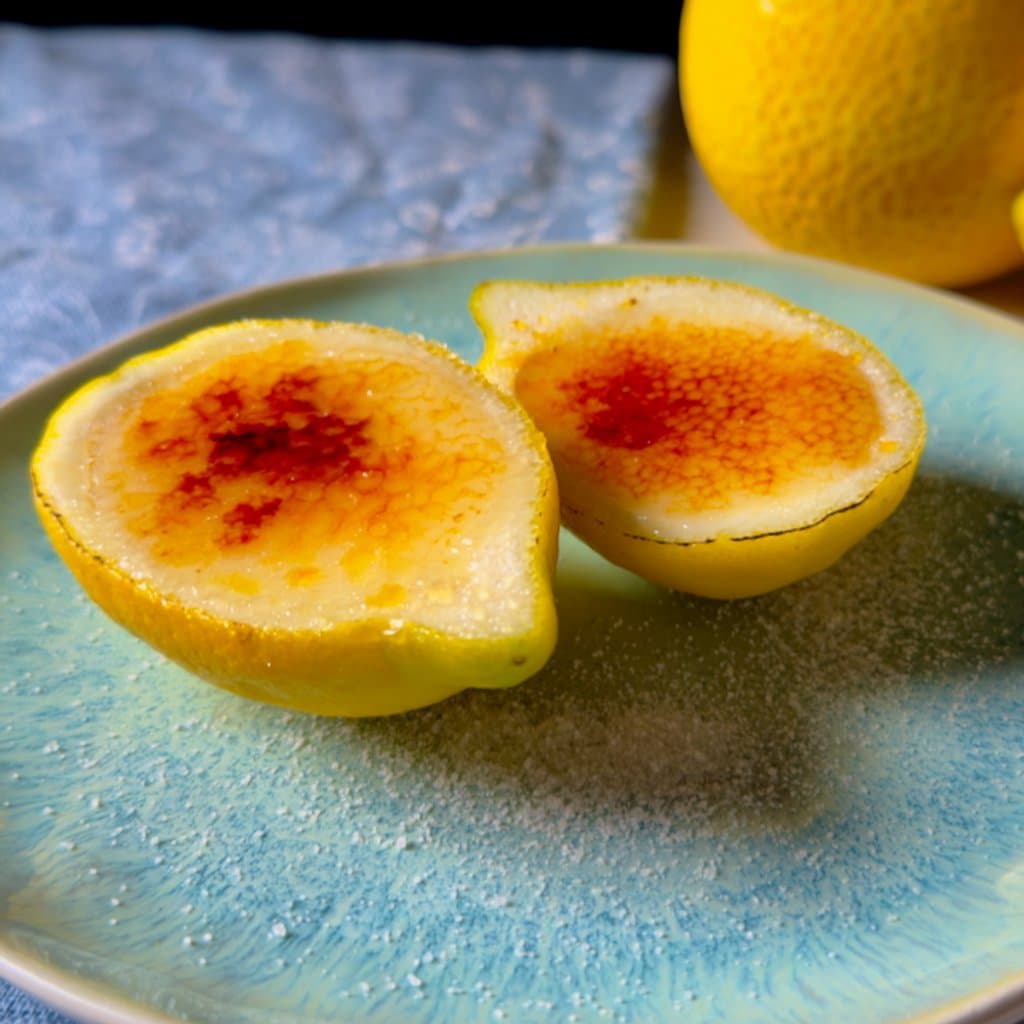
No gelatin. No eggs. Just three ingredients and a little kitchen chemistry that does all the work for you.
Hey, welcome back to Dowell Cooks! If you're looking for a dessert that looks totally impressive but is secretly one of the easiest things you'll ever make — this lemon posset is it. We're talking three ingredients, about 15 minutes of active time, and a result that tastes like something you'd order at a fancy restaurant. Creamy, bright, tangy, and finished with a crème brûlée-style sugar top? Yes, please. This one is perfect for family dinners, date nights, or honestly just treating yourself on a Tuesday. No gelatin, no eggs — just heavy cream, sugar, and fresh lemon doing something genuinely beautiful together.
Why This Works (The Fun Part)
Here's the thing that blew my mind when I first made this: there's no setting agent. No gelatin packet, no agar, no eggs. The posset firms up entirely because the lemon juice reacts with the hot heavy cream — it gently destabilizes the proteins in the cream, which causes the whole thing to thicken and set as it cools. It's basically kitchen chemistry doing your job for you. The fat content in heavy cream is what keeps it silky and smooth rather than grainy. That's also why you can't swap in half-and-half or milk — lower-fat dairy just won't behave the same way. It'll curdle instead of set, and nobody wants that.
The Technique That Makes or Breaks It
The whole recipe hinges on two moments: when you add the lemon juice, and when you add the zest. Bring your cream and sugar to a proper simmer — you want it bubbling gently and the sugar fully dissolved — then let it go for a couple of minutes before pulling it off the heat. Wait about 30 seconds, then whisk in your lemon juice in a slow, steady stream. Don't dump it all in at once. Rushing that step risks a grainy, split texture instead of a smooth, creamy set. The zest goes in last, off the heat entirely. Heat drives off the bright, aromatic top notes in lemon zest, so adding it at the end is what keeps that fresh citrus punch alive in the final dessert. Strain, pour, chill. That's it.
15 minutes, and you’re ready to cook.
Most of the work here is prep — hollowing the lemons and measuring everything out. The actual cook time is only about 15 minutes, then the fridge does the rest.
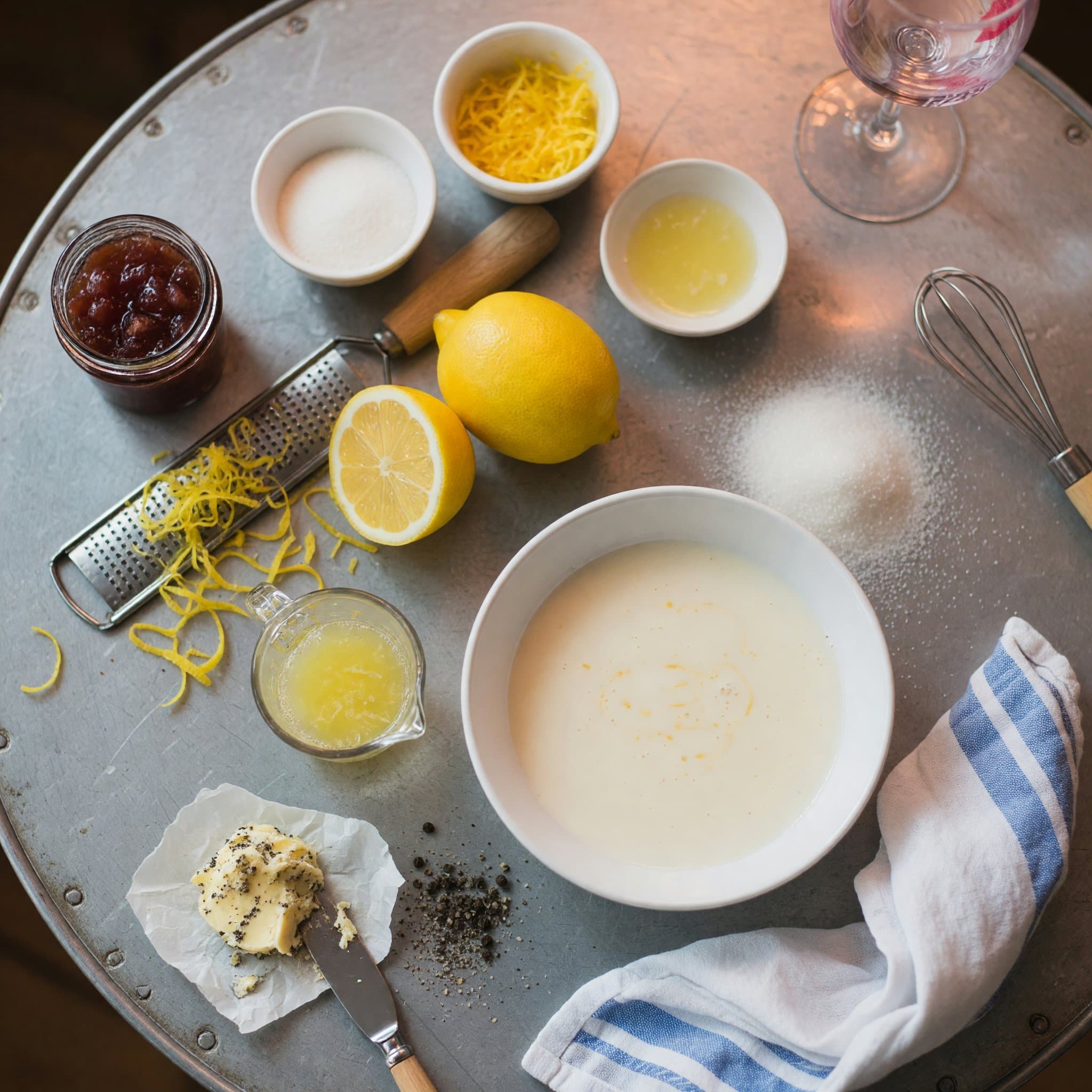
- Gather EquipmentGather a medium saucepan, a whisk or spoon for stirring, a zester or microplane, a small knife, a cutting board, measuring cups and spoons, small serving dishes or the prepared lemon halves, a spoon for transferring, and a blow torch for finishing.
- Prepare the LemonsCut 5 lemons in half lengthwise. Using a small spoon or melon baller, carefully remove the flesh and seeds from each half, leaving the rind intact to create 10 lemon shell halves. Set aside on a clean surface.
- Zest the LemonUsing a zester or microplane, zest 1 lemon to yield about 1 tablespoon of zest. Place the zest in a small bowl.
- Measure Lemon JuiceJuice fresh lemons as needed to yield 2 tablespoons of fresh lemon juice. Pour into a small measuring cup or bowl.
- Measure Heavy Cream and SugarMeasure 2 cups of heavy cream into a measuring cup and 2/3 cup of granulated sugar into a small bowl. Keep separate.
- Stage IngredientsArrange all prepped ingredients near the stove in cooking order: the medium saucepan, the measured heavy cream, the measured sugar, the lemon zest, the lemon juice, the prepared lemon shell halves (or serving dishes), and the blow torch with additional sugar for topping.
Tools for this recipe.
You don't need much — a saucepan, a microplane for zesting, and a blow torch for that brûlée finish. That torch is optional but very much worth it.
- medium saucepan
- whisk
- microplane
- paring knife
- cutting board
- measuring cups
- measuring spoons
- spoon
- blow torch
Sourcing: Fresh Lemons Are Non-Negotiable
Please, please use fresh lemons here. Bottled lemon juice will technically set the posset, but you'll lose all the fragrant, bright citrus character that makes this dessert sing. The zest especially needs to come from a fresh lemon — that's where the most aromatic lift lives, and it's what separates a good posset from a great one. When you're at the store, grab lemons that feel heavy for their size and have a little give when you press them — those are the juiciest ones. For the cream, go full-fat heavy cream, 36% fat or higher. This is not the moment to go light. The fat is literally what makes the texture work.
Substitutions that still taste like the recipe.
Want to riff on the citrus or work with what you have? Here are swaps that actually hold up — just remember, the heavy cream has very few real substitutes.
- calamansi↑ sour
Shares terpene compounds with lemons — more sour
- grapefruit↓ sour
Shares terpene compounds with lemons — less sour
- lime
Shares terpene compounds with lemons
- lime
Shares terpene compounds with lemon
- grapefruit↓ sour
Shares terpene compounds with lemon — less sour
- calamansi
Shares terpene compounds with lemon
- lime juice
Shares terpene compounds with lemon juice
- verjuice↑ sour
Shares acid compounds with lemon juice — more sour
- rice vinegar
Shares acid compounds with lemon juice
- cream
Shares lactone compounds with heavy cream
- half-and-half
Shares lactone compounds with heavy cream
- butter↑ fatty
Shares lactone compounds with heavy cream — more fatty
Make It Your Own
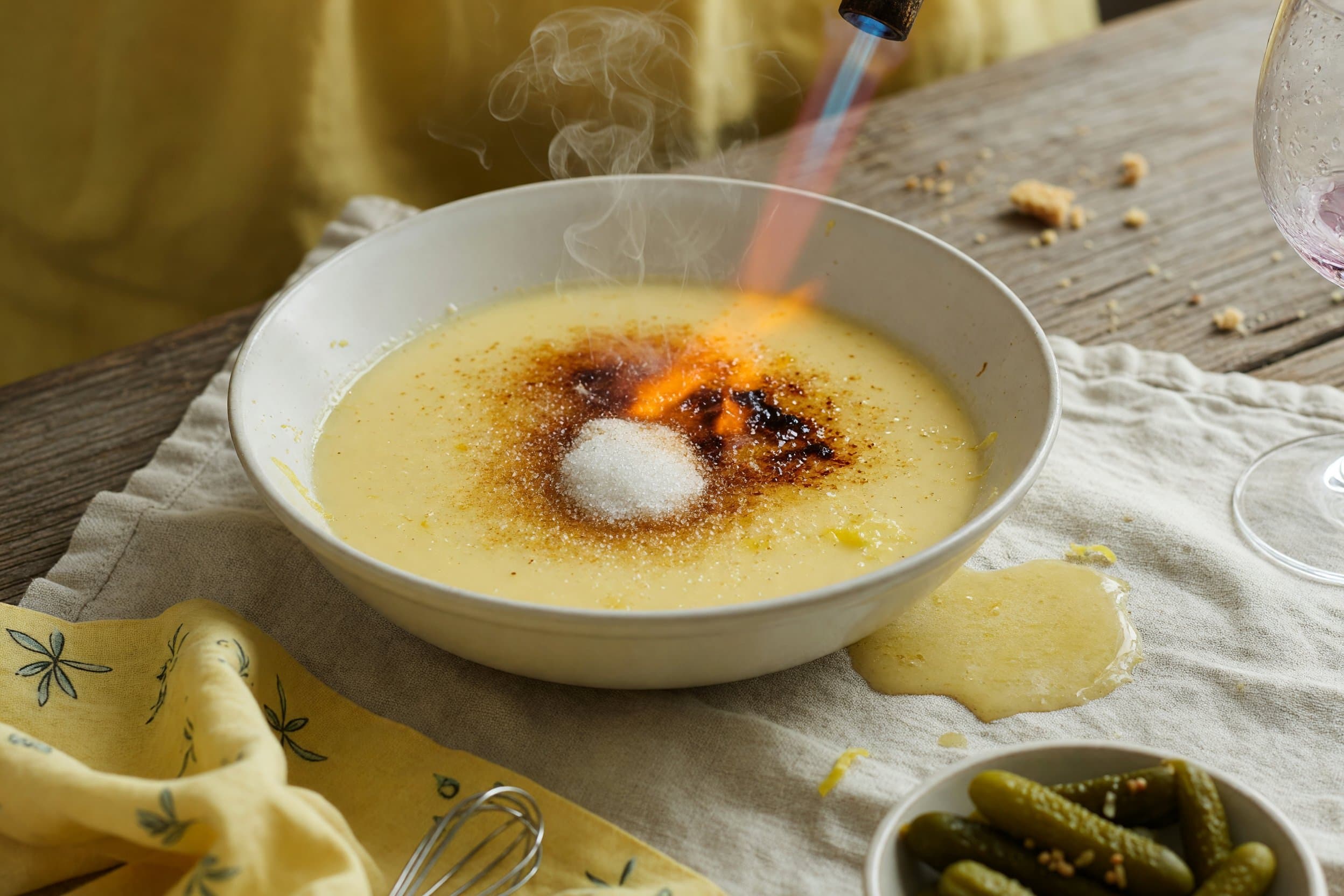
The lemon shell presentation is a total showstopper, but if you'd rather skip the hollowing step, small ramekins or even short glasses work beautifully. You can also play with the citrus — lime posset is incredible (bright and tropical), and grapefruit gives you something a little more bitter and sophisticated. For the brûlée top, a kitchen torch is ideal, but if you don't have one, a quick run under a very hot broiler works in a pinch. Just watch it closely — the sugar goes from golden to burnt in about ten seconds. You can also skip the sugar top entirely and finish with a few fresh berries or a light dusting of zest for a cleaner look.
One Thing to Watch Out For
The biggest mistake people make with posset is adding the lemon juice too fast or while the cream is still at a rolling boil. Either way, you risk the proteins seizing up unevenly and giving you a grainy, curdled texture instead of that silky smooth set. Pull the pan off the heat, give it 30 seconds to calm down, then add the juice slowly while whisking. Also — and this is important — don't try to rush the chill time. Six hours minimum, overnight is better. If you cut it short, the posset won't be fully set and it'll pour out of the lemon shell instead of holding its shape.
Common questions
Can I make lemon posset ahead of time?
Why didn't my posset set?
Do I have to use the lemon shells as cups?
Can I use a broiler instead of a blow torch for the brûlée top?
Can I make this with lime instead of lemon?
And that's really it — one of the simplest, most satisfying desserts you can make at home. Three ingredients, a little patience while it chills, and you've got something that genuinely impresses. That's the whole game here at Dowell Cooks: simple ingredients, big flavor, no stress. If you make this one, I'd love to see it — tag me and show off those lemon shells! And if you're looking for more easy, delicious recipes just like this, browse all the recipes and find your next favorite. Happy cooking! 🍋
The Quarterly
Get the next Quarterly from Dowell Cooks
Seasonal recipes, notes, and the issue links worth saving.

Comments