The Creamiest Cacio e Pepe You'll Ever Make on a Weeknight
Five ingredients, one pan, 45 minutes — this creamy twist on the Roman classic is the kind of pasta that makes everyone at the table go quiet in the best way.
 Dowell Cooks6 min readPrint this post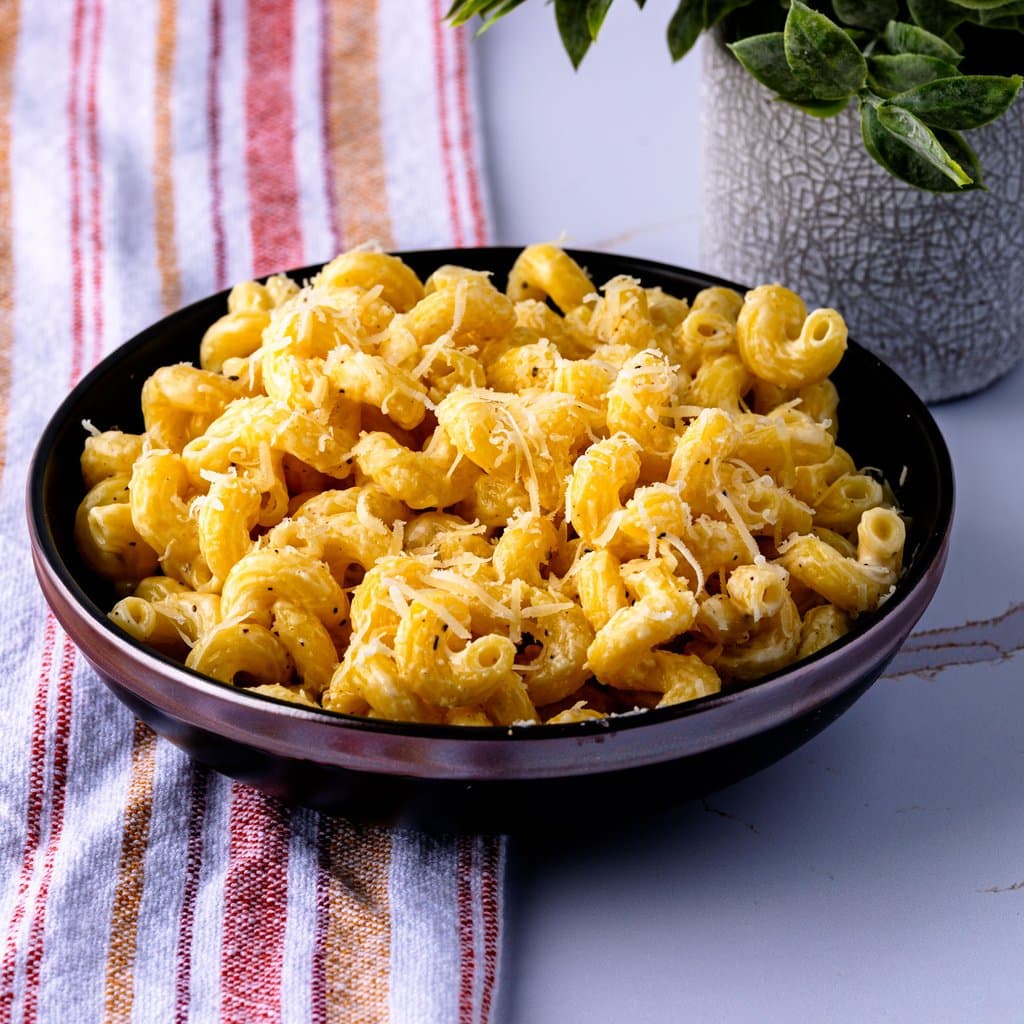
Simple ingredients, delicious meals — that's the whole game.
Hey, welcome back! If you've ever been nervous about making cacio e pepe — you know, the one that always seems to turn into a clumpy, broken mess — this version is here to fix all of that. We're adding heavy cream to the mix, and honestly? It's a total game-changer. You still get all that bold, peppery, cheesy goodness, but the sauce stays silky and smooth every single time. No stress, no scrambled cheese, just a bowl of pasta that tastes like you really know what you're doing. This is the kind of weeknight dinner that feels fancy but comes together with stuff you probably already have. Let's do it.
15 minutes, and you’re ready to cook.
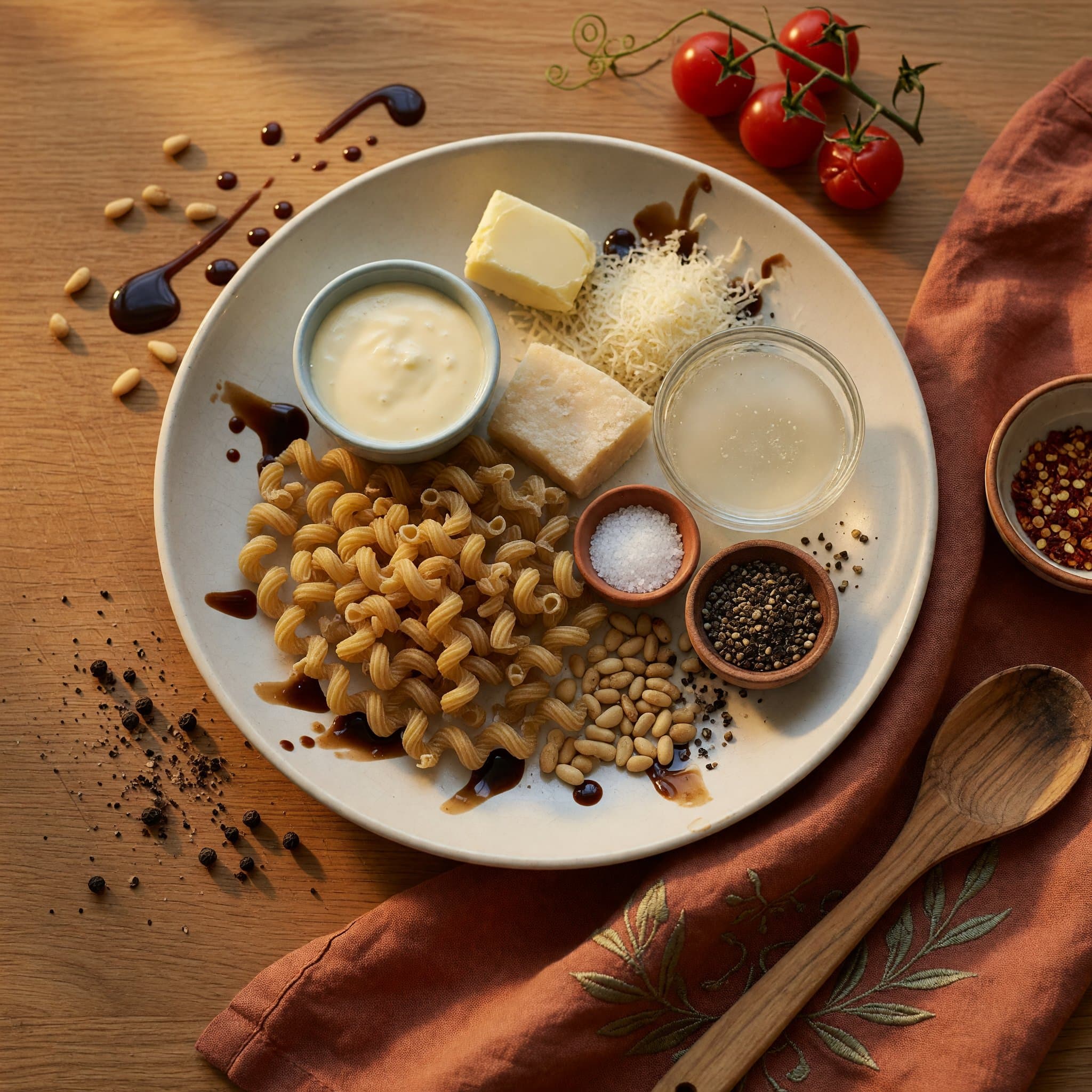
Mise en place takes about 15 minutes and makes the actual cooking a breeze. Get everything prepped and staged before the water boils.
- Gather EquipmentGather a large pot, a large skillet, a box grater or microplane, a measuring cup, measuring spoons, a wooden spoon or pasta fork, a colander, and small prep bowls or ramekins.
- Crack the Black PepperMeasure out 2 teaspoons of black pepper and crack or coarsely grind it using a pepper mill or mortar and pestle. Place in a small prep bowl.2 min
- Grate the Parmesan CheeseUsing a box grater or microplane, finely grate 1 cup of fresh Parmesan cheese. Place in a small prep bowl.3 min
- Measure the Heavy CreamMeasure out 1 cup of heavy cream and pour into a small prep bowl or measuring cup.30s
- Measure the Butter and SaltMeasure out 2 tablespoons of butter and place in a small prep bowl. Measure out 2 tablespoons of salt in a separate small bowl or directly into a measuring spoon for easy access.30s
- Measure the Pasta WaterMeasure out ¾ cup of pasta water in a measuring cup and set aside (you will fill this after the pasta begins cooking).
- Stage IngredientsArrange all prepped ingredients near the stove in cooking order: salt and pasta (together), cracked black pepper, pasta water, heavy cream, grated Parmesan cheese, and butter. Have the colander ready nearby.
The Technique: Toast, Build, Toss
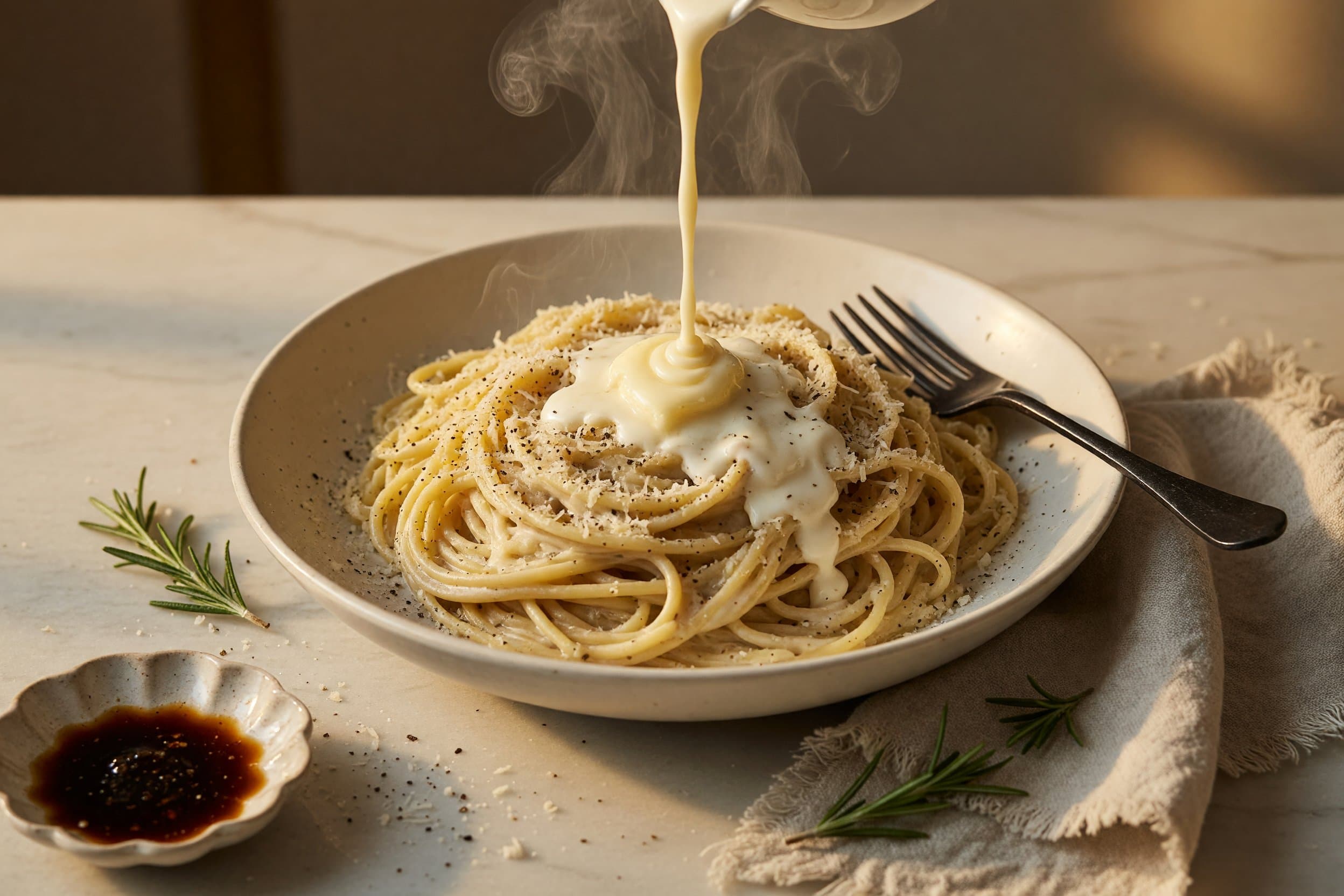
Here's the thing about cacio e pepe — the technique is everything, and it's simpler than you think. Step one: toast your cracked black pepper dry in the pan before anything else goes in. A minute or so over medium-high heat and it goes from flat and sharp to warm, almost floral, and way more complex. That toasted pepper is what makes the whole dish sing. Step two: build the sauce off the heat. Once your pasta water goes in and you drop to medium, add your cream, parmesan, and butter and let them come together gently. You want a light simmer, not a rolling boil — too much heat and the parmesan will seize up on you. Add the cheese in stages and keep stirring. Step three: finish the pasta right in the sauce pan, tossing hard for a couple of minutes so every piece of cavatappi gets coated. That final toss is what makes it look restaurant-worthy.
Don't Skip the Pasta Water
Before you drain your pasta, scoop out at least three-quarters of a cup of that starchy cooking water and set it aside. This stuff is liquid gold. The starch that leaches off the pasta as it cooks is what helps the sauce emulsify — it binds the cream, butter, and cheese into something glossy and cohesive instead of greasy and separated. Add it in gradually as you build the sauce and you'll see it come together right before your eyes. If the sauce ever looks too thick, a splash of pasta water loosens it right up without watering down the flavor.
Why Cavatappi? (And What to Use Instead)
Cavatappi is a great call here — those little ridges and the hollow corkscrew shape grab onto the sauce and hold it. You get a proper coating on every bite instead of the sauce pooling at the bottom of the bowl. That said, the recipe says 'or any pasta' for a reason. Rigatoni, penne, or even spaghetti all work. Just make sure you're grating your parmesan fresh from a wedge. Pre-grated parmesan has anti-caking agents that prevent it from melting cleanly into the sauce — you'll end up with a grainy texture instead of that smooth, creamy finish you're going for.
Substitutions that still taste like the recipe.
Need to swap something out? Here are the best alternatives that'll keep the sauce tasting great.
- cream
Shares lactone compounds with heavy cream
- coconut milk↑ sweet
Shares lactone compounds with heavy cream — more sweet
- half-and-half
Shares lactone compounds with heavy cream
- pecorino cheese
Shares lactone compounds with parmesan cheese
- gruyere cheese
Shares lactone compounds with parmesan cheese
- pecorino↑ fatty
Shares lactone compounds with parmesan cheese — more fatty
- clotted cream
Shares lactone compounds with butter
- cream
Shares lactone compounds with butter
- mascarpone
Shares lactone compounds with butter
- white pasta
Shares pyrazine compounds with pasta
- soba noodle
Shares pyrazine compounds with pasta
- udon
Shares pyrazine compounds with pasta
How It Pairs — and What to Serve Alongside
This pasta is rich, salty, and fatty — in the most satisfying way. The parmesan and pasta are an almost perfect flavor match, which is part of why this dish feels so cohesive even with so few ingredients. The pepper is doing the heavy lifting as the counterweight, cutting through all that richness with heat and a little bitterness. Because the dish leans so heavy and creamy, it really benefits from something bright and fresh on the side. A simple arugula salad with lemon and olive oil is ideal — the bitterness of the greens and the acid from the lemon wake everything up. A glass of crisp white wine works the same way. If you want to make it a fuller meal, a side of roasted cherry tomatoes adds a pop of acidity and color that the pasta is genuinely missing.
A Honest Look at the Nutrition
Let's keep it real: this is a creamy, cheesy pasta and it eats like one. Each serving comes in around 409 calories with a solid hit of dairy — parmesan and heavy cream together cover a big chunk of your daily dairy needs, and the pasta contributes a good dose of carbs for energy. The sodium is on the higher side (a lot of that comes from the parmesan and the salted pasta water), so if you're watching salt, you can ease up on the pasta water seasoning and let the cheese do the work. What this dish doesn't have is vegetables, lean protein, or much in the way of fresh produce — so round it out with a green salad or some roasted veg on the side and you've got a genuinely balanced plate.
Common questions
Why is my sauce clumping or turning grainy?
Can I make this ahead of time?
Do I really need to toast the black pepper?
Can I use pre-grated parmesan from a bag?
What pasta shape works best?
That's it — five ingredients, one pan, and a pasta that genuinely delivers every single time. This is exactly the kind of recipe that lives in the Dowell Cooks wheelhouse: easy, fun, no fuss, all flavor. Whether you're cooking for the family on a Tuesday or trying to impress someone on a Friday, this creamy cacio e pepe has you covered. Give it a try, and if you love it, browse all the recipes for more weeknight wins just like this one.
The Quarterly
Get the next Quarterly from Dowell Cooks
Seasonal recipes, notes, and the issue links worth saving.
Comments