Broccoli and White Cheddar Pasta: The Weeknight Sauce That Actually Behaves
A simple stovetop mac-and-cheese cousin, built on a real roux and a spoonful of Dijon that keeps everything smooth.
 Dowell Cooks6 min readPrint this post
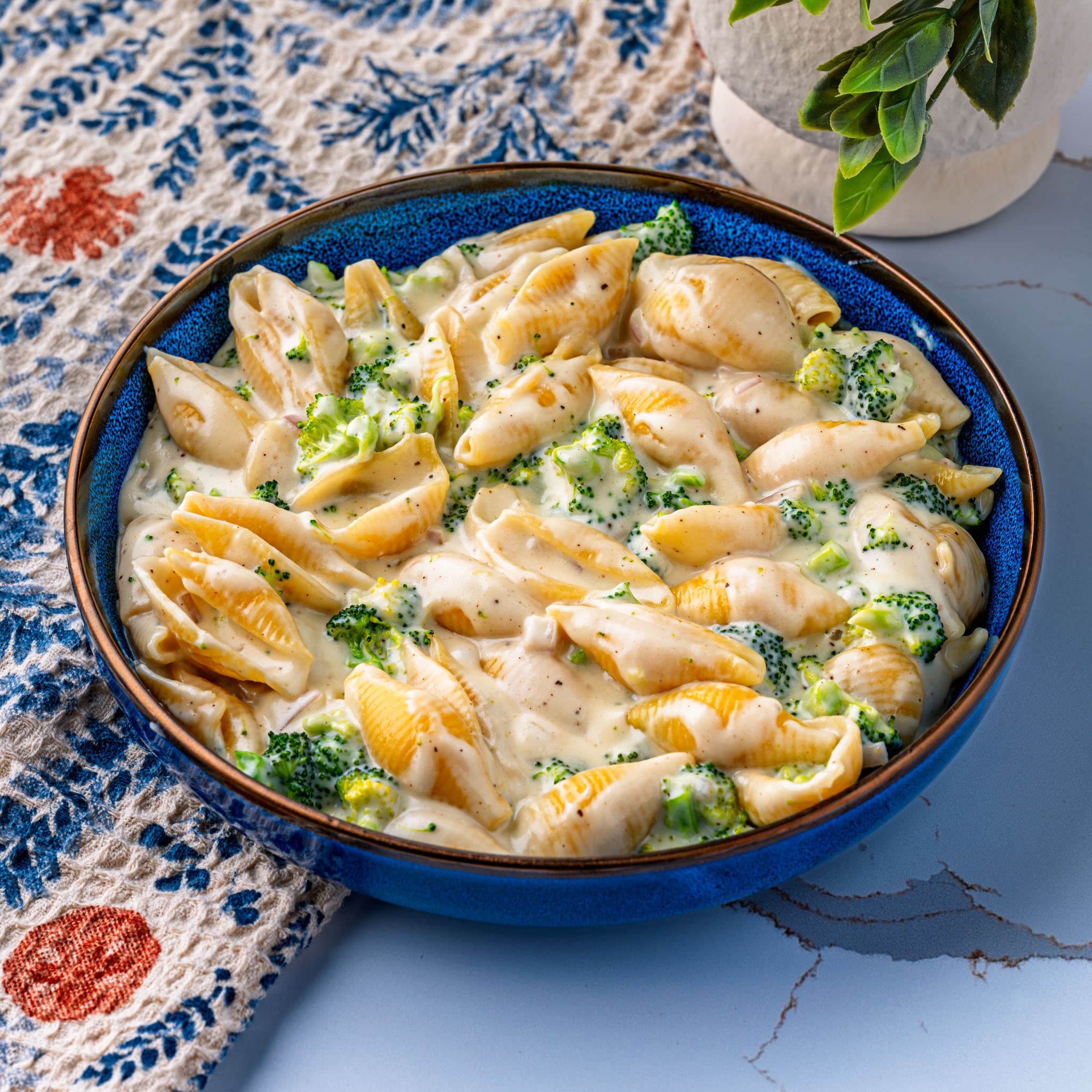
Butter, a little flour, sharp cheddar, and a spoonful of mustard. That's the whole trick.
Hey, welcome back to Dowell Cooks! This one's for the nights when you want something creamy and cheesy but you don't want to babysit a pot for an hour. Broccoli and white cheddar pasta comes together in one skillet, uses ingredients you probably already have, and tastes like the mac and cheese you grew up on, just grown up a little with a spoonful of Dijon.
Three moves make or break this recipe.
The whole dish hinges on three moments at the stove, and none of them take more than a couple minutes.
Sauce should simmer 2 minutes after thickening to fully gelatinize the starch — undercooked roux re-thins as it cools. Pull off heat before adding cheddar.
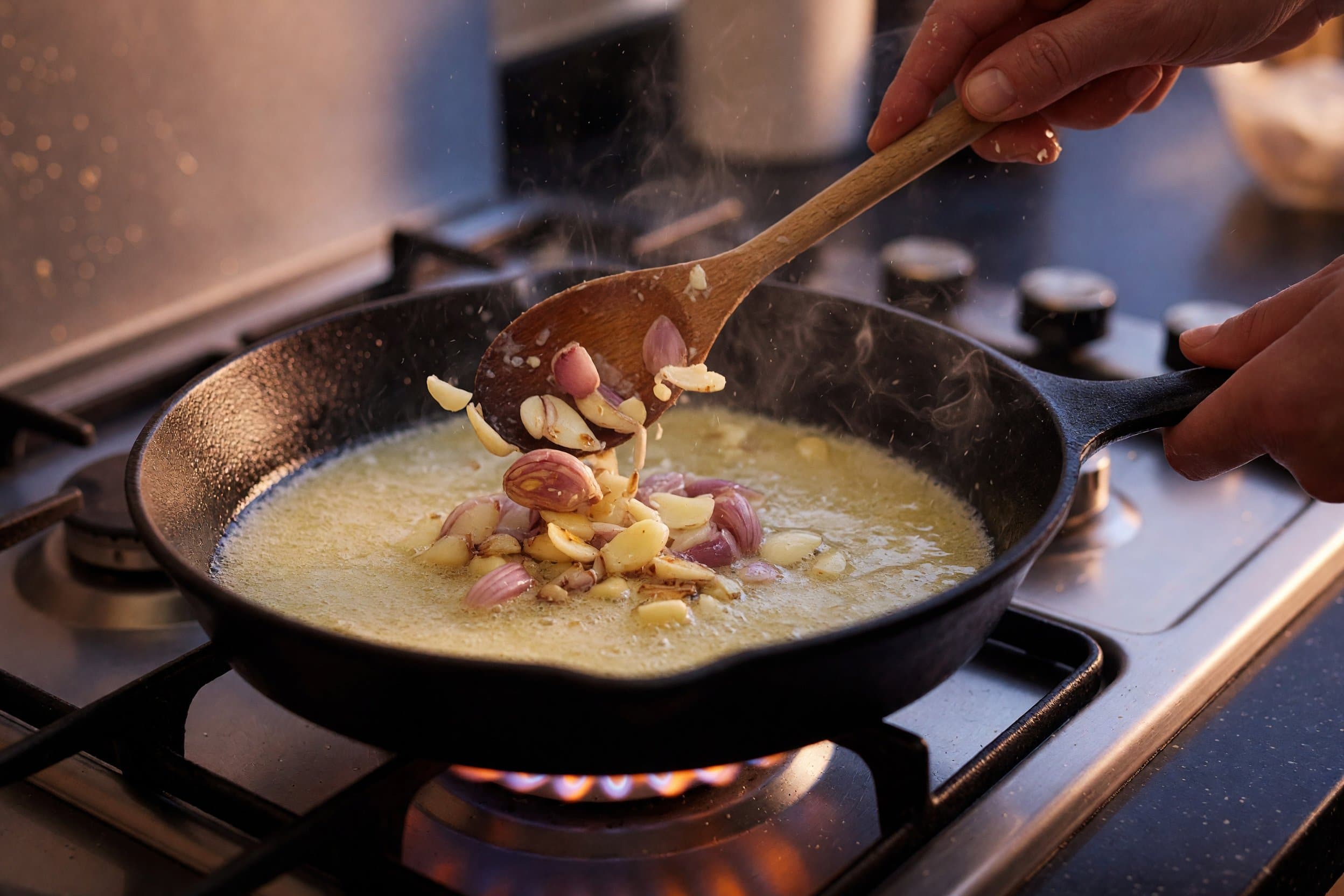
- Sweat shallot and garlic in butter over medium heat until soft — no color
- Cook the flour into the butter for 90 seconds before adding any liquid
- Temper the milk and half and half in warm, then whisk steadily to avoid lumps
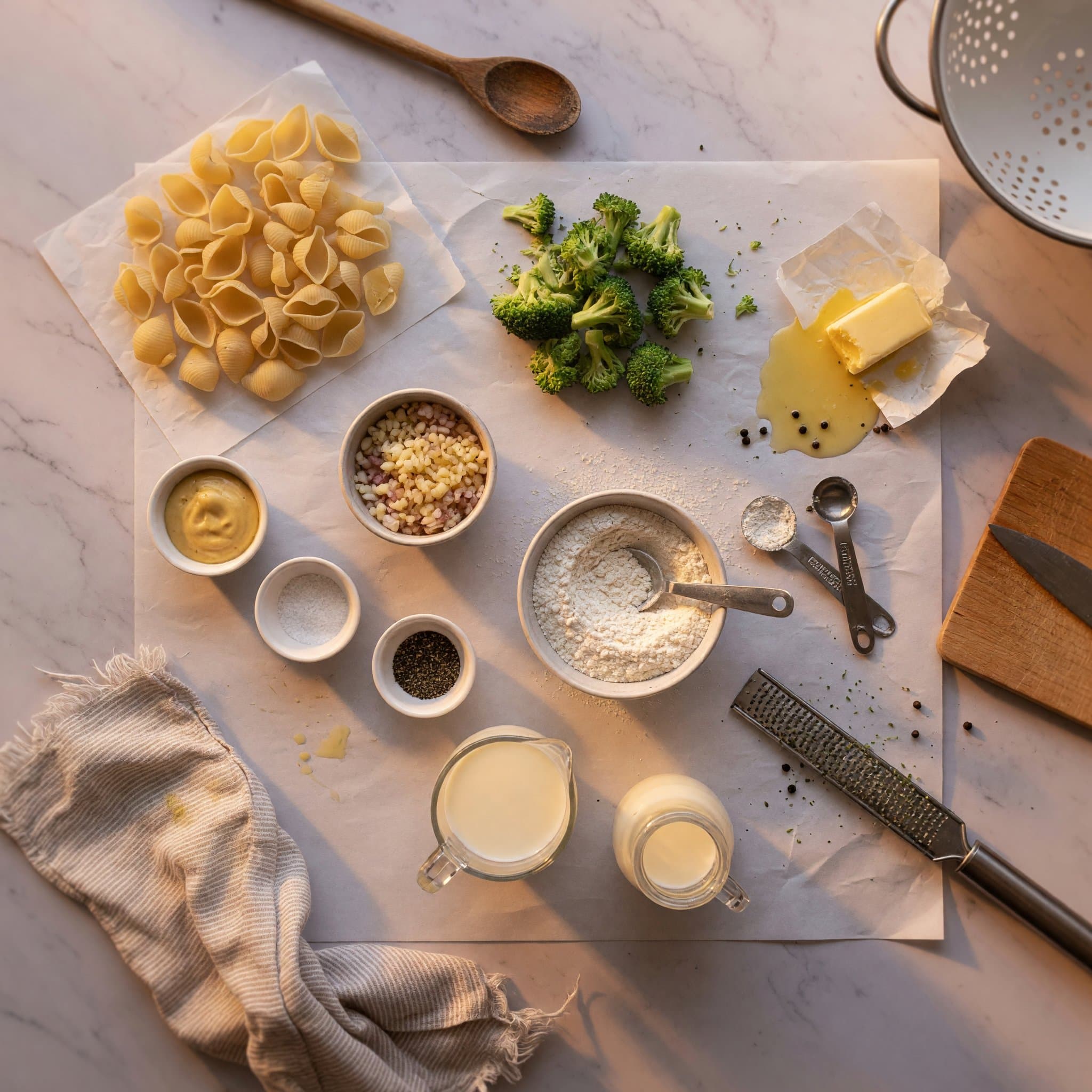
20 minutes, and you’re ready to cook.
Get everything measured and staged before the butter hits the pan, since the sauce moves fast once it starts.
- Gather EquipmentGather a large pot, large cast iron skillet, colander, measuring cups, measuring spoons, cutting board, chef's knife, whisk, wooden spoon, and small bowls for prepped ingredients.
- Preheat Boiling WaterFill a large pot with water, add a generous pinch of kosher salt, and bring to a rolling boil over high heat. This will be ready when you begin cooking.
- Prepare the GarlicPeel 2 cloves of garlic and mince finely. Place in a small prep bowl.1 min
- Prepare the ShallotPeel the shallot, trim the root end, and mince finely to yield about 2 tablespoons. Place in a small prep bowl.2 min
- Prepare the BroccoliRinse the broccoli and cut into florets, discarding the thick stem. Measure out 3 cups of florets and place in a prep bowl.2 min
- Grate the White Cheddar CheeseGrate 6 ounces of extra-sharp white cheddar cheese on the large holes of a box grater. Place in a prep bowl.2 min
- Measure Dry IngredientsMeasure 2 tablespoons of all-purpose flour and 1 teaspoon of Dijon mustard into separate small bowls. Measure out kosher salt and freshly ground black pepper into a small bowl for seasoning to taste.1 min
- Measure LiquidsMeasure 1½ cups of whole milk and 1 cup of half and half into separate prep bowls. Have an extra ½ cup of milk nearby in case the sauce needs thinning.1 min
- Measure Butter and PastaMeasure 2 tablespoons of unsalted butter and place in a small bowl. Measure 8 ounces of pasta shells and place in a prep bowl.1 min
- Stage IngredientsArrange all prepped ingredients near the stove in cooking order: butter, minced garlic, minced shallot, flour, milk, half and half, Dijon mustard, broccoli florets, grated cheese, cooked pasta (to be added after cooking), and salt and pepper for seasoning.
Tools for this recipe.
Nothing exotic here, just the basics you probably already have pulled out for pasta night.
- large pot
- cast-iron skillet
- colander
- measuring cups
- measuring spoons
- cutting board
- chef's knife
- whisk
- wooden spoon
- small bowl
How it actually goes
Get your pasta boiling first so it's ready when the sauce is. Melt the butter, soften the garlic and shallot until they're just fragrant (no browning, you're not searing them), then whisk in the flour and let it cook for a solid minute before any liquid touches the pan. That minute matters. Raw flour tastes like raw flour, and cooking it briefly turns it into something that tastes like the inside of a good pie crust instead. Then whisk in the milk and half and half gradually so you don't end up with lumps, stir in the Dijon, and let it thicken before folding in your pasta, broccoli, and cheese.
That minute of cooking the flour into the butter isn't just about flavor, it's actually changing the texture of the whole sauce.
Gluten inhibition
Butter coats the flour proteins before liquid is added, limiting gluten development. This is what keeps the sauce silky rather than gluey — don't rush the roux step.
Once you know where the dish leans, it's easier to pick sides that push back in the right direction.
Pasta ShellsAll-Purpose Flour
Score 100Both carry toasted notes.
ButterAll-Purpose Flour
Score 95Foundation of baking.
Kosher SaltBlack Pepper
Score 95Most fundamental seasoning duo.
- pasta shells + all-purpose flourBoth carry toasted and browned notes.
- garlic + black pepperBoth carry piney, citrusy, earthy and roasted notes.
- butter + whole milkBoth carry creamy and coconutty notes.
What to put next to it
This is a rich, saucy dish, so I keep the sides simple. A sharp green salad with a vinegary dressing cuts right through the cream. A glass of something crisp and a little acidic does the same job. If you want to round the plate out further, a squeeze of lemon over the top right before serving wakes the whole thing up more than you'd expect from something so small.
Here's the honest nutritional picture of a bowl of this.
Food groups measured against a 2,000-calorie day
- • No protein in this recipe
- • No fruits in this recipe
- • No healthy fats in this recipe
Strong in vegetables, light on protein, fruits, and healthy fats.
- Contains
- milk, wheat, gluten, mustard
- Fits
- Vegetarian, Pescatarian, Nut-Free, Halal, Kosher
Halal and kosher also depend on how the ingredients are sourced and certified.
Substitutions that still taste like the recipe.
Missing something in the fridge? Here's what actually works in its place.
- cauliflower
Lacks the clove-like and smoky notes.
- eggplant
Brings earthy and roasted notes; lacks the oniony and garlicky notes.
- gruyere
- manchego
Lacks the oniony and garlicky notes.
- low-fat milk↓ fatty
- whipped cream↑ fatty
More delicate.
- scallion
Less sugary.
- onion
Brings fruity, clove-like and smoky notes.
- orzo
Less starchy.
- fettuccine
- Produce
- $7.98
- Dairy & Eggs
- $7.12
- Pasta & Grains
- $1.99
- Condiments & Sauces
- $0.06
- Spices & Seasonings
- $0.05
- Baking
- $0.05
Common questions
Can I make this ahead of time?
Can I use pre-shredded cheddar to save time?
What if my sauce comes out grainy?
Is this recipe freezer-friendly?
That's really the whole recipe: melt, whisk, stir, eat. No fancy techniques, no stress, just a good creamy pasta you can throw together on a weeknight and actually feel proud of. Give it a try and let me know how it goes in your kitchen.
The Quarterly
Get the next Quarterly from Dowell Cooks
Seasonal recipes, notes, and the issue links worth saving.
Comments