Vietnamese Steak & Crispy Fries That Punch Way Above Their Weight
Beef tenderloin meets a bold fish sauce marinade, double-fried russet fries, and a garlicky lime aioli — a fusion dinner that earns every bite and comes together in under an hour.
 Dan Cooks7 min readPrint this post
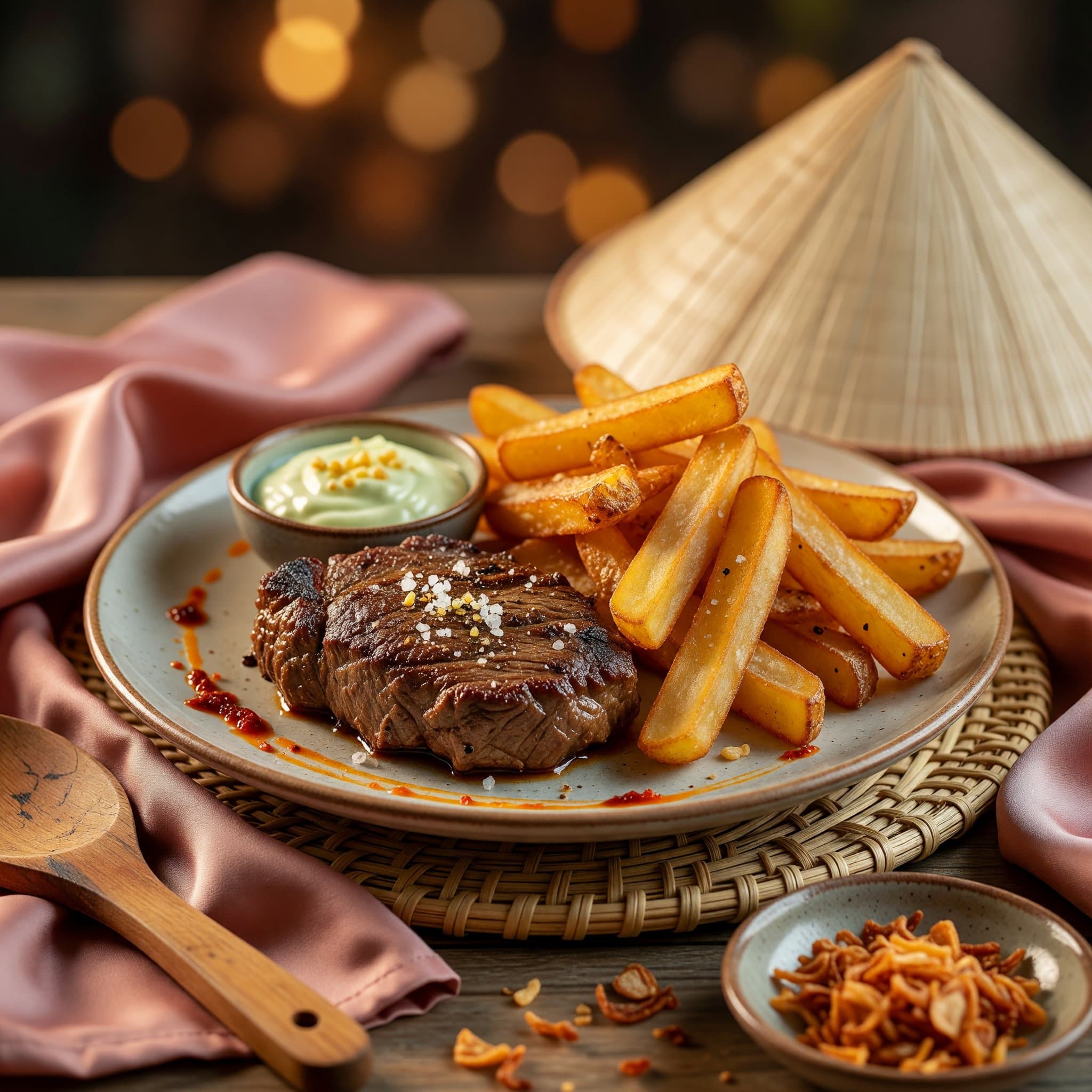
The smoke does its magic. You just have to be patient enough to let it.
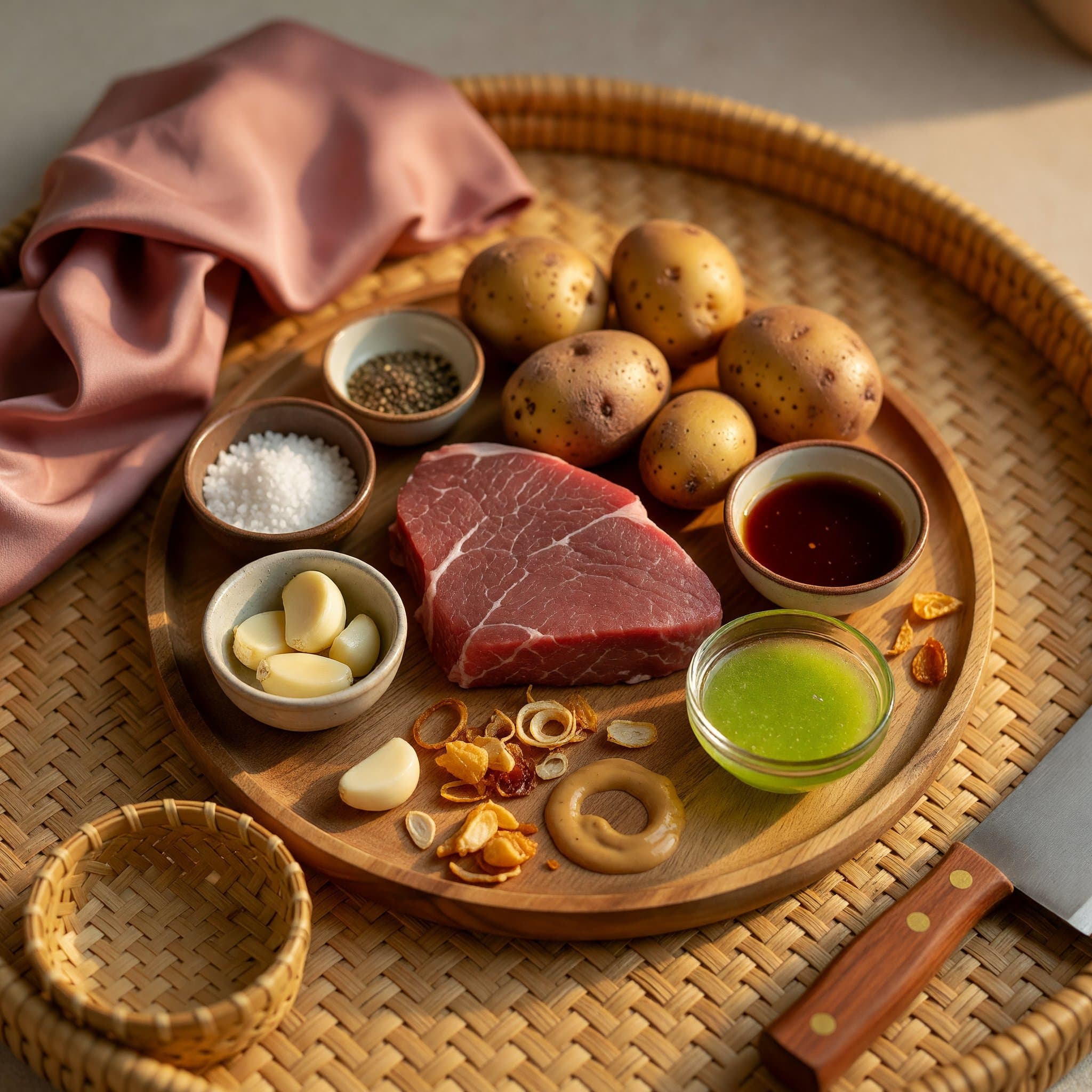
- beef tenderloin + brown sugarBoth carry toasted, browned, fresh and grassy notes.
- black pepper + garlicBoth carry piney, citrusy, earthy and roasted notes.
- russet potato + black pepperBoth carry earthy and roasted notes.
A few things worth knowing before you fire up the skillet — these details are the difference between a good plate and a great one.
Dry-brine the tenderloin, not at the last minute
Salt draws moisture to the surface, then it reabsorbs. Hit the beef with kosher salt at least 40 minutes out — or ideally the night before — so the surface is dry and ready to crust. The 5-to-30-minute window is the danger zone: wet surface, poor sear.
Garlic and fish sauce are a sulfur-aldehyde alliance
These two share sulfur and aldehyde compound families, which is why they amplify each other in the marinade rather than competing. The pairing score is 85 — trust it and don't hold back on either.
The dish reads slightly sour-light — lime juice is your lever
The taste profile shows a sour deficit. Lime juice is already in the recipe; squeeze it at the table rather than only into the marinade so the brightness stays alive on the plate.
Black pepper on beef is a pyrazine-terpene lock
Beef and black pepper share pyrazine and terpene compound families — the roasted, aromatic notes in each reinforce the other. Season the crust generously; it's not just heat, it's flavor architecture.
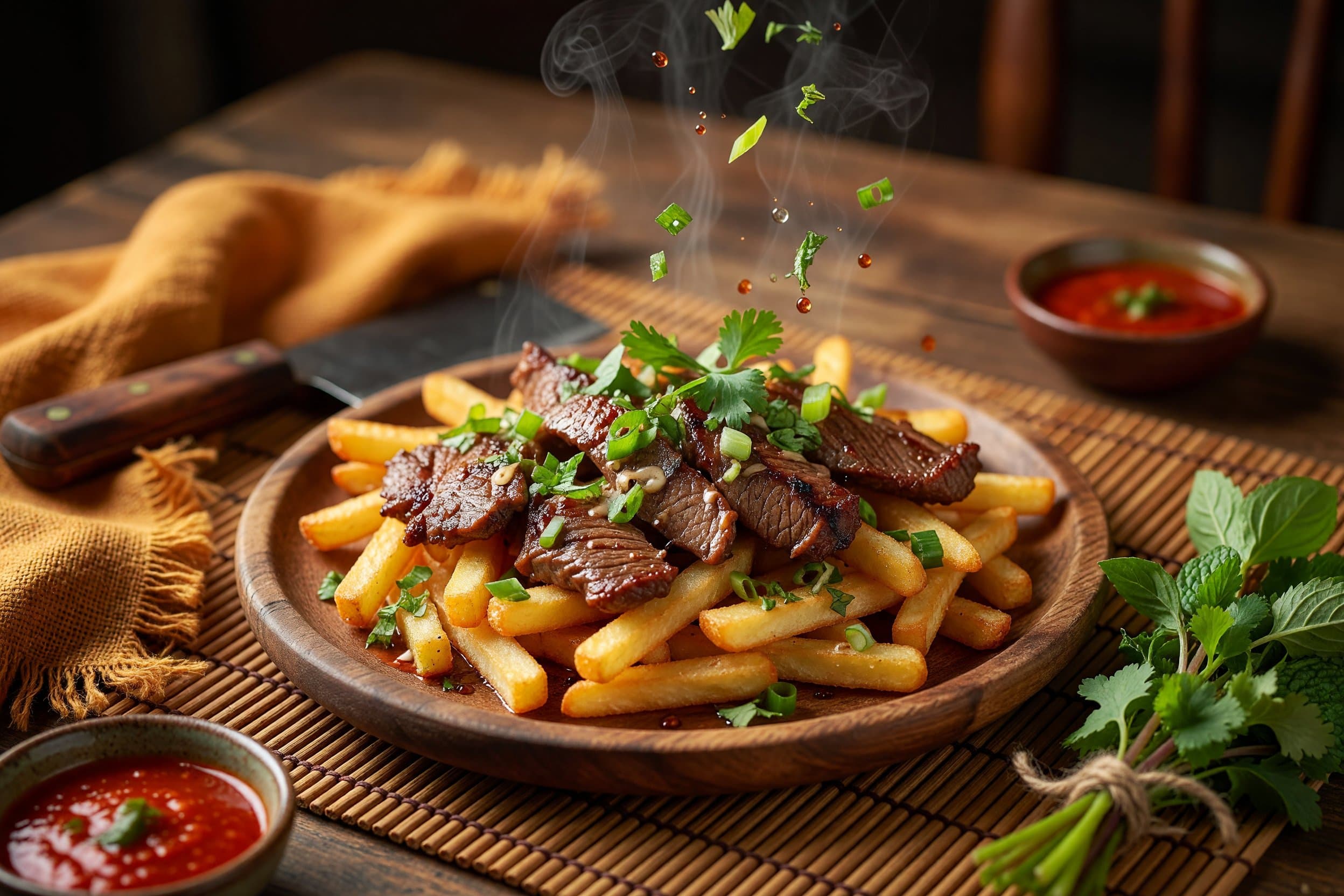
Three moves make or break this recipe.
Three moves that separate a good result from a great one — don't skip any of them.
First fry: ~325°F until potatoes are tender but not colored, 4–5 min. Second fry: ~375°F for 2–3 min until golden. Tenderloin: rest at least 5 min tented loosely.
- Dry-brine the beef with kosher salt 40+ minutes ahead — surface must be dry before it hits the pan
- Double-fry the potatoes: first at lower heat to cook through, second at high heat for the crust
- Rest the tenderloin before slicing — carry-over heat will finish the center
Salt timing on beef tenderloin isn't a preference — it's the difference between a proper crust and a sad steam. Here's the rule.
Salt and protein moisture retention
Salt early. On beef tenderloin, a 40-minute minimum or overnight dry-brine means the surface is dry at cook time and the interior is seasoned through.
If you're short on time, salt right before the pan — never in the 5-to-30-minute window when the surface is wet and the sear will suffer.
25 minutes, and you’re ready to cook.
With 25 minutes of mise en place, the actual cook goes smoothly. Get everything staged before the skillet heats up.
- Gather EquipmentGather all equipment: cutting board, chef's knife, paper towels, measuring spoons, measuring cups, small bowls (3), whisk, cast iron skillet, sheet pan, parchment paper, and a warm plate for resting the steak.
- Preheat the OvenPreheat your oven to 400°F and line a sheet pan with parchment paper.
- Prepare the Beef Tenderloin FilletsPat the 2 beef tenderloin fillets dry with paper towels. Let them sit at room temperature for 10 minutes to bring them to room temperature.10 min
- Prepare the Russet PotatoesWash and peel the 1½ lb russet potatoes. Cut them into ¼-inch-thick fries. Place the cut fries in a bowl of cold water and soak for 10 minutes to remove excess starch. After soaking, pat them thoroughly dry with paper towels and place in a prep container.15 min
- Prepare the GarlicPeel and mince 6 cloves of garlic very finely. Divide into two portions: 4 cloves minced for the garlic aioli and 2 cloves minced for the Vietnamese sauce. Place each portion in a separate small bowl.3 min
- Prepare the Fresh Lime JuiceCut the limes and juice them to yield 2 tbsp fresh lime juice. Divide into two portions: 1 tbsp for the garlic aioli and 1 tbsp for the Vietnamese sauce. Place each portion in a separate small bowl.2 min
- Prepare the ScallionsTrim the scallions, removing the root ends and any yellowed outer layers. Slice them thinly on the bias and place in a prep container.2 min
- Measure Spices and SeasoningsMeasure out 2 tsp kosher salt, 1 tsp black pepper, and ¼ tsp red chili flakes into a small bowl for seasoning the beef. Measure an additional 1 tsp salt and ¼ tsp black pepper into another small bowl for the potatoes. Measure ½ tsp light brown sugar into a small bowl for the Vietnamese sauce.2 min
- Measure Oils and LiquidsMeasure 3 tbsp vegetable oil total: 2 tbsp for tossing the potatoes and 1 tbsp for searing the beef. Measure 1½ tbsp fish sauce into a small bowl. Place all measured oils and fish sauce in prep containers.2 min
- Prepare the MayonnaiseMeasure out ¼ cup mayonnaise into a small bowl for making the garlic aioli.1 min
- Prepare the Fresh CilantroRinse the fresh cilantro and gently pat dry with paper towels. Roughly chop or leave whole sprigs for garnish, and place in a prep container.2 min
- Stage IngredientsArrange all prepped ingredients near your cooking station in order of use: beef fillets and beef seasoning blend closest to the cast iron skillet; potatoes and potato seasoning near the sheet pan; garlic portions, lime juice portions, mayonnaise, fish sauce, and light brown sugar near the prep area for making the aioli and Vietnamese sauce; scallions and cilantro near the plating area.
This plate leads with savory and fatty, with a solid kick of spice. The lime juice is your brightness lever — use it generously at the table.
Add acid to brighten it: lean on the lime juice already in it, or add lemon juice or vinegar, which lifts a heavy or rich dish.
Strong protein, real fiber from the russets, and a rich fat profile. The sodium runs high — fish sauce is doing a lot of work here, so treat this as a treat-night plate.
Food groups measured against a 2,000-calorie day
- ✓ Covers 68% of your daily protein
- • No dairy in this recipe
- • No vegetables in this recipe
- • No whole grains in this recipe
- • No healthy fats in this recipe
Strong in protein, light on dairy, vegetables, whole grains, and healthy fats.
- Contains
- egg, fish
- Fits
- Gluten-Free, Dairy-Free, Nut-Free, Halal, Kosher
Halal and kosher also depend on how the ingredients are sourced and certified.
Substitutions that still taste like the recipe.
Working with what you've got? Here are the swaps that hold up best in this recipe without losing the spirit of the dish.
- soy sauce
Brings toasted and browned notes; lacks the oniony and garlicky notes; sharper.
- liquid aminos↓ savory
Brings fresh and grassy notes; lacks the oniony and garlicky notes; less savoury depth.
- onion soup mix↓ savory
Brings toasted and browned notes; lacks the earthy, roasted and tangy notes; no fermented funk.
- lemon juice
- cream of tartar
Lacks the piney and citrusy notes; drier.
- verjuice
Brings fruity notes; drier; sharper.
- vegan mayonnaise
Lacks the oniony and garlicky notes.
- italian dressing↓ fatty↑ sour
Brings piney and citrusy notes; lacks the fresh and grassy notes; leaner.
- caesar dressing↓ fatty↑ sour
Brings piney and citrusy notes; lacks the fresh and grassy notes; leaner.
- chervil
Brings fruity notes.
- cilantro
Sturdier.
- rice paddy herb
- Produce
- $3.84
- Meat & Poultry
- $43.41
- Condiments & Sauces
- $0.38
- Oils & Vinegars
- $0.04
- Spices & Seasonings
- $0.28
- Baking
- $0.01
Some prices are estimates.
Common questions
Can I use a different cut of beef?
Do I really need to soak the potatoes before frying?
What's the best fish sauce to use?
How do I know when the steak is medium-rare?
Can I make the aioli ahead of time?
The Quarterly
Get the next Quarterly from Dan Cooks
Seasonal recipes, notes, and the issue links worth saving.
Comments