The Only Chocolate Chip Cookie Recipe Your Family Will Ever Need
No tricks, no overnight chill, no fancy equipment — just soft, doughy, perfectly golden cookies that come together in 30 minutes and disappear even faster.
 Dan Cooks7 min readPrint this post
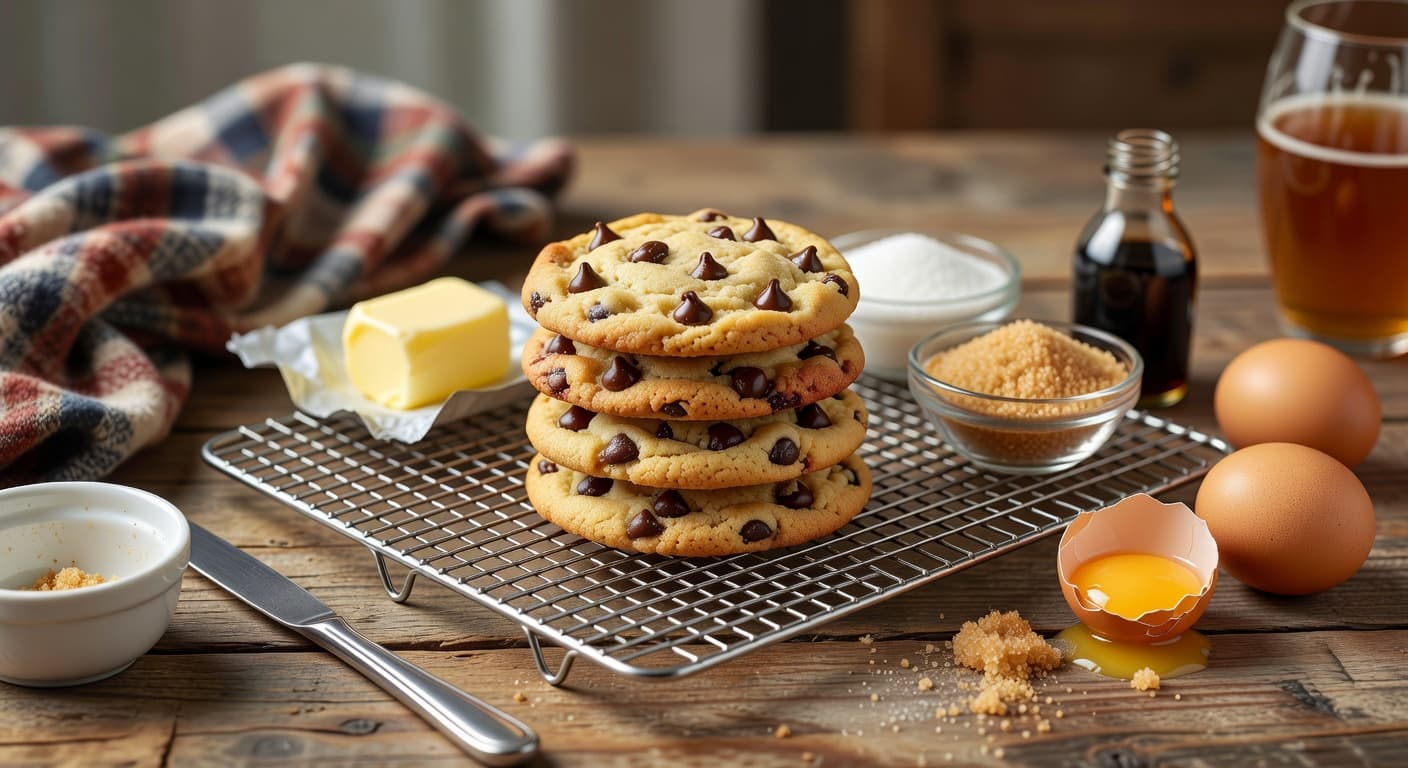
The best meals aren't measured by perfection — they're measured by the memories made around the table.
Some recipes earn their place in a family the hard way — made so many times the page gets stained, the margins fill up with notes, and eventually you don't even need the card anymore. This chocolate chip cookie is one of those recipes. Born Southern, raised on the idea that simple done right beats complicated every time, I've been making these in our Tampa kitchen for years. My kids know the smell before they even hit the back door. My wife doesn't have to ask what's baking. There's no chill time, no brown butter, no special flour — just real pantry ingredients, a little patience with the creaming step, and an oven that does exactly what you tell it. That's the Southern way. Trust the process, season with love, and let the heat do the rest.
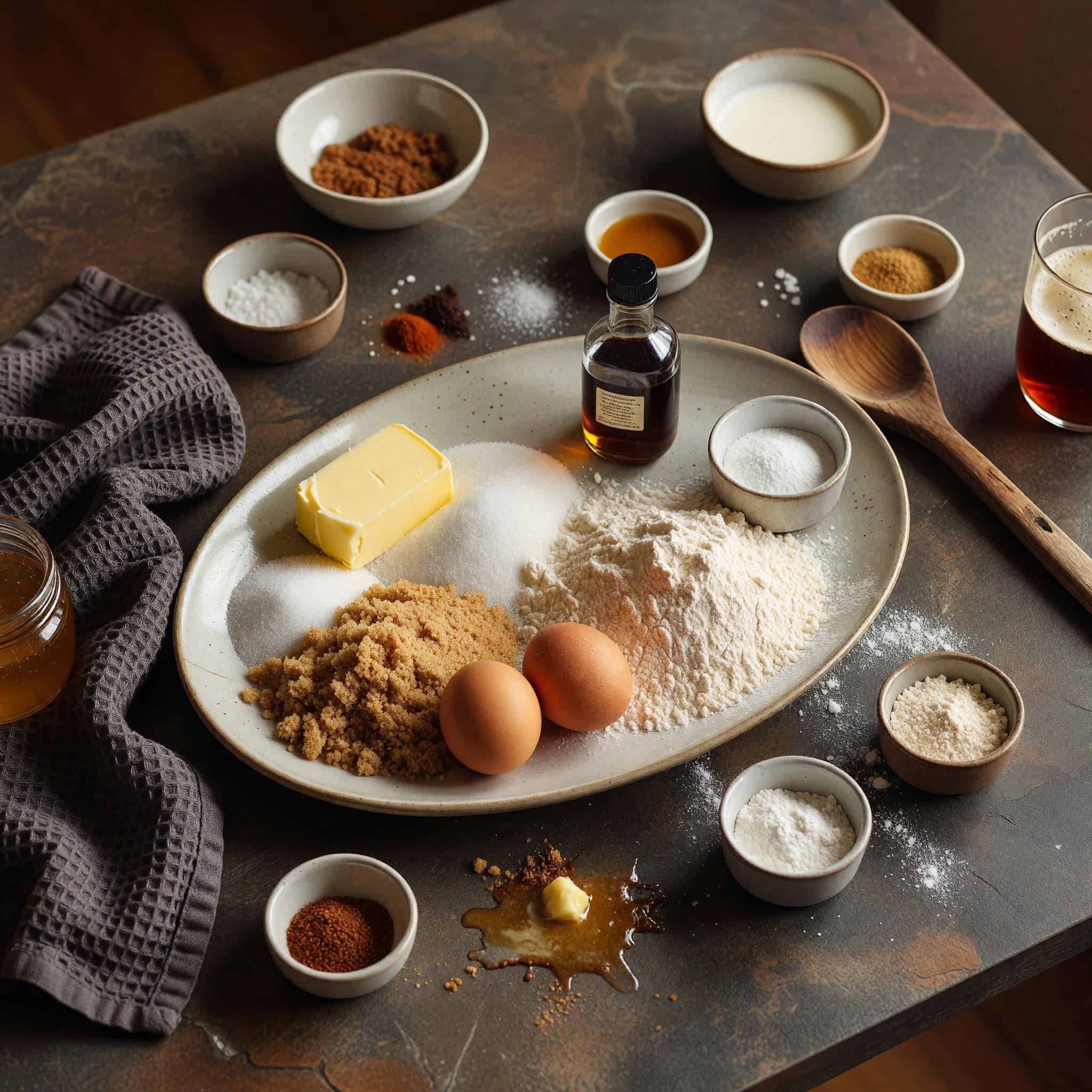
Why This Dough Works Every Time
My grandmother Hellon had a saying about baking: the recipe tells you what to do, but the dough tells you how it's going. She was right. This dough is honest — it gives you clear signals at every step. When the butter and both sugars cream up pale and fluffy, you know you've built the right foundation. When the eggs go in and the whole thing turns glossy and light, you know the structure is set. And when those chocolate chips disappear into the dough, you know you're about two baking sheets away from something your family is going to talk about. The real magic here is the combination of brown sugar alongside the white. Brown sugar holds moisture differently — it keeps the center soft and chewy long after the cookies cool, and it pushes the browning at the edges harder than plain sugar ever could. That contrast between a slightly crisp rim and a pillowy center? That's the brown sugar working.
A few things worth knowing before you start mixing — these are the details that separate a good cookie from a great one.
Baking soda needs acid — and it needs it fast
Baking soda starts releasing CO2 the moment it hits moisture. Get the dough onto the sheet and into the oven without dawdling, or you're baking with spent leavening and flat cookies.
Brown sugar is doing more work than granulated here
Brown sugar's molasses content brings ketone and aldehyde compounds that push Maillard reactions harder than plain granulated. It's also more hygroscopic, which keeps the center soft. The ratio of brown to white sugar is the primary lever for chew vs. crisp.
Butter and vanilla are a natural compound bridge
Butter and vanilla extract share aldehyde and lactone families — they reinforce each other's aromatic depth rather than competing. That's why vanilla reads as richer in a butter-heavy dough than it would in a leaner one.
Sea salt on top isn't garnish — it's a structural fix
The taste profile skews sweet with a salty deficit. A pinch of flaky sea salt pressed onto each ball before baking closes that gap and sharpens the bitter edge of the chocolate chips without adding sweetness.
Three moves make or break this recipe.
Three moves that matter most. Get these right and the rest of the recipe takes care of itself.
Bake at 375°F (190°C) for 9–11 minutes. Pull when edges are set but centers still look underdone — carryover heat finishes them on the pan. Rest on the sheet at least 5 minutes before moving.
- Cream butter and both sugars until pale and fluffy — this aerates the dough before any flour goes in
- Add eggs one at a time and mix just until incorporated to avoid overdeveloping gluten
- Fold in flour until no dry streaks remain, then stop — overworking tightens the crumb
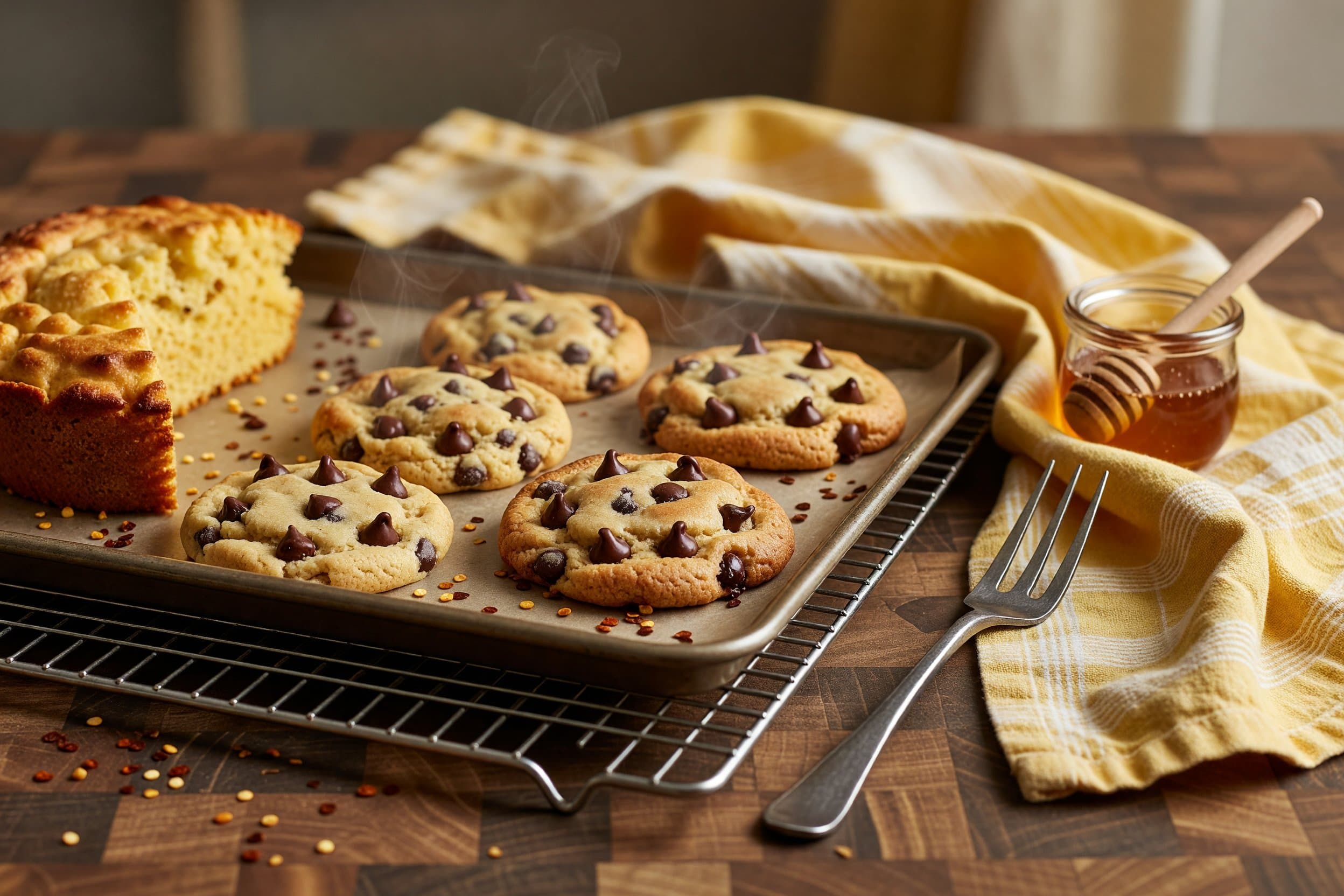
The Pull-Early Rule
Here's the move that most home bakers skip: pull the cookies out when they look like they're not quite done. The edges should be just barely starting to color, and the centers should still look soft — almost underbaked. That's not a mistake. The pan is still hot, and the cookies will keep cooking for a full five minutes after you close the oven door. If you wait until they look done in the oven, they'll be overdone on the rack. Set your timer for 8 minutes the first time, peek, and trust your eyes over the clock. Every oven runs a little different. The goal is a cookie that's fully set but still yielding in the center — that texture only happens if you let carryover heat finish the job. Don't rush the five-minute rest on the pan either. Moving them too soon breaks them apart and you lose that perfect structure they've been building since the butter went in.
Baking soda is a one-shot leavener — once it hits moisture, the clock starts. Here's what that means for your workflow.
Leavening reaction
Baking soda reacts on contact with moisture and any residual acid. Mix efficiently and bake immediately — stalled dough loses lift.
If you need to hold the dough, switch to double-acting baking powder, which reserves a second CO2 release for the oven.
Salt on Top: Not Optional
The recipe calls for a teaspoon of sea salt in the dough, and that's doing its job. But if you want to take these cookies from great to genuinely memorable, press a few flakes of finishing salt onto each dough ball right before it goes in the oven. The dough skews sweet — two cups of sugar and a full bag of chocolate chips will do that — and a little salt on top doesn't just season, it sharpens. It makes the chocolate taste more like chocolate and cuts through the richness so you can actually eat a second one without feeling like you've been hit by a sugar wave. Flaky Maldon or any coarse sea salt works perfectly. It's a two-second step that punches well above its weight.
20 minutes, and you’re ready to cook.
Ten minutes of active prep, twenty minutes total before anything goes in the oven. Here's how to stage it so nothing gets missed.
- Gather EquipmentGather three baking sheets, parchment paper, a medium bowl, a large mixing bowl, a whisk or fork, measuring cups and spoons, and a rubber spatula or wooden spoon.1 min
- Preheat OvenPreheat oven to 375 degrees Fahrenheit (190 degrees Celsius). Line three baking sheets with parchment paper and set aside.
- Measure Salted ButterMeasure 1 cup Salted Butter (softened) into a prep container.1 min
- Measure SugarsMeasure 1 cup Granulated Sugar and 1 cup Light Brown Sugar (packed) into a prep container.2 min
- Measure Vanilla ExtractMeasure 2 tsp Vanilla Extract into a small prep container.30s
- Prepare EggsCrack 2 Eggs into a prep container.1 min
- Measure Dry IngredientsMeasure 3 cup All-Purpose Flour, 1 tsp Baking Soda, ½ tsp Baking Powder, and 1 tsp Sea Salt into a medium bowl and whisk together. Set aside.2 min
- Measure Chocolate ChipsMeasure 2 cup Chocolate Chips into a prep container.1 min
- Stage IngredientsArrange all prepped ingredients near your work station in order: softened butter, sugars, vanilla extract, eggs, dry ingredient mixture, and chocolate chips. Have a large mixing bowl ready for combining.1 min
Tools for this recipe.
Nothing exotic here — this is a standard home kitchen bake. A hand mixer makes creaming easier, but a wooden spoon and some elbow grease will get you there too.
- sheet pan
- parchment paper
- mixing bowl
- small bowl
- measuring cups
- measuring spoons
- whisk
- hand mixer
- rubber spatula
- cookie scoop
- cooling rack
Sourcing: Two Ingredients Worth Paying Attention To
The recipe calls for salted butter, and that's intentional — the salt is already baked into the balance of the dough. If you swap in unsalted, add a little more sea salt to compensate or the cookies will taste flat. For the chocolate chips, this is the one place I'd encourage you to spend a little more. A bag of 60% cacao chips will give you a sharper, slightly bitter contrast against the sweet dough that makes every bite more interesting. The standard semi-sweet chips work fine — we've used them plenty of times — but if you spot a higher-cacao option at the store, grab it. The difference shows up clearly once the cookies come out of the oven.
- Contains
- milk, egg, wheat, gluten
- Fits
- Vegetarian, Pescatarian, Nut-Free, Halal, Kosher
Halal and kosher also depend on how the ingredients are sourced and certified.
Substitutions that still taste like the recipe.
Need to work with what's in the pantry? Here are the closest swaps for the key ingredients — flavor-matched, not just substituted.
- clotted cream
- cream
Lacks the fresh and grassy notes.
- mascarpone
Lacks the fresh and grassy notes; juicier; more delicate.
- jaggery
Brings creamy and coconutty notes; lacks the fresh and grassy notes.
- honey
Brings fruity, piney and citrusy notes; lacks the toasted, browned and buttery notes.
- agave nectar
Brings fruity notes; lacks the toasted, browned and buttery notes; more delicate.
- vanilla
Brings creamy and coconutty notes; less aromatic.
- rose water
Brings piney and citrusy notes; less aromatic.
- almond extract
Brings creamy and coconutty notes; lacks the clove-like and smoky notes.
- chocolate↓ sweet
Brings buttery, toasted and browned notes; richer.
- milk chocolate
Brings toasted and browned notes; lacks the earthy and roasted notes; sweeter-bodied.
- maple syrup↓ fatty
Sweeter-bodied.
- salt
Brings fresh and grassy notes.
- kosher salt
- Himalayan pink salt
Variations Worth Trying
Once you've made this dough a few times and it feels like yours, start playing. A teaspoon of espresso powder stirred into the dry ingredients deepens the chocolate flavor without making the cookies taste like coffee — it just makes the chocolate taste more like itself. Swapping half the chocolate chips for chopped dark chocolate bars gives you irregular pockets of melted chocolate that pool differently than chips. And if you want a bakery-style cookie, use a large ice cream scoop instead of rolling by hand — the bigger dough ball means a thicker center and a more dramatic contrast between the edge and the middle. All three of these work with the same base dough, same bake time. The recipe is a foundation. Build on it.
- Dairy & Eggs
- $0.26
- Spices & Seasonings
- $0.05
- Baking
- $2.72
Common questions
Do I really not need to chill the dough?
Why do my cookies come out flat?
Can I make the dough ahead and freeze it?
Can I use unsalted butter instead of salted?
How do I store these and how long do they keep?
This is the cookie I make when my kids ask for something sweet after dinner. It's the one I bring to the neighbor's cookout when I want to show up with something that feels homemade because it is. No shortcuts, no gimmicks — just butter, sugar, chocolate, and a little bit of care at every step. That's the whole recipe. That's the whole philosophy, really. Good ingredients, honest technique, and food made for the people sitting at your table. Fire up the oven and make something good today.
The Quarterly
Get the next Quarterly from Dan Cooks
Seasonal recipes, notes, and the issue links worth saving.
Comments