Dan Cooks

May 29, 2026

Tasteze Blog

Eight Hours of Smoke, One Table Worth Gathering Around

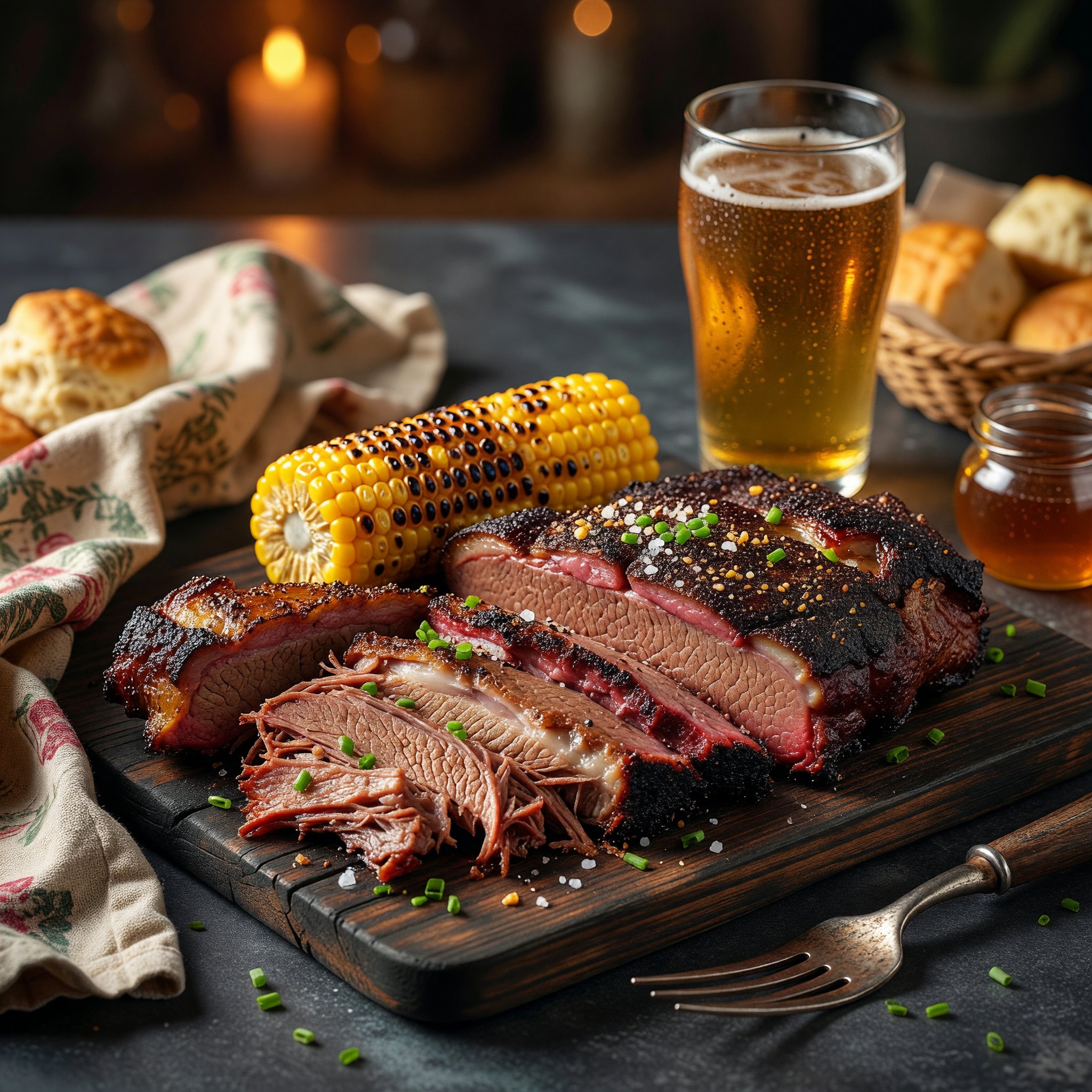
This Texas-style brisket — half pulled, half sliced — is the kind of low-and-slow cook that turns a backyard into a destination.

The smoke does its magic. You just have to be patient enough to let it.

Dan Cooks

Eight Hours of Smoke, One Table Worth Gathering Around

This Texas-style brisket — half pulled, half sliced — is the kind of low-and-slow cook that turns a backyard into a destination.

Some cooks are born in a hurry. I was born in the South, so I learned early that the best things take time. This brisket is eight hours of patience paid off — a whole packer cut rubbed down with a five-spice blend, smoked low and slow over oak or hickory until the bark goes dark and the flat practically sighs when you touch it. Half goes on the board in thick, clean slices. The other half gets pulled into smoky, silky strands. Both land on the same plate, next to charred corn slicked with butter and a squeeze of lime. That's a Tampa backyard summer right there — fire, family, and food that tastes like you meant every minute of it.

Why this cook is worth your weekend

My grandmother Hellon never rushed a thing at the stove, and my daddy Bermon taught me that fire deserves respect. A brisket like this one sits right at the meeting point of both lessons. It's not a weeknight dinner — it's a project, a ritual, a reason to invite people over. The dual-serve idea came from watching how different folks eat at a cookout: some want that clean, sliceable flat with a proper crust; others want the deckle-rich pulled meat piled high. Doing both off the same cook means nobody goes home wanting.

Low, slow, and deliberate

Two twenty-five degrees is not a suggestion — it's the whole philosophy. At that temperature, the tough collagen in the brisket has time to convert into gelatin, which is what gives you that silky, almost buttery texture in the pulled sections. You'll hit a stall somewhere around 155–165°F internal where the temperature just stops moving. Don't panic, don't crank the heat. Wrap it in butcher paper and push through. Pull it for slicing at 195°F; let it ride to 205°F if you want the full pull. Then rest it — at least 20 minutes wrapped, longer if you can stand it. That rest isn't downtime. It's where the magic finishes.

Page 1Continued

Dan Cooks

Blog print edition

The spritz is doing more than you think

That apple cider vinegar and beef broth spray isn't just about keeping the surface moist, though it does that too. The acid in the vinegar works against the richness of the beef, lifting the fat just enough that each bite stays bright instead of heavy. Start spritzing after the first three hours, then every 30 minutes after that. You want a light, even coat — not a drench. Too much and you're washing off the bark you spent hours building.

The corn is not an afterthought

Charred corn with butter and lime sounds simple until you actually eat it and realize it's doing serious work. The char deepens the corn's natural sweetness and adds a slight bitterness that cuts through the richness of the brisket. Butter pulls that sweetness up even further. Then lime and fresh cilantro come in — they share a bright, grassy character that snaps the whole plate into focus. That squeeze of lime over the corn is the same acid-fat principle that makes the vinegar spritz work on the brisket. It's not garnish. It's the balance.

The corn side earns its place — here's how the flavors on this plate connect.

  • corn

Know what you're getting into

I'll be straight with you: this is a special-occasion cook, and the numbers reflect that. A well-marbled brisket plus three tablespoons of butter means the fat runs high — that's part of why it tastes so good, and it's also why this one belongs on the weekend table, not the Tuesday rotation. Sodium adds up fast between the rub, the broth, and the beef itself, so keep the rest of the day lighter if you can. The bright side? The corn and the spice blend bring more fiber to the plate than you'd expect from a meat-forward meal. Protein is through the roof. This is food that earns its place.

Page 2Continued

Dan Cooks

Closing page

balanced

A rich, protein-forward plate — go in with eyes open on the fat and sodium, and enjoy every bite.

Where to source your brisket

Ask your butcher for a whole packer brisket — that means the point and the flat still attached. Pre-trimmed flats are convenient, but they dry out over a long smoke because you've lost the fat cap that does the basting work. Leave the fat cap at a quarter inch: enough to protect the meat, not so much that it pools and steams instead of rendering. For the salt, go coarse — sea salt or kosher. Fine salt over-penetrates during a long dry brine and can make the bark taste more cured than smoked.

This brisket is the kind of cook that makes people linger at the table long after the plates are cleared. That's the whole point. My wife's eyes light up when the food hits the table, and this one never misses. Whether you're feeding a crowd or just your own family on a slow Saturday, be patient with the smoke and let the meat do the talking. Fire up something good.