Dan Cooks

April 30, 2026

Tasteze Blog

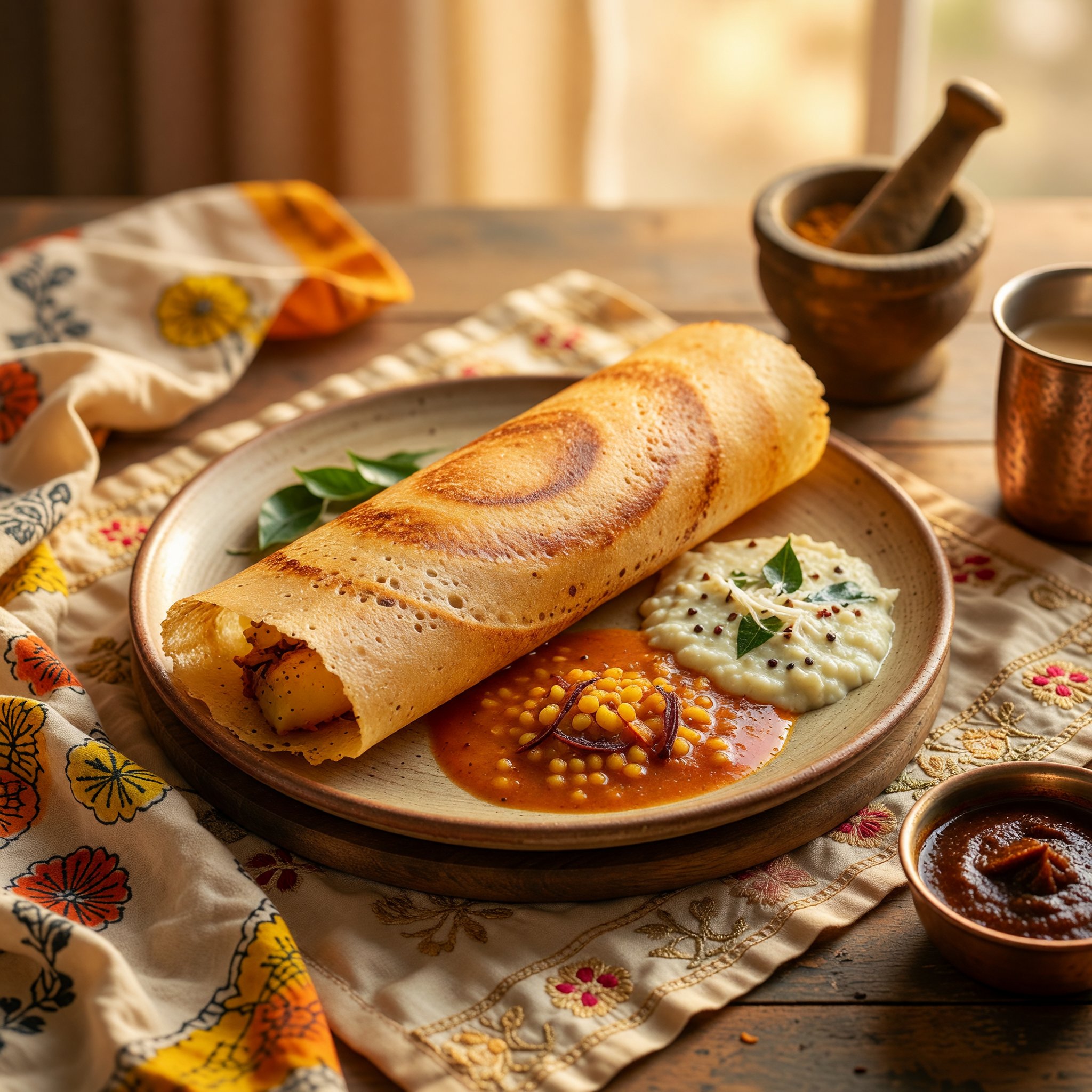
Golden, Crispy Masala Dosa: A South Indian Brunch Worth the Patience

Spiced potato filling, a ripping-hot cast iron pan, and pre-made batter that shortcuts the hard part — this is the dosa your family will ask for again and again.

Master the tawa, and the rest of this dosa falls into place.

Dan Cooks

Golden, Crispy Masala Dosa: A South Indian Brunch Worth the Patience

Spiced potato filling, a ripping-hot cast iron pan, and pre-made batter that shortcuts the hard part — this is the dosa your family will ask for again and again.

I'll be honest with you — I didn't grow up eating dosa on Saturday mornings. My mornings smelled like bacon grease and biscuits, not mustard seeds crackling in coconut oil. But somewhere between my love of the grill and my curiosity about bold, layered flavors, South Indian cooking got its hooks in me. The first time I watched a proper masala dosa come off a hot tawa — that thin golden crepe, crisp at the edges, folded over a filling that smells like everything good about a spice cabinet — I knew I had to learn it. This recipe is my family's version: deliberate, approachable, and built around a pre-made dosa batter that lets you skip the two-day fermentation and get straight to the good part. The technique is what matters here. Get the pan right, get the tempering right, and you've got a brunch that'll make everyone go quiet at the table — and that's the highest compliment in my house.

The Story Behind the Filling

Every great dosa starts with the masala — that golden, turmeric-stained potato filling that's been feeding South Indian families for generations. It's humble ingredients done with intention: potatoes, onion, a little green chili heat, and a tempering of mustard seeds and curry leaves that transforms plain cooking oil into something aromatic and alive. The tempering is the soul of this dish. When those mustard seeds hit hot coconut oil and start to pop and sputter, that's the moment the whole kitchen wakes up. My kids come running every time. I've cooked a lot of things over a lot of fires, and I still get a little excited when I hear that crackle. It's the same feeling as the first sizzle when a steak hits cast iron — your senses know something good is happening. The filling gets its depth from patience: letting the onion go fully soft before the potato goes in, covering the pan and letting everything steam-cook together until the potato is tender and just starting to catch a little color at the edges. Don't rush it. The dosa itself is quick — the filling is where the flavor lives.

Page 1Continued

Dan Cooks

Blog print edition

How to Work the Tawa

The pan is everything. A cast iron skillet or a proper tawa — either works, but it has to be genuinely hot before a drop of batter touches it. Here's my test: flick a few drops of water onto the surface. If they skitter and evaporate in under a second, you're ready. If they just sit and bubble, give it another minute. Once the batter hits the pan, you have about five seconds to spread it. Use the back of a ladle and work in a single outward spiral from the center — one confident motion, not back-and-forth scrubbing. You want it thin enough that you could almost see light through it. Thick dosas don't crisp; they steam from the inside and turn soft. A drizzle of coconut oil around the edges after the first minute helps the bottom release and adds that signature golden crunch. When the edges start to lift on their own and the underside is deep gold, it's ready for the filling. No need to flip — the top sets from the steam of the filling.

The Coconut Factor — What to Know Before You Dig In

Masala dosa is a genuinely satisfying brunch — the potatoes and lentils bring real substance, and the fiber count from the potato, onion, and coconut chutney together is legitimately impressive for a morning meal. But I want to be straight with you about the fat: between the coconut oil in the filling, the oil on the tawa, and the coconut chutney on the side, this is a rich plate. The coconut is doing a lot of the flavor work here, and it's also doing most of the heavy lifting on the fat side. That's not a reason to skip it — it's a reason to enjoy it fully and not feel like you need to double the chutney every time. The sodium sits at a comfortable level, so season to taste without worry. And if you want to lighten things up on a regular-rotation morning, swapping coconut oil for avocado oil on the tawa keeps the crispiness without the extra richness.

balanced

A fiber-rich, protein-moderate brunch — satisfying and wholesome, with coconut contributing most of the fat. Enjoy it fully, just know what's in the bowl.

Serving It Right

Dosa is not a solo act. The coconut chutney and sambar aren't garnish — they're structural. The cool, creamy chutney cuts through the richness of the coconut oil in the filling and gives your palate a reset between bites. The sambar, with its tomato and bloomed spice base, brings the brightness that the filling doesn't have on its own. This dish runs a little low on acidity by nature — the tomato in the sambar is doing real work to balance the starchy potato and the fat from the coconut. Don't skip it, and don't serve it lukewarm. A hot sambar alongside a crispy dosa is the combination that makes this dish feel complete rather than heavy. If you want to push the pairing further, a cold glass of salted lassi or even a simple fresh lime soda alongside turns this into a proper South Indian spread.

Page 2Continued

Dan Cooks

Closing page

Make It Your Own

Once you've got the basic masala dosa down, the filling is wide open for variation. My favorite riff for the kids is adding a handful of frozen peas to the potato filling in the last few minutes of cooking — they sweeten things up and add a little color. For a spicier version, swap the single green chili for a serrano and add a pinch of black pepper to the tempering. If you're cooking for someone avoiding the heat altogether, pull the chili out and lean into the mustard seed and curry leaf flavor — it's still deeply aromatic without the fire. The batter itself is the constant; the filling is where you can cook with instinct. And if you happen to have leftover filling, it makes a genuinely great scrambled egg mix-in the next morning — turmeric potatoes and eggs on a weekday is a very good idea.

There's something that happens at the table when you put down a plate of food that took real attention — people slow down. They notice. A masala dosa done right has that effect. It's not the flashiest thing I've ever cooked, but it's one of the most satisfying, because every layer of flavor in it was built deliberately: the tempering, the filling, the crisp on the crepe, the brightness of the sambar. That's cooking with intention. That's what my grandmother Hellon would call cooking with love made visible. Fire up something good today — and don't rush the mustard seeds.