Gochujang Chicken Thighs: A Little Korean Fire for the Southern Skillet
Same cast iron, same patience, a different kind of heat — this one glazes instead of smokes.
 Dan Cooks4 min readPrint this post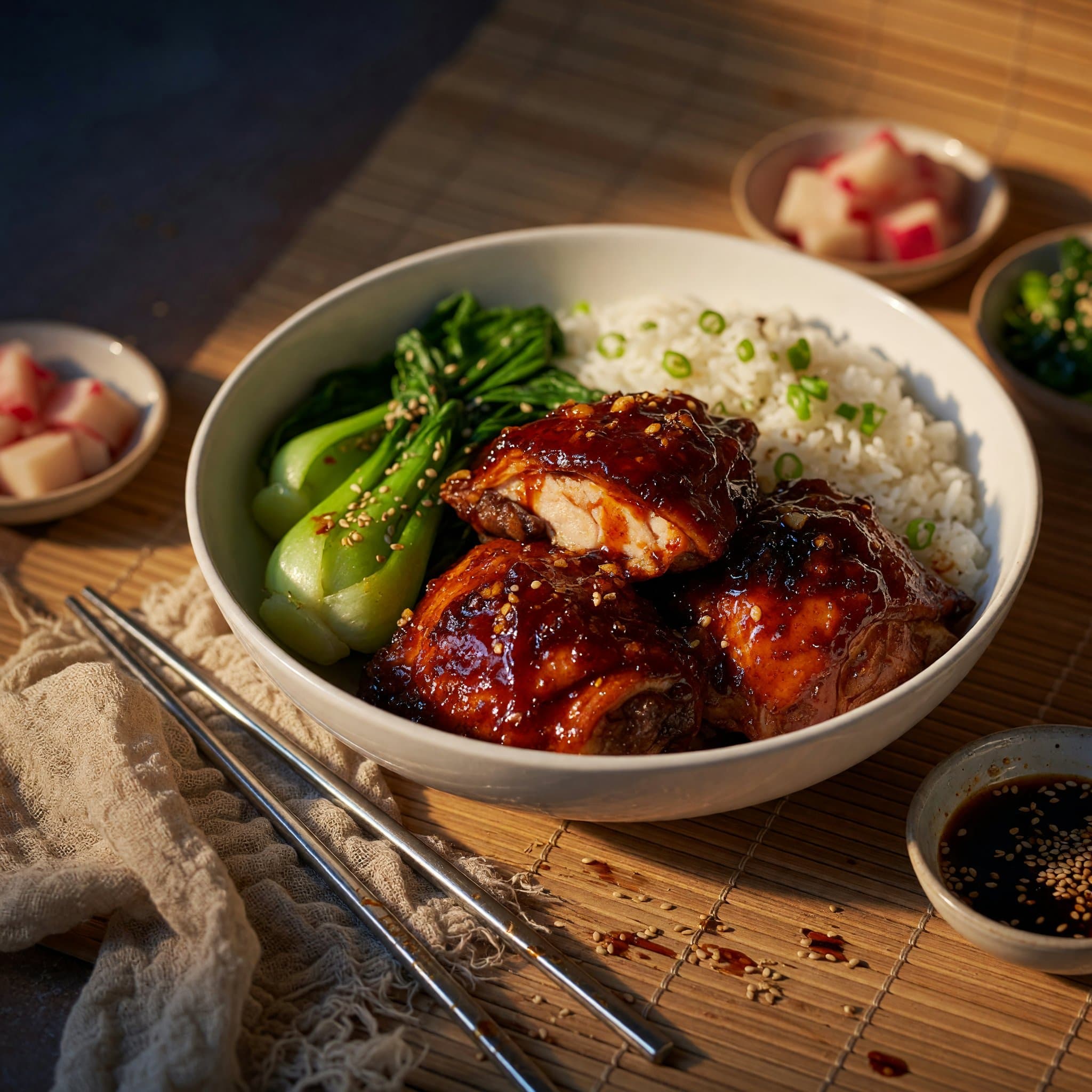
The smoke does its magic — you just have to be patient enough to let it. Same goes for a good glaze.
I didn't grow up with gochujang in the pantry, but I know a good glaze when I taste one, and this one earned its spot in my rotation the first night I made it. It's got that same lesson my daddy taught me over a smoker: don't rush the color. Sweet, spicy, sticky sauce clinging to crispy chicken skin, a pile of bright green bok choy on the side, and the whole thing done inside 40 minutes. That's a weeknight win in my book.
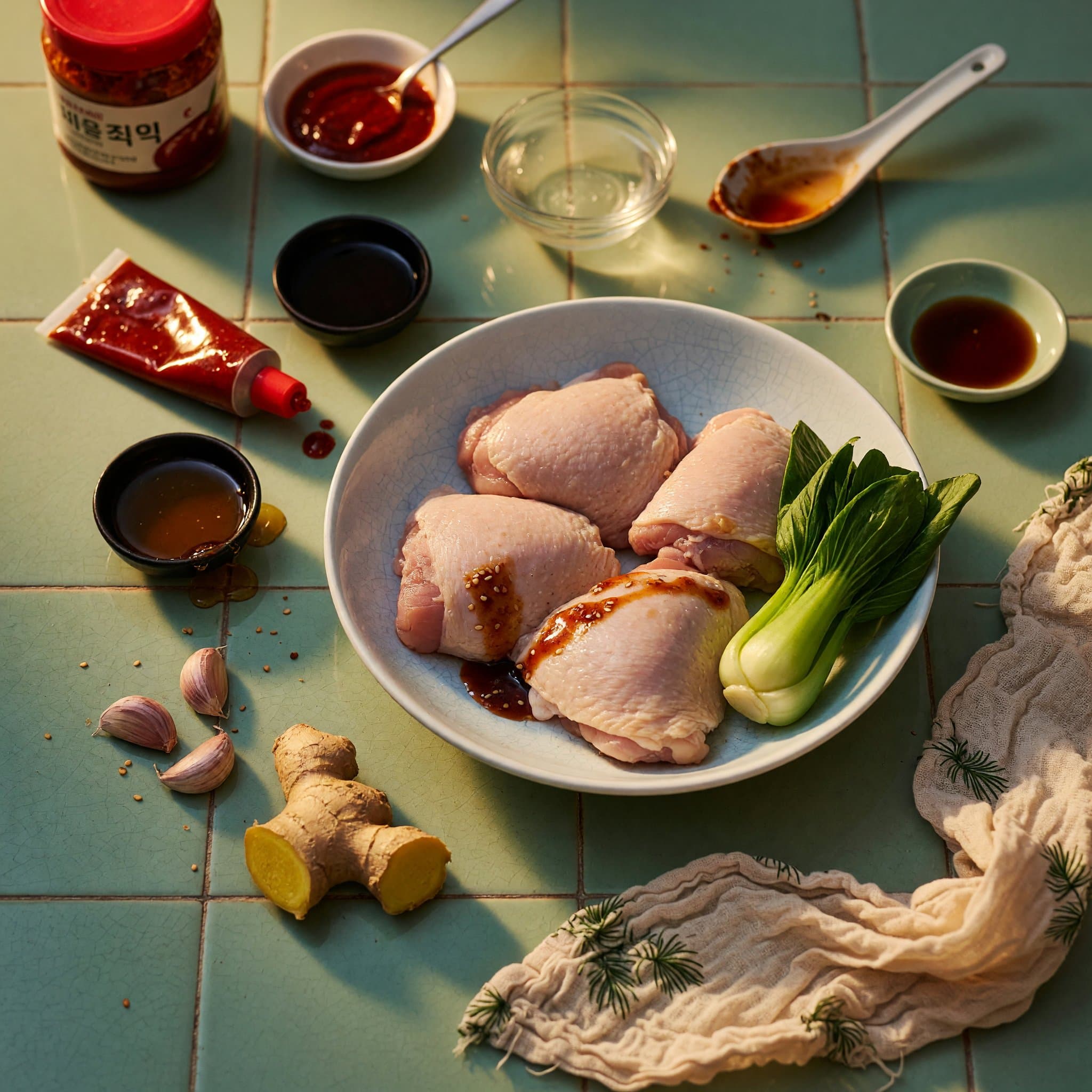
A different kind of low and slow
Most nights you'll find me standing over hickory smoke, but this dish reminded me the same principles carry over to a hot skillet on the stovetop. My mama, Barbara, always said good food doesn't need a shortcut, it needs a little respect. Here that means letting the chicken skin actually crisp before you touch it, and letting the glaze do its work in the last few minutes instead of dumping it on too early and drowning the whole pan.
Dry chicken, hot pan, no exceptions
Pat those thighs bone dry before they see the skillet. Any surface moisture means you're steaming instead of browning, and that skin will come out pale and sad instead of deep mahogany. Get the oil shimmering, lay the thighs skin-side down, and then leave them alone. They'll tell you when they're ready to flip by releasing clean from the pan.
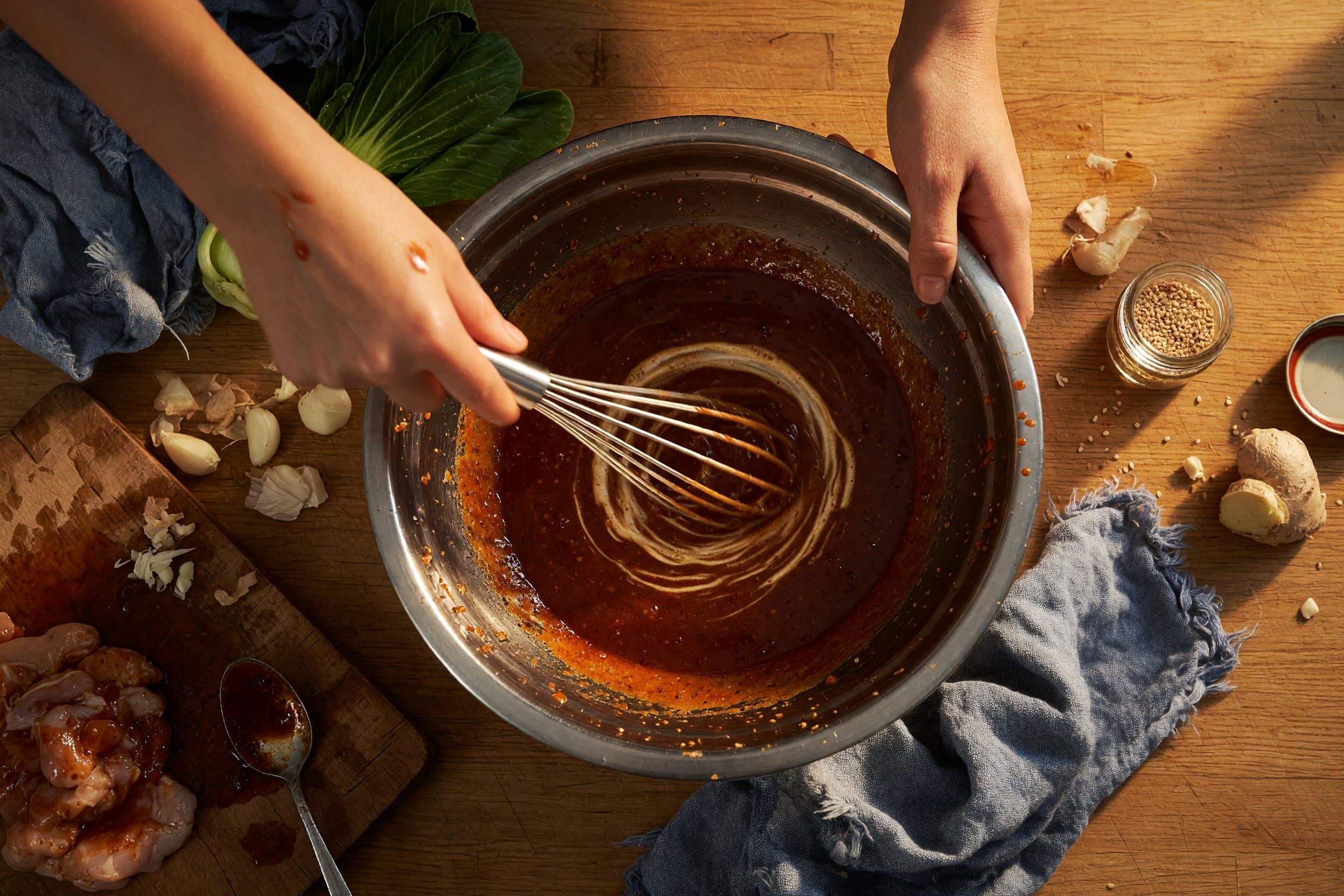
40 minutes, and you’re ready to cook.
Get your mise in order first. Whisk the sauce, mince your aromatics, and boil your water for the bok choy before that skillet ever gets hot.
- Gather EquipmentGather a large cast iron skillet, a small mixing bowl, a whisk, a cutting board, a sharp knife, paper towels, a meat thermometer, a large pot, a steamer basket or colander, tongs, a basting brush or spoon, and serving plates.
- Preheat Water for Bok ChoyFill a large pot with water and set it on the stove over high heat to come to a boil. This will be ready when you need to steam the bok choy during cooking.
- Prepare the Chicken ThighsPat the chicken thighs dry with paper towels to remove excess moisture. This ensures crispy skin during cooking. Set them on a clean cutting board.2 min
- Prepare the GarlicPeel 4 cloves of garlic and mince finely to yield about 1 tablespoon. Place in a small prep container.1 min
- Prepare the Fresh GingerPeel fresh ginger and mince finely to yield about 1 tablespoon. Place in a small prep container.1 min
- Prepare the Bok ChoyRinse the bok choy under cold water and trim the base. Leave whole or cut into halves lengthwise if large. Pat dry and place in a prep container.2 min
- Measure SpicesMeasure out ½ teaspoon kosher salt and ¼ teaspoon black pepper into a small bowl or onto a plate for easy access during cooking.30s
- Whisk the Gochujang SauceIn a small bowl, whisk together 3 tablespoons gochujang, 2 tablespoons soy sauce, 1 tablespoon honey, 1 tablespoon sesame oil, the minced garlic, the minced ginger, and 1 tablespoon rice vinegar until smooth and well combined. Set aside.2 min
- Stage IngredientsArrange all prepped ingredients near the stove in cooking order: the dried chicken thighs, the measured spices, the olive oil, the gochujang sauce, the bok choy, and the sesame seeds and scallions (if using) for garnish.
Salt like you mean it, or salt at the last minute
There's no middle ground with salt on chicken thighs. Season them at least 40 minutes before they hit the pan so the salt has time to work its way back in, or salt them right as they go in the skillet. Anywhere in between and you'll pull moisture to the surface without giving it time to soak back, and that's the difference between a juicy thigh and a dry one.
One thing I'll say plain: skip the olive oil if you've got a neutral oil on hand. It fights the gochujang and sesame oil instead of getting out of their way, and this sauce works hard enough without something pulling against it. Grapeseed or a plain vegetable oil lets the glaze stay front and center where it belongs.
Why the sauce holds together
Soy sauce and sesame oil are doing the real work in that glaze, both leaning into the same roasted, savory register so they reinforce each other instead of competing. Garlic and ginger build the backbone underneath, and a scatter of scallion at the end just extends that same fresh, sharp note. It's a tight little chord, and it's why the sauce tastes like more than the sum of its parts.
Substitutions that still taste like the recipe.
Don't have everything on hand? These swaps keep the dish honest without losing the point.
- chicken drumstick
Shares maillard compounds with chicken thigh
- turkey breast↓ fatty
Shares maillard compounds with chicken thigh — less fatty
- doubanjiang↓ sweet
Shares pyrazine compounds with gochujang — less sweet
- red curry paste↓ sweet
Shares terpene compounds with gochujang — less sweet
- fish sauce
Shares pyrazine compounds with soy sauce
- liquid aminos↓ savory
Shares pyrazine compounds with soy sauce — less savory
Worth knowing before you plate it
This dish is protein-forward and doesn't skimp on the good fats, so it'll fill you up. But between the gochujang, the soy sauce, and the honey glaze, both the salt and the sugar run higher than you'd want every night of the week. If you make this a regular in your rotation, a low-sodium soy sauce cuts that load without touching the flavor, and you could pull the honey back by half and still get that same lacquered shine.
Common questions
Can I use chicken breast instead of thighs?
What if my glaze breaks and separates instead of coating?
Is bok choy the only side that works here?
Tools for this recipe.
Nothing fancy here, just the basics you probably already own.
- cast-iron skillet
- small bowl
- whisk
- cutting board
- chef's knife
- instant-read thermometer
- stockpot
- steamer basket
- tongs
- basting brush
This one's earned a permanent spot next to my ribs and my burgers, proof that good technique travels well past the smoker. Give the pan the time it needs, trust the glaze to do its work in those last few minutes, and you'll have something worth calling the family to the table for.
The Quarterly
Get the next Quarterly from Dan Cooks
Seasonal recipes, notes, and the issue links worth saving.
Comments