Dakgalbi Done Right: One-Pan Spicy Korean Chicken the Whole Family Will Ask For Again
Bold gochujang heat, caramelized chicken thighs, earthy mushrooms, and a savory-sweet sauce that tastes like it cooked all day — ready in 45 minutes from a single cast-iron pan.
 Dan Cooks7 min readPrint this post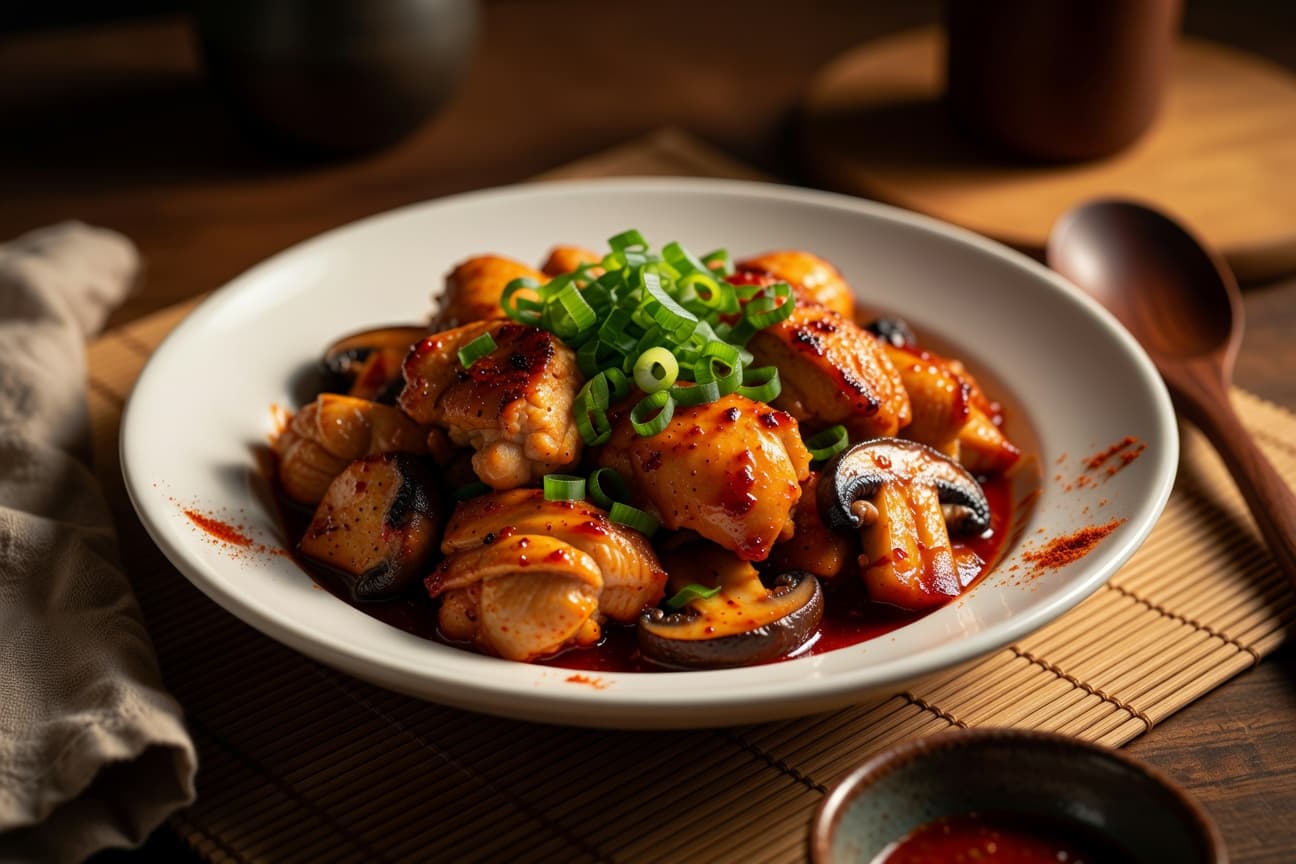
The best meals aren't measured by perfection — they're measured by the memories made around the table.
I'll be honest with you — I didn't grow up eating Korean food. I grew up in the South, where the fire was always hickory and the sauce was always smoky-sweet. But somewhere along the way I discovered that a screaming-hot cast-iron pan and a bold fermented chile paste can tell a story just as deep as any backyard barbecue. That's what dakgalbi is. It's Korean street food — spicy, caramelized, loud in the pan — and the first time I made it for my family on a warm Tampa evening, every plate came back clean. Now it's in the regular rotation, right alongside the ribs and the grilled shrimp. The grill taught me to respect the fire. This dish taught me the same lesson applies inside, too.
Why This One Works
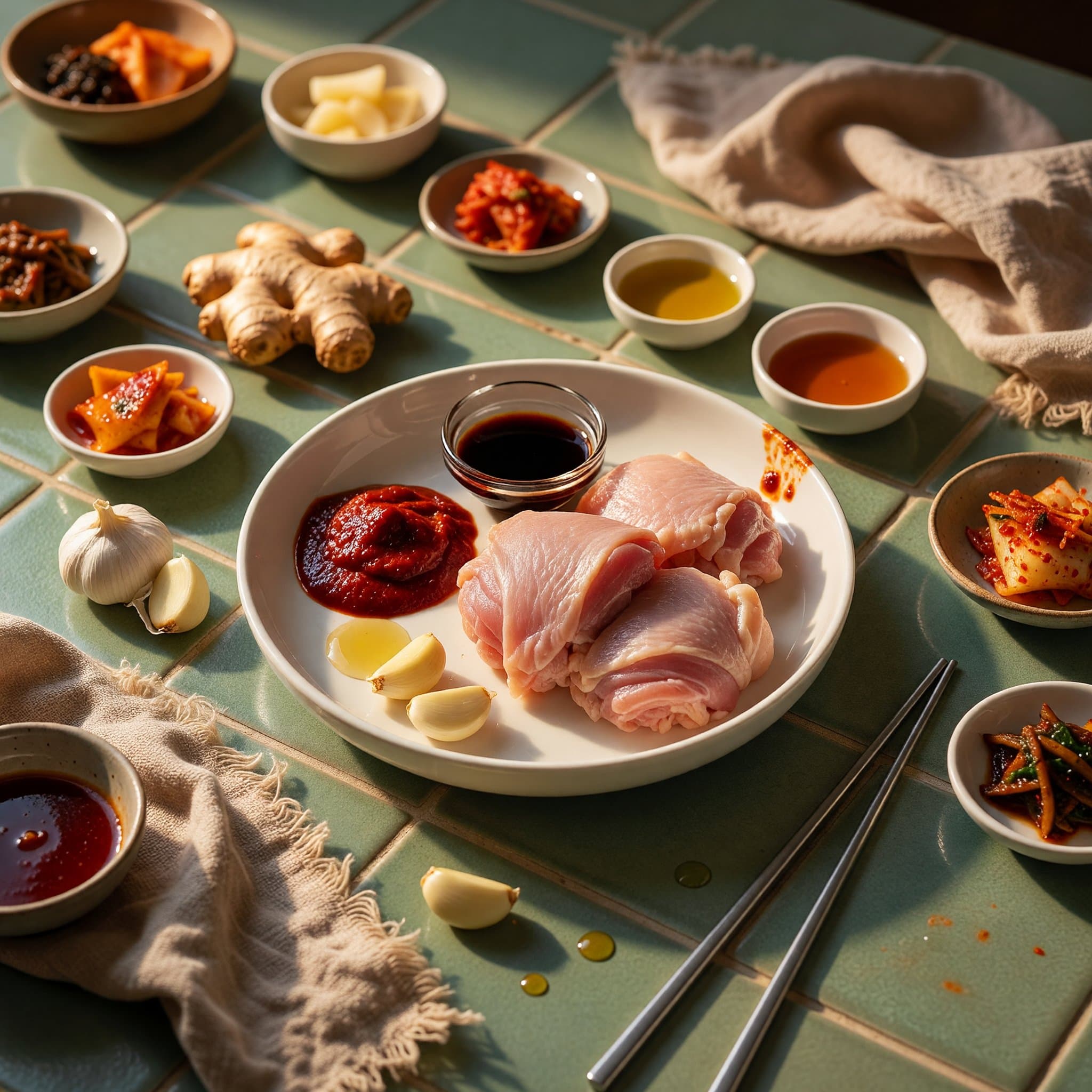
Dakgalbi is a beloved dish from Chuncheon, South Korea — a city so proud of it they built a street dedicated to nothing else. The soul of it is simple: chicken marinated in a gochujang-based sauce, cooked hot and fast until the edges caramelize and the whole pan smells like something you'd wait in line for. This weeknight version keeps faith with that tradition. Chicken thighs over breasts, because thighs stay juicy under high heat. Shiitake or cremini mushrooms, because they bring an earthiness that makes the sauce taste like it's been going for hours. And asparagus for a little brightness and snap at the end — something green to cut through all that savory richness. It's the kind of dish my grandmother Hellon would've understood even if she'd never tasted it: good ingredients, bold seasoning, and enough love in the pan to make everyone at the table feel it.
The Sear Is Everything
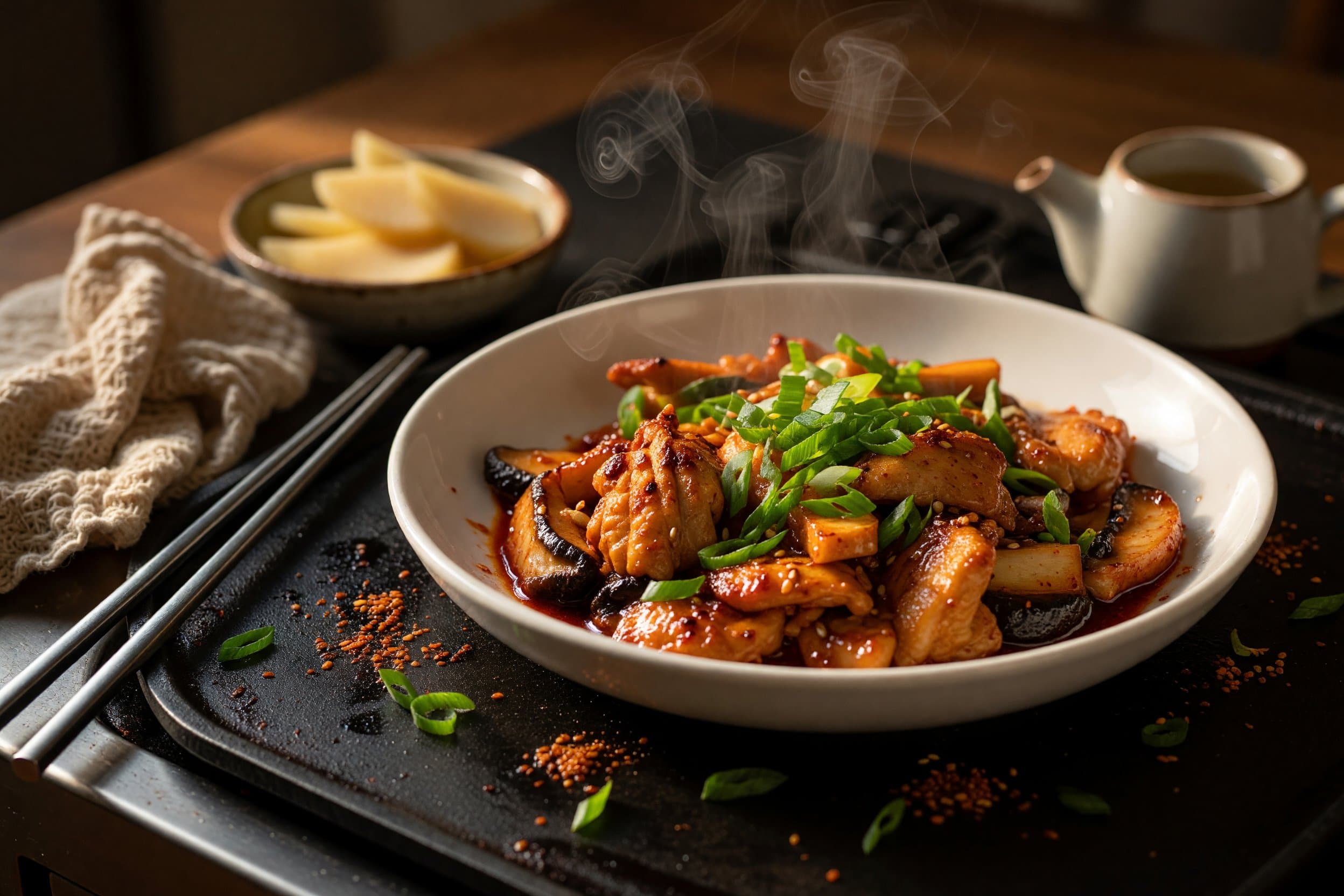
Here's the thing about gochujang: it's loaded with natural sugars from fermentation, and those sugars will scorch the moment they hit a hot pan before the chicken has built any color. So the sequence matters. Get your cast iron ripping hot — oil shimmering, just starting to smoke — before anything goes in. Sear the chicken in a single layer and leave it alone for three to four minutes. Don't poke it, don't stir it. Let the bottom form a proper crust. That browned layer is where all the deep, roasted flavor lives, and when the gochujang sauce hits it later, the two lock together into something that tastes far more complex than the sum of its parts. The mushrooms get the same treatment — push the onion aside, lay them flat, and let them go golden on one side before you toss. Rushed mushrooms steam. Patient mushrooms caramelize. The difference is everything.
How the Sauce Comes Together
The marinade is doing a lot of heavy lifting here, and it's worth understanding why it works so well. Gochujang, soy sauce, and mushrooms are all deeply savory on their own — but together they stack in a way that makes the sauce taste like it's been simmering for hours rather than whisked together in five minutes. The honey isn't just sweetness; it's the bridge that lets the gochujang caramelize without burning. And the sesame oil? Add it to the marinade, not the pan. Its roasted, nutty character dissipates fast over direct heat — you want it in the sauce where it amplifies everything around it. Finish with sesame seeds off heat for a little crunch that echoes those same warm, toasted notes. The scallion greens go on last, right before plating, so they stay bright and fresh — a clean counterpoint to all that savory depth.
This dish leads hard on savory with a solid kick of sweet and spice — classic dakgalbi territory. A squeeze of lime or a splash of rice vinegar at the table can brighten the whole plate.
30 minutes, and you’re ready to cook.
The mise en place here is the real cook — 30 minutes of organized prep means the actual stir-fry goes fast and clean. Start the rice first, then work through everything else.
- Gather EquipmentGather a large cast iron skillet or wok, a medium mixing bowl, a small bowl, a cutting board, a sharp knife, a whisk, measuring spoons, measuring cups, a rice cooker or pot with lid, and a wooden spoon or spatula.
- Start the RiceRinse the short-grain white rice under cold water until the water runs mostly clear. Cook according to package directions (stovetop, rice cooker, or Instant Pot). Keep warm while you prepare everything else.
- Prepare the Chicken ThighsPat the chicken thighs dry with paper towels. Cut into bite-sized pieces (roughly 1.5 to 2 inches). Set aside in a small bowl.5 min
- Mince the GarlicPeel and mince the garlic cloves finely — you'll need about 1 tablespoon minced. Place in a small prep container.2 min
- Prepare the GingerPeel a small piece of fresh ginger and grate finely on a microplane or box grater — you'll need about 1 teaspoon grated. Place in a small prep container.2 min
- Make the Gochujang MarinadeIn a medium bowl, whisk together the gochujang, soy sauce, sesame oil, honey, minced garlic, and grated ginger until smooth and well combined. Taste — it should be bold, spicy, and slightly sweet. Set aside.3 min
- Marinate the ChickenAdd the chicken pieces to the marinade bowl and toss well to coat every piece. Let marinate at room temperature for at least 10 minutes while you prep the vegetables. (If prepping ahead, cover and refrigerate for up to 4 hours.)
- Prepare the OnionPeel the onion half and slice into thin half-moons. Place in a prep container.2 min
- Slice the MushroomsWipe the mushrooms clean with a damp paper towel. Slice into ¼-inch-thick slices. Place in a prep container.2 min
- Prepare the AsparagusRinse the asparagus and trim off the woody ends (about the bottom 1–2 inches). Cut into 1-inch pieces. Place in a prep container.2 min
- Prepare the ScallionsRinse the scallions and trim the root ends. Separate the white and light green parts from the dark green tops. Cut the whites into 1-inch pieces and place in one prep container. Cut the greens into 1-inch pieces and place in a separate prep container.2 min
- Measure Neutral Oil and Sesame SeedsMeasure out 1 tablespoon neutral oil into a small container. Measure out 1 teaspoon sesame seeds into a small bowl. Measure out ½ teaspoon gochugaru into a small bowl.1 min
- Stage IngredientsArrange all prepped containers near the stove in cooking order: marinated chicken (with marinade), neutral oil, onion slices, scallion whites, mushroom slices, asparagus pieces, scallion greens, sesame seeds, and gochugaru. Have a meat thermometer ready to check the chicken's internal temperature.
Substitutions that still taste like the recipe.
Whether you're working with what's in the fridge or dialing the heat up or down, here are the swaps that hold up best in this dish.
- doubanjiang↓ sweet
Shares pyrazine compounds with gochujang — less sweet
- harissa↓ savory
Shares terpene compounds with gochujang — less savory
- red curry paste↓ sweet
Shares terpene compounds with gochujang — less sweet
- king trumpet mushroom
Shares pyrazine compounds with mushroom
- portobello mushroom
Shares sulfur compounds with mushroom
- oyster mushroom
Shares pyrazine compounds with mushroom
- cake flour
Shares maillard compounds with white rice
- fufu flour
Shares maillard compounds with white rice
- tapioca starch
Shares maillard compounds with white rice
- broccolini
Shares sulfur compounds with asparagus
- eggplant
Shares pyrazine compounds with asparagus
- potato
Shares pyrazine compounds with asparagus
A Word on Sourcing
Two ingredients here are worth buying right the first time. Gochujang varies wildly depending on where it's made — Korean-made versions have a fermentation depth that domestic brands just don't replicate. Look for a tub rather than a squeeze bottle, and check that the label lists fermented chili paste, not just chili paste. The difference in the finished sauce is noticeable. Same goes for sesame oil: reach for toasted, not raw. Raw sesame oil is mild and almost flavorless. Toasted sesame oil has that deep, nutty warmth that makes the whole marinade sing. Both of these keep well in the fridge for months, so the investment pays off across a lot of meals.
Honest Nutrition Notes
This dish is genuinely strong on protein — the chicken thighs alone put you well over what most people need from a single dinner, which makes it a solid choice if you're feeding active kids or anyone who needs to feel full and stay that way. The fats are mostly the good kind: sesame oil, neutral oil, and the natural fat in chicken thighs. The sugar in the dish comes from gochujang, honey, and onion — moderate overall, and nothing that should worry you at a normal serving size. Where it's lighter: vegetables. The mushrooms and asparagus contribute, but if you want a fuller plate, add a simple cucumber salad or some kimchi on the side. And if the white rice is a habit you're looking to shift, brown rice or farro underneath this sauce is genuinely good — nuttier, more filling, and it holds up to the bold flavors just fine.
Common questions
Can I use chicken breast instead of thighs?
How spicy is this dish?
Can I marinate the chicken overnight?
What if I don't have a cast-iron skillet?
Can I make this ahead for meal prep?
This is the kind of dinner that earns a permanent spot in your rotation — not because it's fancy, but because it's honest. One pan, real ingredients, bold flavors, and a table full of people who want seconds. That's the whole goal, whether I'm standing over a grill in the backyard or a cast iron on the stove. The fire is just the beginning. Fire up something good tonight.
The Quarterly
Get the next Quarterly from Dan Cooks
Seasonal recipes, notes, and the issue links worth saving.

Comments