Dan Cooks
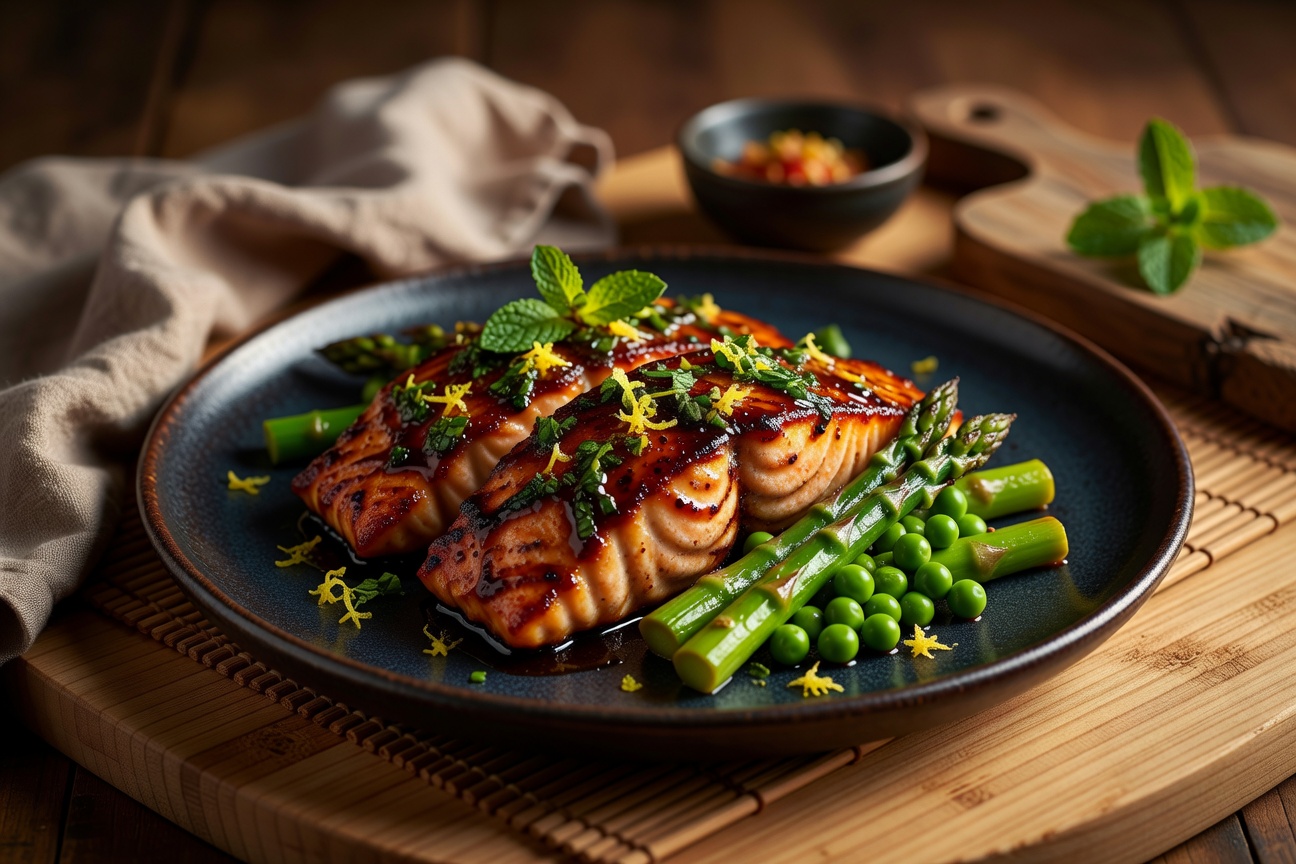
The Miso-Glazed Salmon That Tastes Like a Restaurant Forgot to Charge You
Rich, caramelized miso glaze. Crisp spring vegetables. A bright mint-and-lemon finish that cuts right through the richness. This is the weeknight dinner that makes the whole family go quiet at the table — in the best…
I'll be honest with you — I'm a grill man through and through. Give me a cast iron over open coals and a cold sweet tea in hand, and I'm right where I belong. But every now and then, even I get pulled inside by something that deserves the full attention of a hot skillet and a little patience. This miso-glazed salmon is one of those dishes.
I first started playing with miso glazes because I wanted that same deep, lacquered crust I chase on a great piece of grilled chicken — that caramelized, slightly sticky bark that makes you reach for another piece before you've finished the first. Turns out, miso does that better than almost anything. It's fermented, it's salty-sweet, and when it hits a hot pan, it transforms into something that tastes like it took all day. It didn't. Start to finish, you're sitting down in 35 minutes.
This one's for the family table — the kind of dinner where my wife raises an eyebrow after the first bite and says, "You made this on a Tuesday?" Yeah. I did. And so can you.
The Glaze Is Everything — Here's How to Not Blow It
The miso glaze on this salmon is doing a lot of heavy lifting, and it rewards you for treating it right. The combination of miso, soy sauce, and mirin isn't just flavor — it's a Maillard machine. Both miso and soy are fermented, which means they're already loaded with roasted, nutty depth before heat ever touches them. When you add the sweetness from the mirin and just a touch of honey, you've got a glaze that caramelizes fast and hard. That's a good thing — until it isn't.
Here's the move: apply the glaze in two stages. Half goes on the flesh side before the fish ever sees the pan, letting it marinate for at least 10 minutes. The second half goes on after you flip, right when the skin side is already golden and crisp. That second coat caramelizes in the final 2–3 minutes without burning. If you try to glaze it all at once from the start, the sugars scorch before the fish is cooked through. Patience on the flip.
Also — and I cannot stress this enough — pat the fillets completely dry before the glaze goes on. Salt draws moisture to the surface; dry the fish, then glaze. A wet fillet steams in the pan instead of searing, and you'll lose that crust entirely. Press the skin down…