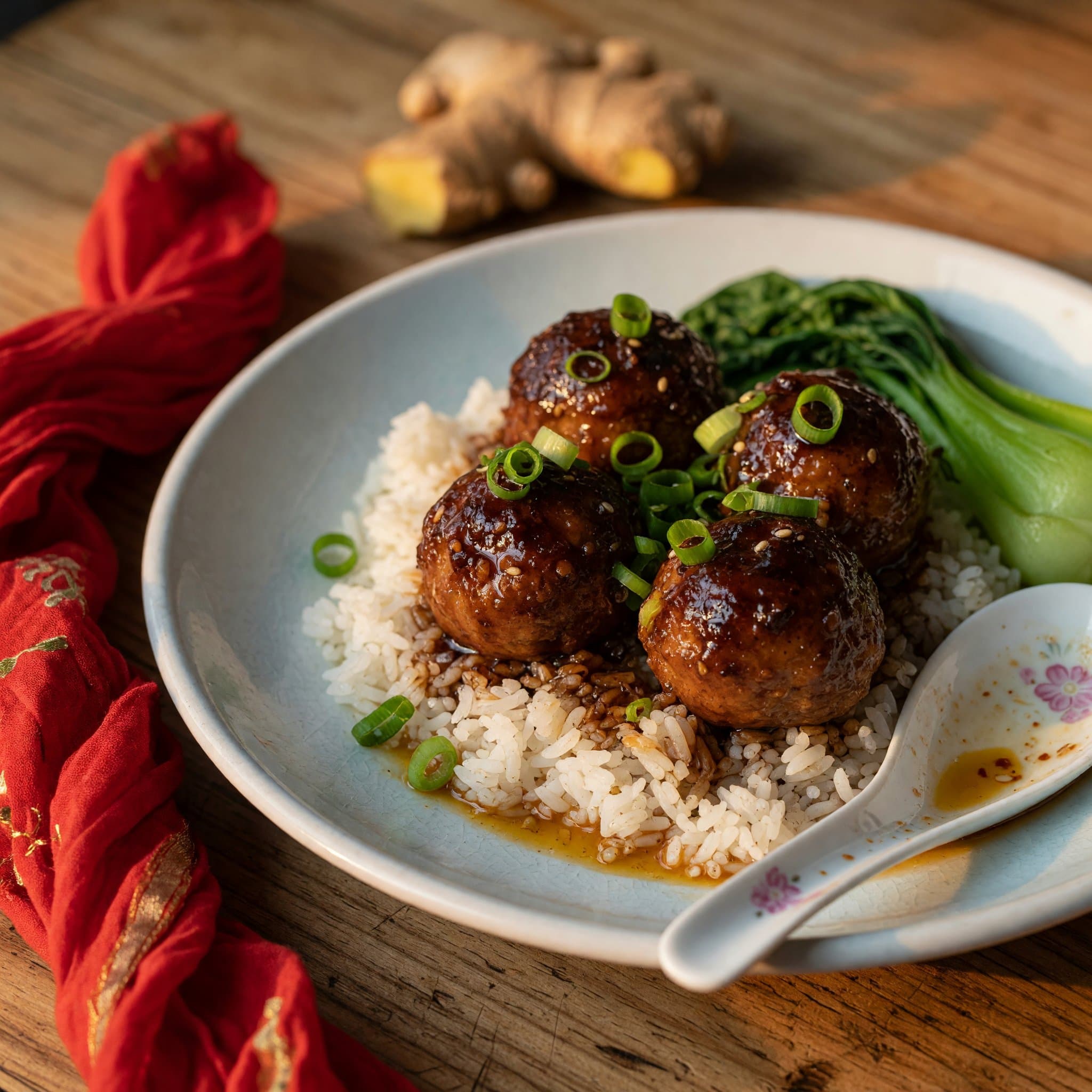
Glazed Pork with Apple-Coconut Sauce and Crispy Onions
A Southern pitmaster meets Chinese-inspired flavors — seared pork tenderloin bathed in a silky apple-coconut glaze, crowned with shatteringly crispy fried onions. Fifty minutes, one skillet, and a whole lot of soul.
 Dan Cooks6 min readPrint this post

Season boldly, trust the smoke, and feed the ones you love.
Down here in Tampa, I'm usually standing over a grill with hickory smoke curling up into the Florida sky. But some evenings, the fire moves indoors — to a cast iron skillet that's seen more love than I can count. This glazed pork tenderloin is one of those dishes that surprised even me the first time I made it. Apple butter and coconut milk in the same pan as ginger and sesame oil? Sounds like a stretch. But the moment that sauce starts to simmer and the whole kitchen fills with that warm, round, slightly sweet aroma, you understand it completely. It tastes like something my grandmother Hellon would have nodded at — bold, comforting, and made with intention. This one's for the family table, and it earns every minute you give it.

Three moves make or break this recipe.
Three moves separate a good version of this dish from a great one. Get these right and everything else falls into place.
Pork tenderloin is done at 140°F internal — it carries over to 145°F on rest. Overcooking by even 5°F costs you significant moisture in a lean cut.
- Dry-brine the tenderloin at least 1 hour ahead with kosher salt — pat dry before cooking
- Slurry cornstarch in cold water; add to sauce only after it's off a rolling boil, then simmer 2 minutes
- Add rice vinegar last, after thickening, and serve promptly — acid thins the sauce on standing
The Sear Is Non-Negotiable
Pork tenderloin is a lean, mild cut — it needs the Maillard reaction to develop any real depth of flavor. That golden-brown crust you build in the cast iron isn't just about looks; it's what makes ginger feel like a natural companion to the meat rather than something layered on top. Get your oil shimmering hot before the pork goes in, and don't crowd the pan. Let it sit. Resist the urge to move it. You're looking for a deep, even sear on all sides — about ten minutes total. Then let it rest five minutes before you slice. Pork tenderloin is done at 140°F and carries over to 145°F on the rest. Cook it past that and you've traded juicy for dry, and no sauce in the world fully fixes that.
- coconut milk + gingerBoth carry buttery notes.
- sesame oil + sesame seedsBoth carry clove-like, smoky, fresh and grassy notes.
- sesame oil + scallionBoth carry fresh and grassy notes.

Salt timing on a lean cut like pork tenderloin matters more than most people realize. Here's the window you want to avoid.
Salt timing on lean pork
Salt dissolves myosin and aids moisture retention — but only if you give it time to equilibrate (1+ hour) or apply it right at cook time. The 5–30 minute window leaves surface moisture that kills browning.
Don't Sleep on the Crispy Onions
While the pork is simmering in the sauce, you've got a window to fry the onions — and you should absolutely use it. Slice them thin, toss them in cornstarch until every ring is lightly coated, then fry in batches in about half an inch of hot oil. Three to four minutes per batch. You're looking for deep gold, not pale yellow. Transfer them to a paper towel-lined plate and don't stack them — they need airflow to stay crispy. These aren't a garnish. They're the textural counterweight to a sauce this rich and creamy. Every bite of tender, glazed pork needs that crunch on top to keep things honest.
15 minutes, and you’re ready to cook.
Fifteen minutes of mise en place makes the cook feel effortless. Stage everything near the stove before the first drop of oil hits the pan.
- Gather EquipmentGather a cast iron skillet, a separate medium skillet for frying, cutting board, sharp knife, paper towels, measuring spoons and cups, small bowls for prepped ingredients, a whisk or spoon for stirring, tongs, and a paper towel-lined plate for the crispy onions.
- Prepare the Pork TenderloinPat the pork tenderloin dry with paper towels. Season all sides evenly with kosher salt and white pepper. Place on a clean cutting board and set aside.
- Prepare the GingerPeel the fresh ginger and mince finely — you'll need about 1 tablespoon. Place in a small prep bowl.2 min
- Prepare the ScallionsTrim the scallions, separating the white and light green parts from the dark green tops. Slice the white and light green parts into 1-inch pieces and place in one prep bowl. Thinly slice the dark green tops and place in a separate prep bowl for garnish.2 min
- Prepare the OnionPeel the onion and slice thinly into rings or half-moons, about 1/8-inch thick. Place in a prep bowl and toss with the cornstarch until evenly coated.2 min
- Measure Liquids and Sauce ComponentsMeasure out 1½ tablespoons sesame oil into a small bowl, 1 tablespoon vegetable oil for the main skillet into another small bowl, ¾ cup coconut milk into a measuring cup, 3 tablespoons apple butter into a small bowl, ¼ cup water into a measuring cup, and 1 tablespoon rice vinegar into a small bowl. Keep these separate and ready to add in sequence.1 min
- Stage IngredientsArrange all prepped ingredients and measured liquids near the stove in the order they will be used: seasoned pork on the cutting board, vegetable oil for searing, sesame oil, white scallion parts, minced ginger, coconut milk, apple butter, water, rice vinegar, cornstarch-coated onion slices, and sesame seeds for garnish. Have the paper towel-lined plate ready for the crispy onions.
Why This Combination Works
The pairing that makes this dish sing is coconut milk and ginger. The fat in the coconut milk physically wraps around ginger's heat compounds and slows their release — so instead of a sharp spike of spice, you get a slow, round warmth that builds and lingers. It's a gentler kind of heat, and it's what makes this sauce feel so satisfying rather than aggressive. Then there's the sesame double-down: sesame oil in the sauce, sesame seeds on top. Using both deepens that toasted, nutty note without piling on extra fat the dish can't carry. And the apple butter? It brings concentrated fruit sugars that caramelize against the pork as the sauce reduces — adding a glaze quality that applesauce simply can't replicate.
This dish leans sweet and savory with a fatty richness from the coconut milk and sesame. The rice vinegar keeps the finish bright.
Add a touch of sweetness (honey, sugar, mirin) to round out flavors.
A few things worth knowing before you start cooking — these are the details that separate a good result from a great one.
Cornstarch slurry timing is everything here
Mix cornstarch into cold liquid before it hits the hot sauce, then simmer a full two minutes to gelatinize completely. Pull it off heat before adding rice vinegar — acid degrades the starch network fast and your sauce will thin at the table.
Coconut milk will break if you rush it
Coconut milk is high-fat dairy — it tolerates acid and heat better than milk, but if you add rice vinegar while the sauce is still at a hard simmer, the proteins will curdle. Temper the acid in off-heat or use the cornstarch slurry as a stabilizer before the vinegar goes in.
Ginger and pork are a natural bridge
Pork's pyrazine and aldehyde compounds — built during browning — share terpene bridges with ginger, which is why the spice reads as complementary rather than intrusive. Don't skip the sear; without Maillard development, that pairing score drops significantly.
Salt the pork early or right before cooking — not in between
Kosher salt draws moisture to the surface within minutes. If you salt and let the tenderloin sit 5–30 minutes, you're cooking wet meat that won't brown. Either dry-brine an hour ahead or season right as it hits the pan.
- Contains
- wheat, gluten, sesame
- Fits
- Dairy-Free, Nut-Free
Substitutions that still taste like the recipe.
Need to swap something out? Here are the closest flavor-matched alternatives for the key players in this dish.
- cream
- half-and-half
Juicier.
- clotted cream↑ fatty
Brings fresh and grassy notes.
- apple pie filling
Sweeter-bodied.
- maraschino cherry
Sweeter-bodied.
- dried apple
- fresh turmeric↓ spicy
- galangal
Lacks the buttery notes; drier.
- fingerroot↓ spicy
Brings fresh and grassy notes; lacks the buttery notes; drier.
- walnut oil↓ savory
- olive oil↓ savory
Brings piney and citrusy notes; lacks the earthy and roasted notes.
- truffle oil
Brings oniony, garlicky and buttery notes; lacks the earthy, roasted, clove-like and smoky notes.
This is a protein-forward meal — one serving covers well over a day's worth of protein needs. Pair it with steamed rice and a vegetable side to round out the plate.
Food groups measured against a 2,000-calorie day
- ✓ Covers 76% of your daily protein
- ✓ Covers 450% of your daily healthy fats
- • No dairy in this recipe
- • No vegetables in this recipe
- • No whole grains in this recipe
Strong in protein and healthy fats, light on dairy, vegetables, and whole grains.
- Produce
- $2.88
- Meat & Poultry
- $2.99
- Nuts & Seeds
- $0.01
- Canned & Jarred
- $1.00
- Condiments & Sauces
- $0.22
- Oils & Vinegars
- $0.31
- Spices & Seasonings
- $0.24
- Baking
- $0.04
Some prices are estimates.
Common questions
Can I make the sauce ahead of time?
How do I know when the pork tenderloin is done?
Can I use applesauce instead of apple butter?
My crispy onions went soft. What happened?
Is this dish gluten-free?
This dish is proof that bold flavors don't have to be complicated. A good sear, a patient sauce, and a handful of crispy onions on top — that's the whole story. My family cleaned their plates the first night I made this, and that's the only review that matters to me. Whether you're cooking for two on a weeknight or feeding a crowd on the weekend, this one's worth the fifty minutes. Fire up the skillet with Dan — and don't forget to taste as you go.
The Quarterly
Get the next Quarterly from Dan Cooks
Seasonal recipes, notes, and the issue links worth saving.
Comments